

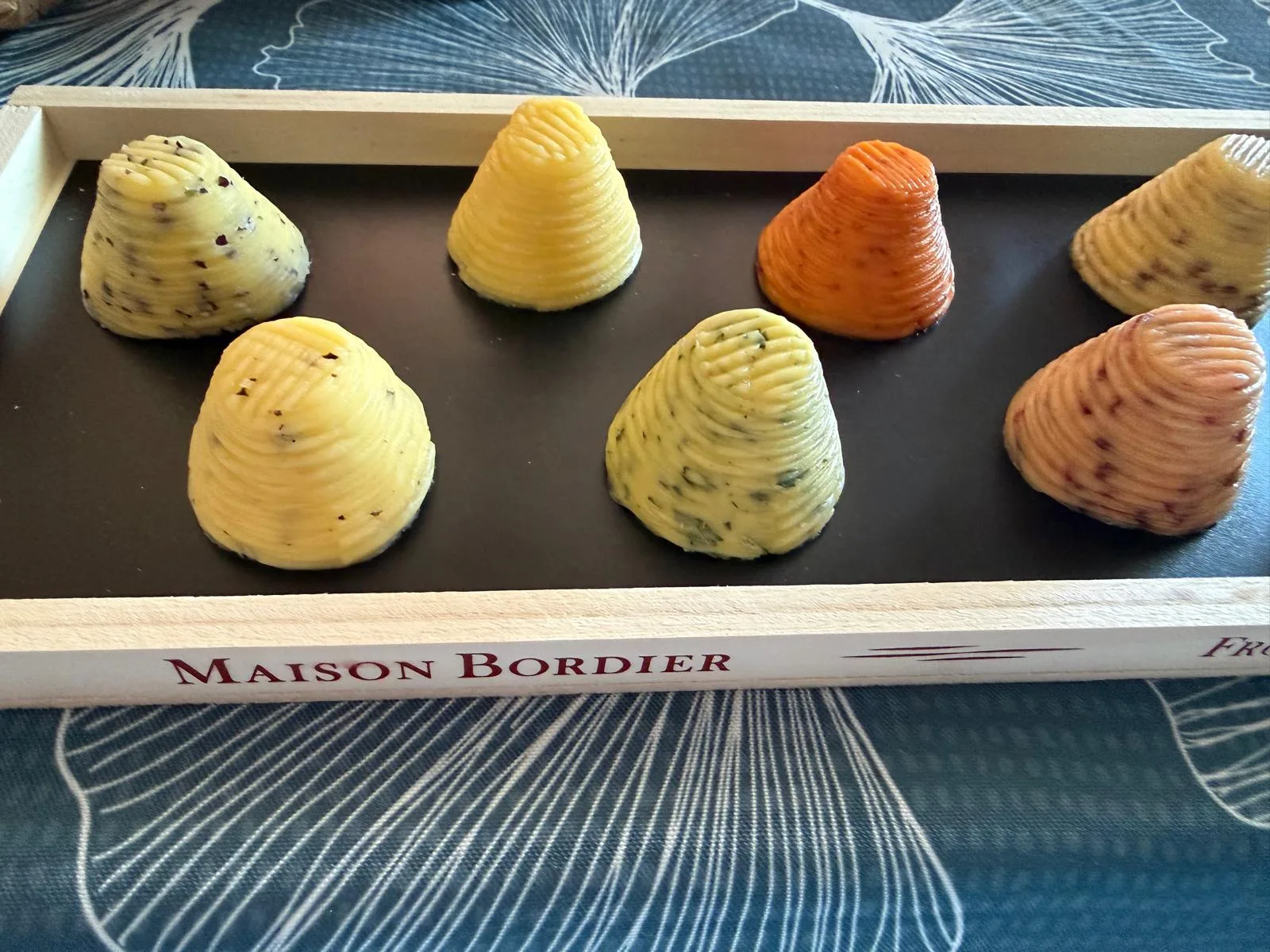
Hand-churned, salted with fleur de sel, flavored with vanilla, Espelette pepper, buckwheat, raspberry, or chocolate. A licensed private guide tells you why Breton baratte butter is worth the trip, the story behind Jean-Yves Bordier, and how to bring it home to the United States without losing it to customs.
I received a message from an American client last week. She had just read a piece in Bon Appétit about travelers bringing suitcases full of Breton butter back to the United States. She wanted to know if it was really that good, and whether I could organize a tasting for her next visit.
The answer to both questions is yes.
What the magazine did not quite capture, because no one in New York really can, is why this is happening. Breton butter has been one of the great ingredients of French cuisine for centuries, but for a long time it was a quiet, domestic affair. Then one man in Saint-Malo started making butter the old way, by hand, on a wooden churn, and the rest of the world slowly discovered what the Bretons had always known. After 18 years guiding travelers through this region, I have watched this obsession grow from a trickle to a flood. Here is the honest story behind it, and what you need to know before you come taste it for yourself.
Why Brittany Salts Its Butter, and the Rest of France Does Not
To understand Breton butter, you have to start with a tax.
In the fourteenth century, the kingdom of France imposed the gabelle, a crushing salt tax that made salt one of the most expensive ingredients in the country. Peasants in most French provinces could barely afford to salt their soup, let alone their butter. Butter was therefore eaten fresh, or preserved by churning it hard and washing it in cold water, but never by salting it. To this day, the rest of France eats sweet cream butter almost exclusively.
Brittany was different. Thanks to its fierce independence and its ancient privileges, inherited from the Duchess Anne and her marriage treaties with the French crown, Brittany was exempt from the gabelle. Salt from the marshes of Guérande cost almost nothing. Breton women salted their butter heavily, both for flavor and for preservation, and developed a taste for it that became a regional signature. When the gabelle was finally abolished during the French Revolution, the rest of France had already forgotten the taste of salted butter. Brittany had never stopped.
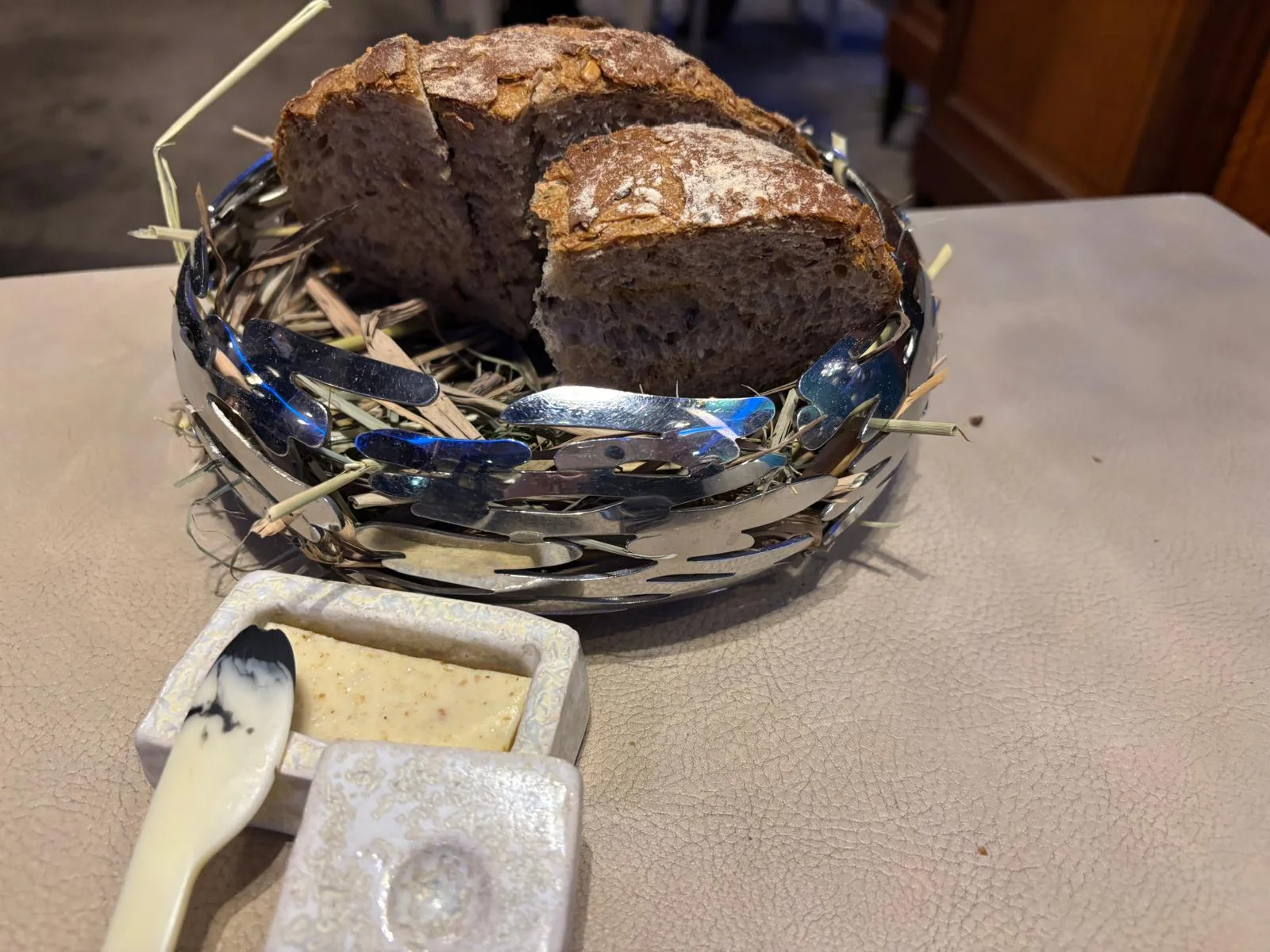
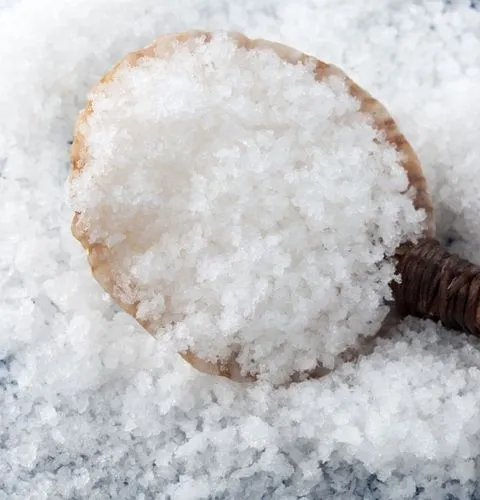
Eight centuries later, when you sit down at a creperie in Dinan or a bistro in Saint-Malo and the waiter brings you a small pot of butter before you have even ordered, you are eating the legacy of that tax exemption. The fleur de sel de Guérande, the hand-raked sea salt crystals still harvested in the marshes a few hours south, is the same salt the Breton grandmothers used. The butter itself, rich and yellow from the milk of cattle grazing on the salt-laced coastal pastures, is the same butter their daughters churned by hand on Sunday mornings.
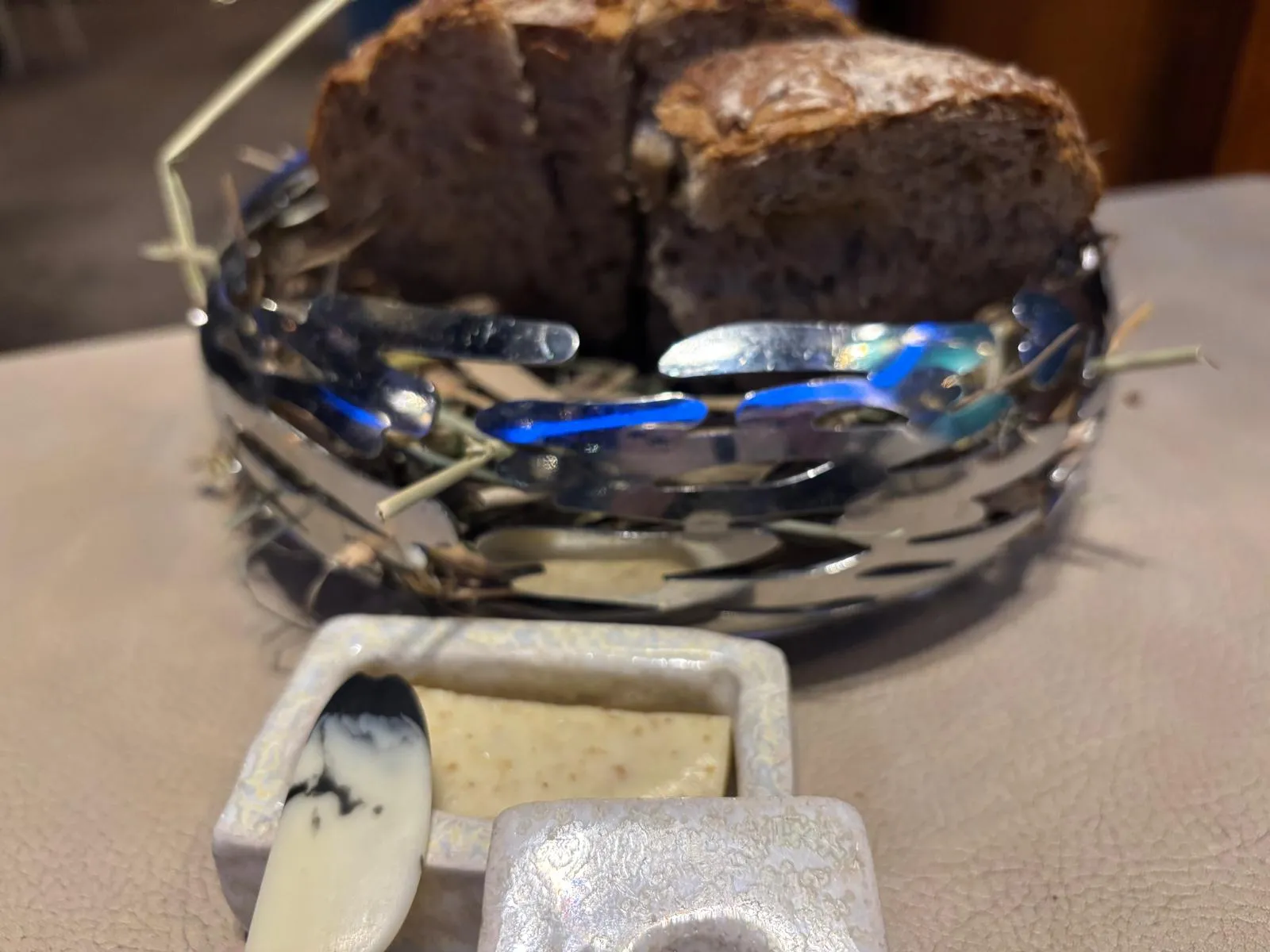 The humble pot of salted butter, the first thing that arrives at every Breton table
The Industrial Detour, and Jean-Yves Bordier’s Rebellion
By the middle of the twentieth century, almost all butter in France was made the industrial way. Centrifuges, continuous churns, refrigerated tanks, standardized starters, everything calibrated for volume and shelf life. The traditional method, churning pasteurized cream slowly in a wooden baratte for hours, kneading the butter by hand on a wooden table, letting it rest, working it again until the texture became silky and the flavor concentrated, had almost disappeared.
Then, in 1985, a fishmonger’s son named Jean-Yves Bordier took over a small cheese and dairy shop on Rue de l’Orme in the walled city of Saint-Malo. He was obsessed with texture. He believed that industrial butter, however clean, however consistent, had lost something essential. So he tracked down an old wooden baratte, tracked down a Malaxeur (the wooden kneading paddle the Breton grandmothers had used), and started churning butter the way it had been done before the machines arrived.
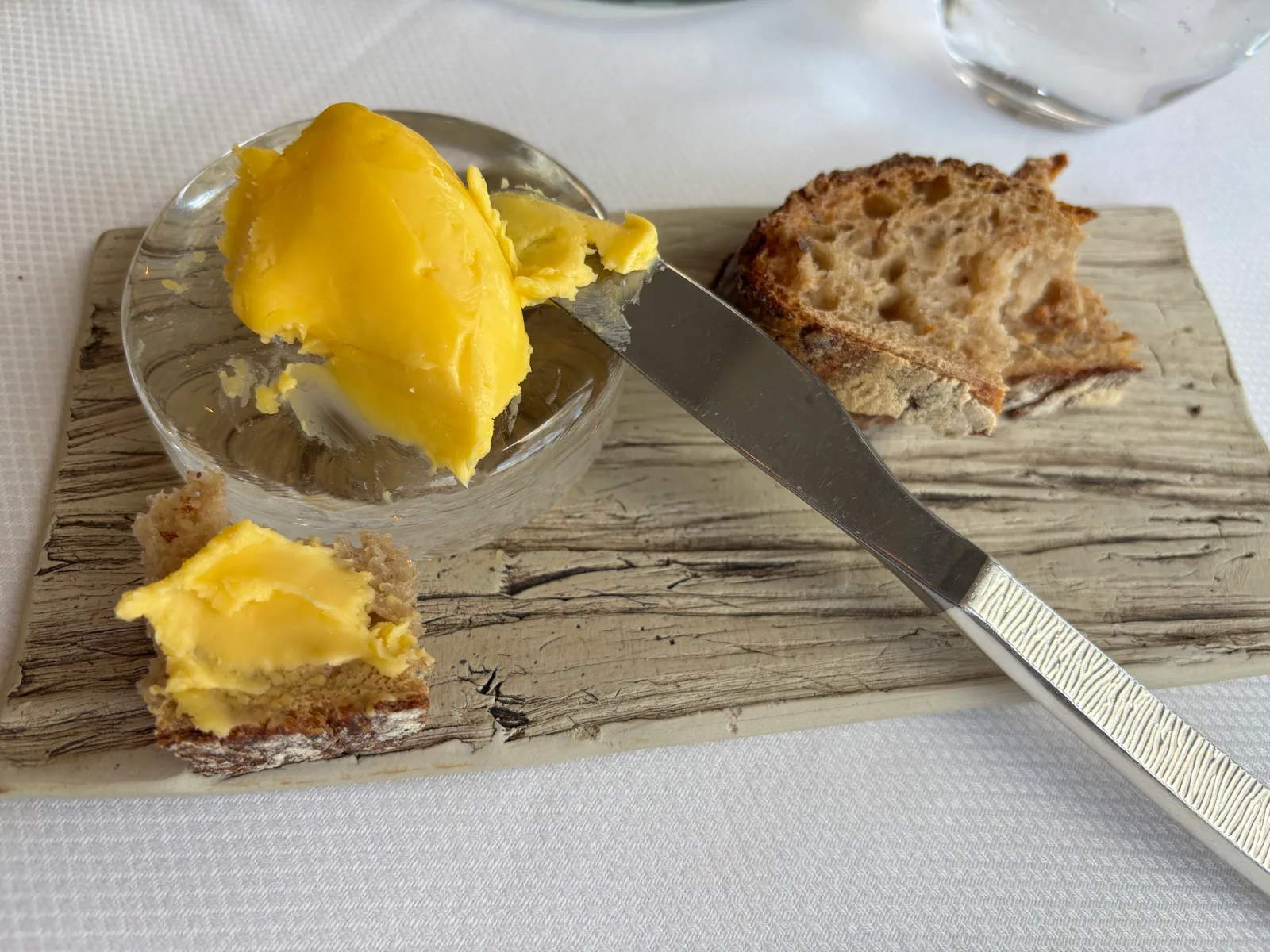 Baratte butter served the Breton way, soft enough to spread straight onto fresh bread
The difference was immediate. Industrial butter is stiff, waxy, almost plastic. Baratte butter is plastic in a completely different sense of the word, in that you can sculpt it, spread it, fold it, work it with your hands. It melts more readily on the tongue. The flavor is deeper, rounder, more alive, because the slow churning preserves the tiny fat globules instead of shearing them apart. And because Bordier churned in small batches, he could play with flavors.
He started with salted butter, of course. Then he added seaweed, because he was on the Atlantic and seaweed was everywhere. Then smoked salt. Then Espelette pepper. Then vanilla. Then raspberry. Then buckwheat. Then chocolate, in what was either a stroke of genius or a sweet tooth that refused to be contained. Today, his shop sells more than twenty variations, and his butter is served at Michelin-starred restaurants across France, Japan, and the United States.
The Flavored Butters: What to Actually Taste
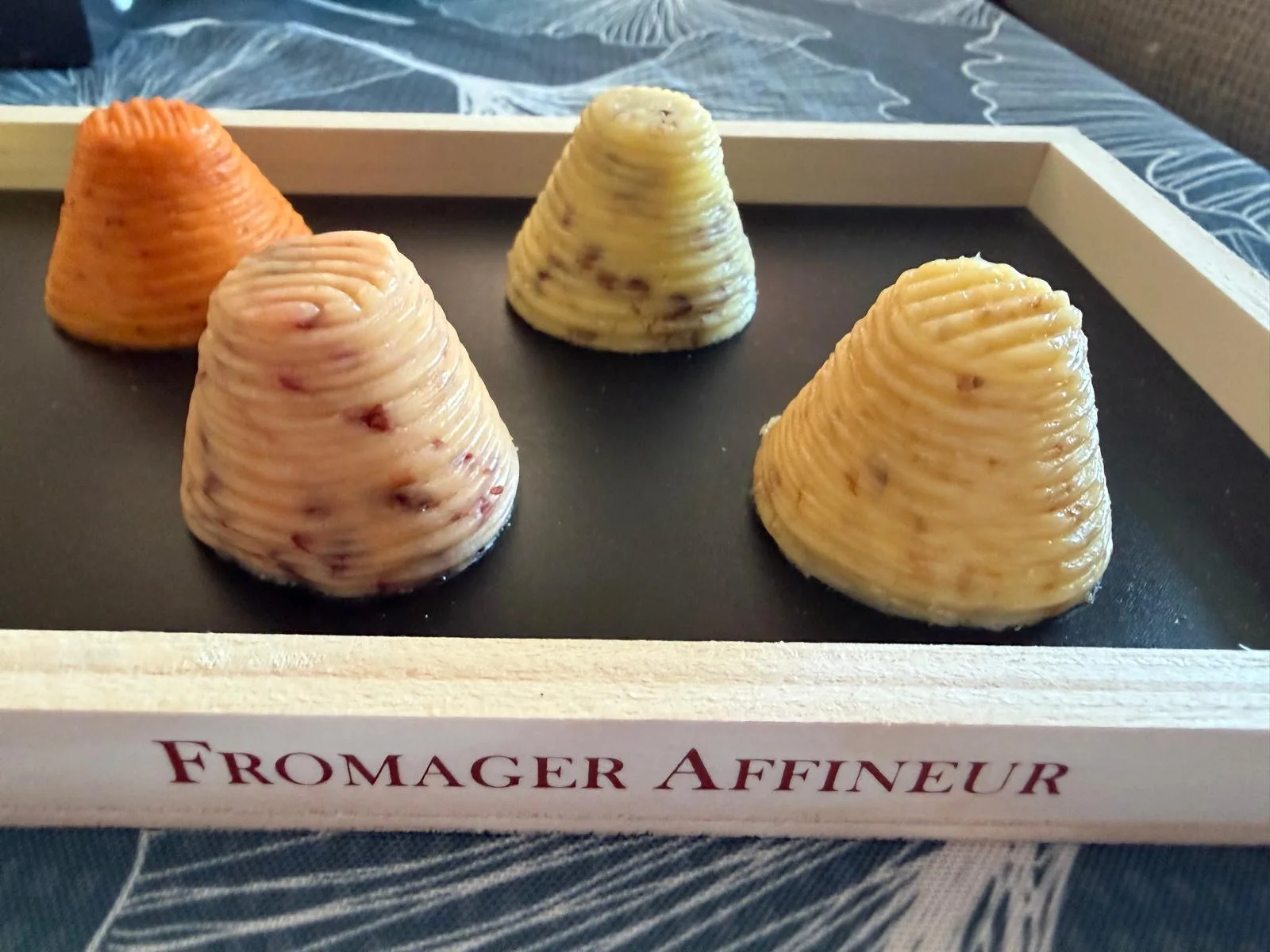 Bordier’s flavored butters, hand-shaped and colored by seaweed, herbs, Espelette pepper and raspberry
When American travelers ask me which Bordier butter to try first, I usually recommend the following five. They are the ones I always include when I organize a private Breton butter tasting, because together they tell the full story of what this butter can do.
Vanilla Butter
Beurre à la Vanille
Madagascar vanilla pods are split open, the seeds scraped out, and folded into the butter by hand. The flavor is floral, slightly sweet, and utterly disarming on a warm brioche. I serve it for breakfast tastings, paired with a slice of far breton still warm from the bakery.
Espelette Pepper Butter
Beurre au Piment d’Espelette
The only Basque ingredient in the lineup, and the one that surprises people the most. Piment d’Espelette is not hot in the aggressive sense. It is warm, fruity, vaguely smoky, and when it is folded into salted butter it makes a spread that lifts an omelette, a seared scallop, or a grilled piece of monkfish into something unforgettable.
Buckwheat Butter
Beurre au Sarrasin
This one is pure Breton genius. Toasted buckwheat kernels, ground and folded into the butter, give it a nutty, earthy quality that echoes the galette itself. When you eat it on a warm galette de sarrasin, you get the flavor of buckwheat twice, in the batter and in the butter. I recommend it with roasted root vegetables, or on toast with a drizzle of Breton honey.
Raspberry Butter
Beurre à la Framboise
Fresh raspberries folded into pale, slightly sweetened butter. It sounds like a novelty. It tastes like a revelation. The acidity of the fruit balances the richness of the butter in a way that works astonishingly well with sharp sheep’s cheese, with foie gras, or with a simple slice of seeded sourdough.
Chocolate Butter
Beurre au Chocolat
Belinda’s personal weakness, I will admit it in writing. Dark chocolate, finely grated and worked into softened butter. Spread on a croissant, it does something you will not forgive yourself for not having discovered sooner. Spread on a slice of warm brioche with a few grains of fleur de sel on top, it becomes the reason you will keep coming back to Brittany.
Cooking with Breton Butter, Beyond the Dinner Table
Tourists often think of salted butter as a table butter, something to spread on bread. It is that, yes, but it is also one of the most versatile ingredients in the Breton kitchen.
On galettes, the salted butter is the first thing on the batter, melting into the buckwheat before the egg goes in. On scallops, a knob of salted butter and a squeeze of lemon is the only sauce you will ever need. On a warm brioche, it is dessert. Reduced with shallots and a splash of apple cider vinegar, it becomes beurre blanc, the great white sauce of the Loire and of Brittany, the base for fish, for poultry, for asparagus in April. Worked cold into flour, it becomes the laminated dough of the kouign-amann, the pastry that ruined all other pastries.
Every Breton grandmother I know keeps three butters in her fridge at all times: a salted one for cooking and table, a sweet one for pastry, and a lightly salted one for spreading. Bordier’s selection has simply added a dozen more options to a lineup that was already rich.
The Butter Tasting Experience with BELLIDAYS
When I organize a private butter tasting for my clients, I do it the way a sommelier would organize a wine flight. We set up a long wooden table, I lay out six to eight butters on a slate, I pair each with a specific bread or pastry, I pour a dry Breton cider or a glass of chilled Muscadet between tastings, and I walk my guests through the history, the technique, and the flavor notes of each one.
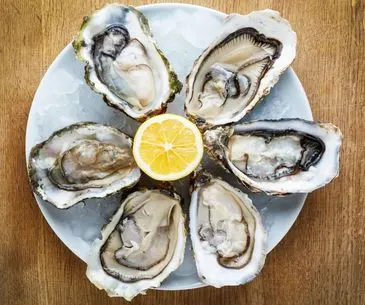
Most tastings happen in Saint-Malo, where we can walk the twenty meters between Bordier’s shop and the tasting space I use, but I have also set up tastings in Cancale paired with oysters, in the Grande Brière paired with a market lunch, and at private châteaux in the Loire for smaller groups who want a more intimate setting.
The tastings are available seasonally and on request, because the flavored butters are not all produced year-round. Raspberry butter, for example, is made in summer when the fruit is at its peak. Vanilla and salted butter are available all year. The best time to plan a full tasting is between May and October, although winter tastings with specific seasonal flavors, truffle, smoked salt, yuzu, are also possible and often magical.
Cooking Classes with Butter Tastings: Crepes, Galettes, and Beyond
For clients who want to go further, I organize private cooking classes in partnership with a small number of Breton chefs and creperie owners whose work I know and trust. The format is simple: two hours of hands-on cooking, making galettes de sarrasin from scratch on a traditional billig, followed by sweet crepes with flavored butters and a tasting flight paired with Breton cider.
My clients leave with a recipe book, a better understanding of why Breton buckwheat tastes the way it does, and, usually, the firm intention to buy a billig before they fly home. (I can help with that too. The small family workshops that make them export to the United States.)
Contact us to organize your private butter tasting or cooking class →
How to Bring Breton Butter Home to the United States
This is the practical question I receive the most, so let me be clear on the rules.
Yes, you can bring Breton butter into the United States as a traveler. Butter is classified as a dairy product, and under current US Customs and Border Protection and USDA APHIS guidelines, dairy products for personal use are generally admissible when they are commercially packaged, clearly labeled, and declared on your CBP Form 6059B at the point of entry. You must declare it. If you declare it honestly and it is personal-use quantities in sealed retail packaging, it is almost always let through.
Here is what I recommend when clients want to carry butter home.
Buy the Vacuum-Sealed Retail Packs
Bordier sells his butter in wax-paper-wrapped blocks for local consumption, but he also makes vacuum-sealed retail packs specifically for travel. Ask for those. They keep the butter stable for up to two weeks without refrigeration and are perfectly acceptable at customs because they carry commercial labels with ingredients and origin.
Use an Insulated Cooler Bag
Put the butter in a soft-sided insulated cooler with two or three frozen gel packs, and place it in your checked luggage. Eight hours across the Atlantic in a cold hold will not hurt it. I would not recommend carrying butter in a hot cabin for a connection through Atlanta in July, but a direct flight to New York or Boston is perfectly safe.
Declare Everything
When you land in the United States, check the box for food on CBP Form 6059B. Tell the officer you have commercial French butter in your checked bag. In almost every case, they will wave you through. In rare cases they will inspect. Lying about it, or hiding it, is what creates problems. Honest dairy declarations are a routine matter.
Freeze When You Get Home
Breton butter freezes beautifully. A block of salted butter wrapped in wax paper and sealed in a zipper bag will keep perfectly for six months at minus 18°C. Most of my clients divide their haul into weekly portions and pull one out each Sunday morning for the week ahead.
If you want to avoid the hassle entirely, Bordier ships to the United States through a handful of authorized importers, and a few of my favorite New York and Los Angeles restaurants carry his butter on their cheese boards. But if you are planning to visit Brittany anyway, buying it at the source, from a man who churns it himself, is the experience you came for.
Frequently Asked Questions
What is baratte butter?
Baratte butter, or beurre de baratte, is butter churned in a slow, traditional wooden churn and then hand-kneaded on a wooden paddle, rather than produced by industrial centrifuge. The method takes hours instead of minutes and preserves the flavor and texture of the cream. Jean-Yves Bordier is the most famous producer of baratte butter in France today.
Why is Breton butter salted when most French butter is not?
Brittany was historically exempt from the French salt tax, the gabelle, which made salt unaffordable elsewhere in the country. Breton women could therefore salt their butter for flavor and preservation, while the rest of France developed the tradition of sweet cream butter. The regional preference has never disappeared.
Where can I buy Bordier butter in Brittany?
The historic shop is at 9 rue de l’Orme in Saint-Malo, inside the walled city. Bordier butter is also served at many Michelin-starred restaurants in Brittany, Normandy, and across France, and I include it in most of my private food tours.
Can I bring French butter back to the United States?
Yes. Butter is an admissible dairy product for personal use when it is commercially packaged, labeled, and declared on your customs form. Vacuum-sealed retail packs in checked luggage with a soft cooler are the recommended method.
What is a Breton butter tasting?
A guided tasting flight of six to eight flavored butters, paired with Breton breads, pastries, cider, and local cheeses. I organize private tastings on request for clients visiting Saint-Malo, Cancale, or the Loire Valley. Available seasonally.
Do you offer cooking classes with butter tastings?
Yes. I organize private cooking classes focused on galettes de sarrasin and Breton crepes, paired with flavored butter tastings and Breton cider. The classes are hands-on, in small groups, and can be built into any multi-day itinerary in Brittany.
What is the best time of year to do a Breton butter tasting?
May to October offers the widest selection of seasonal flavored butters. Raspberry and herb butters are summer specialties. Truffle and smoked butters are winter favorites. Salted, vanilla, Espelette, buckwheat, and chocolate butters are available year-round.
Article written by Belinda C., licensed private chauffeur-guide and founder of BELLIDAYS Travel Tours. Specialising in private gastronomic and cultural tours across Brittany, Normandy and the Loire Valley for international travellers. bellidays.com