A curated guide to the films and books I recommend to my American clients before, or after, a WWII history tour in Normandy and Brittany. Watch them, read them, then stand on the ground where it all happened.
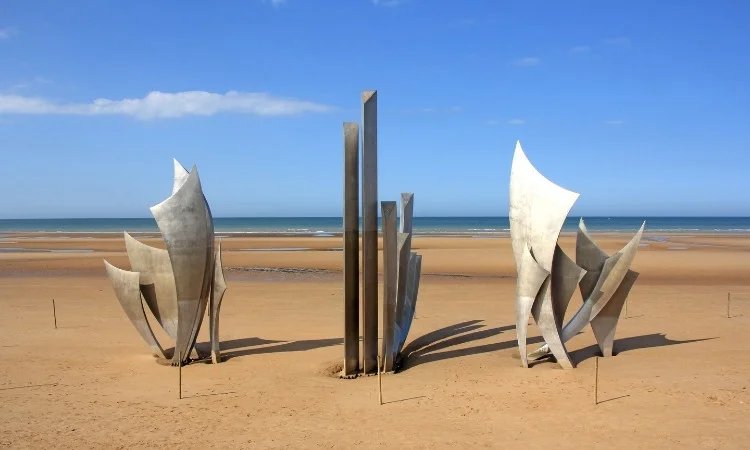
There is a particular kind of silence that settles over you when you stand at the American Cemetery in Colleville-sur-Mer and look out over 9,388 white marble crosses and Stars of David stretching toward the sea. Or when you walk the sand at Omaha Beach and try to imagine what happened there on June 6, 1944.
No amount of reading or watching can fully prepare you for that moment. But the right films and books can open something in you before you arrive, so that when you stand on that ground, you are not just a tourist looking at a place. You are someone who already knows the names, the faces, the impossible choices made by ordinary men and women in extraordinary times.
This is my curated guide to the films and books I recommend to my American clients before a WWII history tour in Normandy and Brittany. Watch them. Read them. Then come and see the places where it all happened.
Should you take them in before you come, or after you leave? Before is always my first advice, because the ground already means something the moment you reach it. But I will be honest with you: watching these films or reading these books after you have stood on Omaha Beach and walked the rows at the cemetery is not the same experience at all. The same scenes land somewhere entirely different once your own feet have touched that sand. So the truest answer is both. Come prepared, then let the stories find you again when you are home. And if you want the full picture of what awaits you on the coast, my complete guide to the D-Day beaches of Normandy is the best place to start.
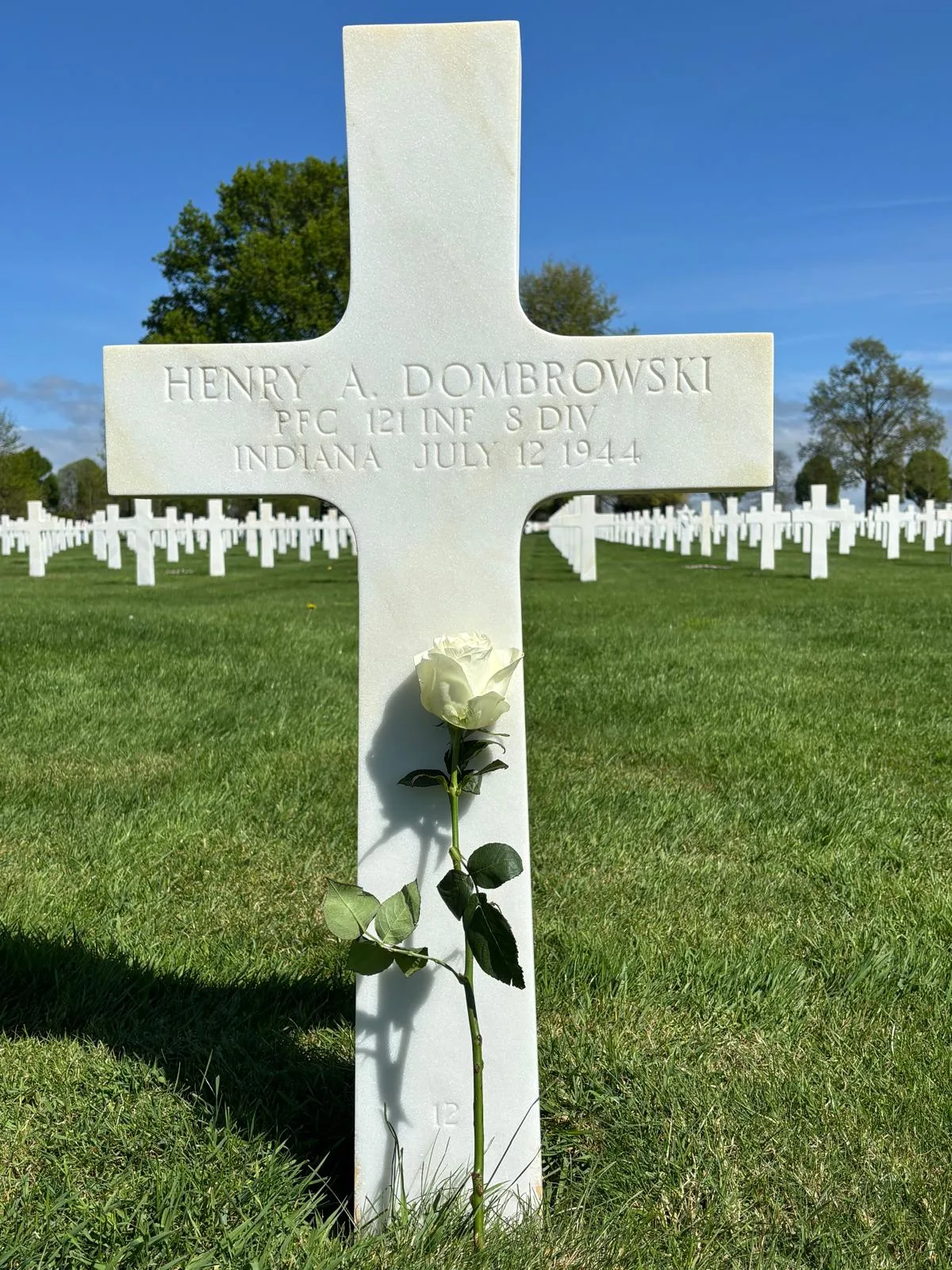
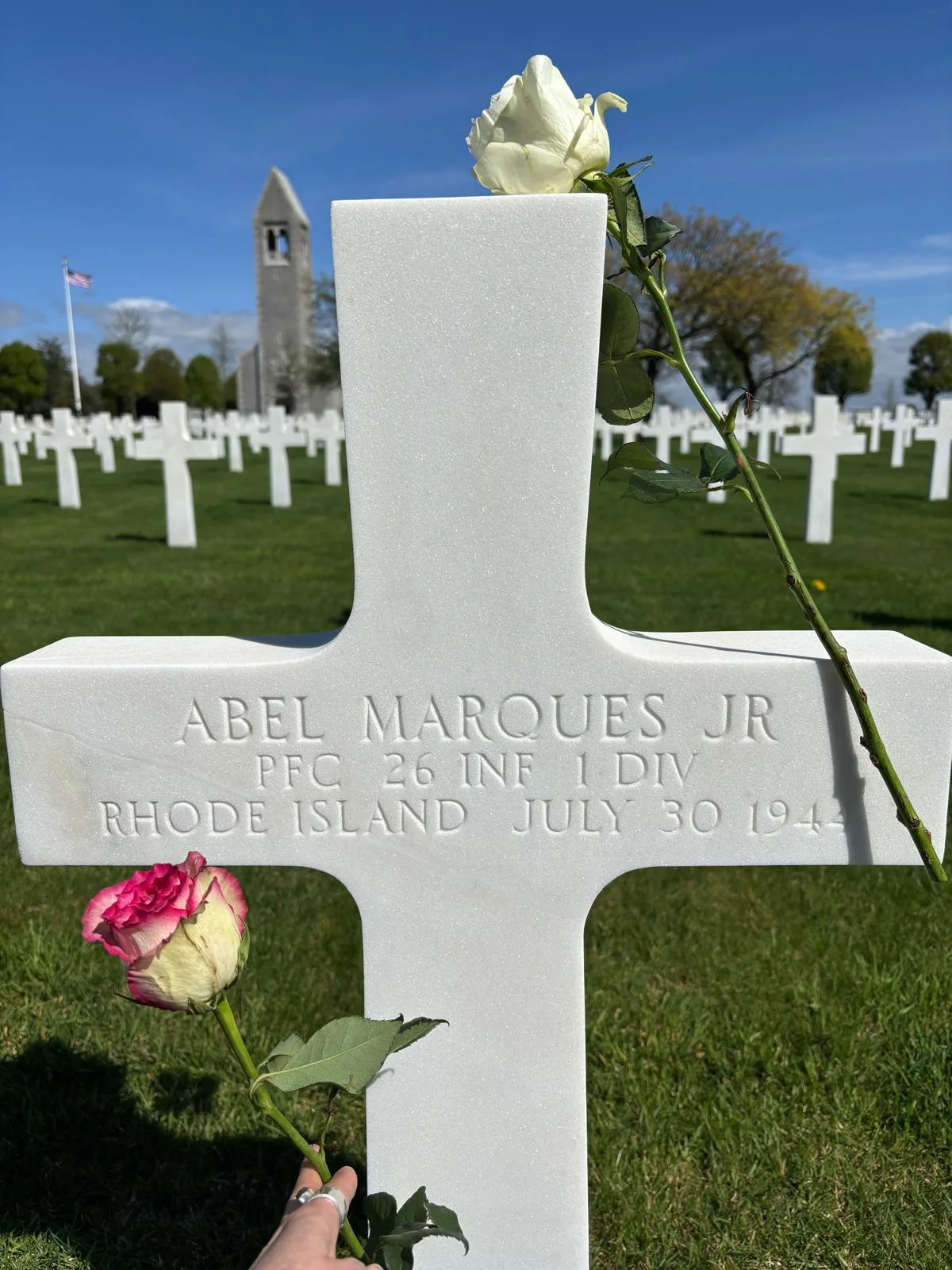
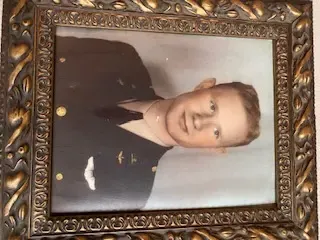
 The American Cemetery at Colleville-sur-Mer, where the names of real people are carved in white marble above Omaha Beach
Films
The Landings and the European Theater
The Longest Day (1962)
The grandfather of all D-Day films. Three hours, an all-star cast, and a scope that attempts to capture the entire operation from both Allied and German perspectives. Dated in some ways, but still essential. Based on Cornelius Ryan’s landmark book of the same name, it recreates the landings, the paratroopers, the chaos and the heroism with a fidelity that later productions have rarely matched. Watch this first.
Saving Private Ryan (1998)
Steven Spielberg’s masterpiece opens with twenty-seven minutes of Omaha Beach combat that remains the most viscerally accurate depiction of the D-Day landings ever filmed. Veterans wept in theaters and left early. It is not easy viewing, but it is necessary. The story that follows, a small squad sent deep into France to bring home the last surviving brother of a family, is also a meditation on sacrifice, duty, and the impossible arithmetic of who is worth saving and at what cost.
Band of Brothers (2001)
Steven Spielberg and Tom Hanks produced this ten-episode HBO miniseries following Easy Company, 506th Regiment of the 101st Airborne, from their training through D-Day, the liberation of the Netherlands, the Battle of the Bulge, and into Germany itself. It is, quite simply, the finest piece of WWII filmmaking ever made for television. Each episode is based on real men, real events, real places. If you have time for nothing else on this list, watch this.
A Bridge Too Far (1977)
Operation Market Garden, September 1944. The Allies’ ambitious plan to end the war by Christmas by dropping 35,000 paratroopers into the Netherlands and seizing a series of bridges culminated in the disaster at Arnhem. An all-star cast including Sean Connery, Michael Caine, Anthony Hopkins and Robert Redford. A sobering reminder that the war was not a series of victories but a grinding, costly campaign with catastrophic failures alongside the triumphs.
Fury (2014)
Brad Pitt leads a Sherman tank crew through the final brutal weeks of the war in Germany. Unflinching and unglamorous, it captures the exhaustion, the moral compromise, and the strange brotherhood that forms between men who have seen too much. Essential for understanding what the final push into Germany actually looked like.
Dunkirk (2017)
Christopher Nolan’s immersive account of Operation Dynamo, the evacuation of 338,000 Allied troops from the beaches of northern France in May and June 1940. Told from three perspectives simultaneously, on land, sea, and air, it is more sensory experience than conventional narrative. A reminder that before D-Day, there was the catastrophic retreat that made D-Day necessary.
 The films prepare you, but the ground itself is where the story becomes real
Occupation, Resistance, and the Human Cost
Female Agents, or Les Femmes de l’ombre (2008)
This French film deserves to be far better known outside France. Based on real events, it follows a group of women recruited by the British Special Operations Executive to carry out a mission in occupied France. The performances are extraordinary and the film does not flinch from the reality of what these women faced. One of the most honest portrayals of female resistance fighters ever made. I consider this essential viewing before any tour of Brittany or Normandy.
The Nightingale (2019)
Based on Kristin Hannah’s bestselling novel, this film follows two sisters in occupied France, one a young Frenchwoman working with the resistance, the other a Belgian nurse. It is the war seen entirely through the eyes of women, and it is devastating in the best possible sense. A necessary corrective to the male-dominated narratives that dominate most WWII storytelling.
Suite Française (2015)
Based on Irène Némirovsky’s extraordinary unfinished novel, written during the Occupation itself before Némirovsky was deported and murdered at Auschwitz in 1942. The film captures the texture of daily life in occupied France with rare intimacy. Michelle Williams and Matthias Schoenaerts are both superb.
Is Paris Burning?, or Paris brûle-t-il? (1966)
In August 1944, Adolf Hitler ordered the destruction of Paris. Every bridge, every monument, every cultural institution was to be razed before the Allied advance. His military governor, General Dietrich von Choltitz, disobeyed those orders and surrendered the city intact. This film, based on the landmark book by Larry Collins and Dominique Lapierre, tells the story of those final days. “Is Paris burning?” Hitler reportedly screamed at his generals as the city fell. It was not. Thanks to one man who chose conscience over obedience.
Charlotte (2021)
An animated film about Charlotte Salomon, a young Jewish artist who created 769 autobiographical paintings in the south of France between 1941 and 1942, knowing she was likely to die. She was deported to Auschwitz at age 26. The film is visually stunning and emotionally annihilating.
Stories of Humanity Within Inhumanity
Life is Beautiful, or La vita è bella (1997)
Roberto Benigni’s masterpiece. An Italian Jewish man uses humor and imagination to shield his young son from the reality of a Nazi concentration camp. It won three Academy Awards including Best Foreign Language Film and Best Actor. It will break your heart and then, somehow, put it back together. One of the most important films ever made about the Holocaust.
The Boy in the Striped Pyjamas (2008)
The friendship between the son of a Nazi commandant and a Jewish boy on the other side of the fence at a concentration camp. Told from the perspective of a child who does not fully understand what he is seeing, which makes it all the more devastating. A film that stays with you.
The Imitation Game (2014)
Benedict Cumberbatch as Alan Turing, the brilliant mathematician who led the team at Bletchley Park that cracked the Enigma code, effectively shortening the war by an estimated two years and saving millions of lives. The film also confronts Turing’s tragic postwar persecution for his homosexuality. Essential for understanding that the war was won not only on beaches and battlefields but in rooms full of people solving impossible problems.
Lee (2023)
Kate Winslet as Lee Miller, the American model who became one of the most important photojournalists of the Second World War. She photographed the liberation of Paris, the concentration camps at Dachau and Buchenwald, and documented the war’s end with unflinching courage. A portrait of a woman who refused to look away.
Art, Memory, and What Was Stolen
The Monuments Men (2014)
George Clooney directs and stars in this account of the real-life Monuments, Fine Arts, and Archives program, a unit of Allied soldiers tasked with identifying and protecting cultural treasures from Nazi looting and destruction. The Nazis stole an estimated five million artworks from across occupied Europe. Much of it was hidden in salt mines, cellars, and private collections. Some of it has never been returned.
This film pairs naturally with “Is Paris Burning?”, because together they illustrate a truth that is easy to miss in stories of combat: Hitler was at war not just with people but with memory itself. He wanted to erase cultures, histories, and identities along with the human beings who carried them. The fact that Paris still stands, that the Louvre still holds its collections, that so much was saved, is itself a kind of victory.
The Channel Islands, an Occupation Closer to Home
The Guernsey Literary and Potato Peel Pie Society (2018)
The only part of the British Isles to be occupied by Nazi Germany was the Channel Islands: Jersey, Guernsey, Alderney, and Sark. This charming and moving film, based on the beloved novel by Mary Ann Shaffer and Annie Barrows, tells the story of the Guernsey occupation through letters exchanged between a London author and the islanders she comes to love. A wonderful reminder that occupation touched lives much closer to the British experience than most people realize.
Books
History and Memoir
The Longest Day, by Cornelius Ryan
The book that defined WWII narrative nonfiction. Ryan interviewed hundreds of survivors from both sides and reconstructed June 6, 1944 in extraordinary detail. Still essential, more than sixty years after its publication.
Is Paris Burning?, by Larry Collins and Dominique Lapierre
The story of Paris in August 1944 told with the pace of a thriller and the depth of serious history. Collins and Lapierre interviewed over 1,000 participants, including von Choltitz himself. Impossible to put down.
Night, by Elie Wiesel
The most important Holocaust memoir ever written. Brief, devastating, essential. Wiesel was fifteen when he was deported to Auschwitz. What he saw there is told in prose stripped of everything except the truth. Every visitor to a WWII site should have read this.
The Diary of a Young Girl, by Anne Frank
Still the most widely read account of what it meant to hide from the Nazi regime. Anne Frank was thirteen when she began writing and fifteen when she was betrayed and deported. She died in Bergen-Belsen concentration camp in February or March 1945, a few weeks before liberation. The diary survived. She did not.
Novels and Personal Accounts
Suite Française, by Irène Némirovsky
An extraordinary document: a novel written during the Occupation by a woman who would be murdered by the regime she was describing. Némirovsky completed two of the five planned sections before her deportation. Her daughters carried the manuscript for sixty years, believing it was too painful to read, before finally publishing it in 2004. It won the Prix Renaudot and became an international sensation.
Resistance, by Agnès Humbert
The journal of a French art historian who became one of the first Resistance fighters in Paris, was arrested by the Gestapo, and survived forced labor in Germany. Published in France in 1946, only recently rediscovered in English translation. Extraordinarily vivid and modern in voice.
Sarah’s Key, by Tatiana de Rosnay
A novel that moves between a contemporary American journalist in Paris and the story of a ten-year-old Jewish girl caught in the Vel d’Hiv Roundup of July 1942, when the French police, not the Germans, arrested 13,000 Parisian Jews and handed them to the Nazis. A painful and necessary account of French complicity during the Occupation. Immensely popular with American readers.
The Alice Network, by Kate Quinn
Historical fiction following a real WWI spy network and a young American woman searching for her missing cousin in postwar France. Meticulously researched, propulsive, and deeply satisfying. An excellent gateway into serious WWII historical fiction.
All the Light We Cannot See, by Anthony Doerr
Winner of the Pulitzer Prize for Fiction in 2015, this novel follows a blind French girl and a young German soldier whose lives converge in Saint-Malo in 1944, precisely as the city is being bombarded by the Allies. For anyone visiting Brittany, this is essential reading. Doerr spent years researching Saint-Malo, and the city itself becomes a character in the novel. It is now a Netflix miniseries too, though the book is far superior. If it is the reason you are coming to Brittany, read the real story behind the novel before you arrive.
The Nightingale, by Kristin Hannah
Two sisters in occupied France, two paths of resistance, one devastating story. Kristin Hannah’s novel has sold millions of copies worldwide and introduced an entire generation of American readers to the reality of the French Occupation and the women who fought within it. Compulsive reading.
The Guernsey Literary and Potato Peel Pie Society, by Mary Ann Shaffer and Annie Barrows
The novel behind the film. Told entirely through letters, it is witty, warm, and ultimately heartbreaking. The account of life under German occupation in Guernsey is both specific and universal.
The Monuments Men, by Robert M. Edsel
The full, deeply researched account of the art recovery mission that inspired the film. Edsel spent years tracking down surviving Monuments Men and following their routes across Europe. More comprehensive and more moving than the film.
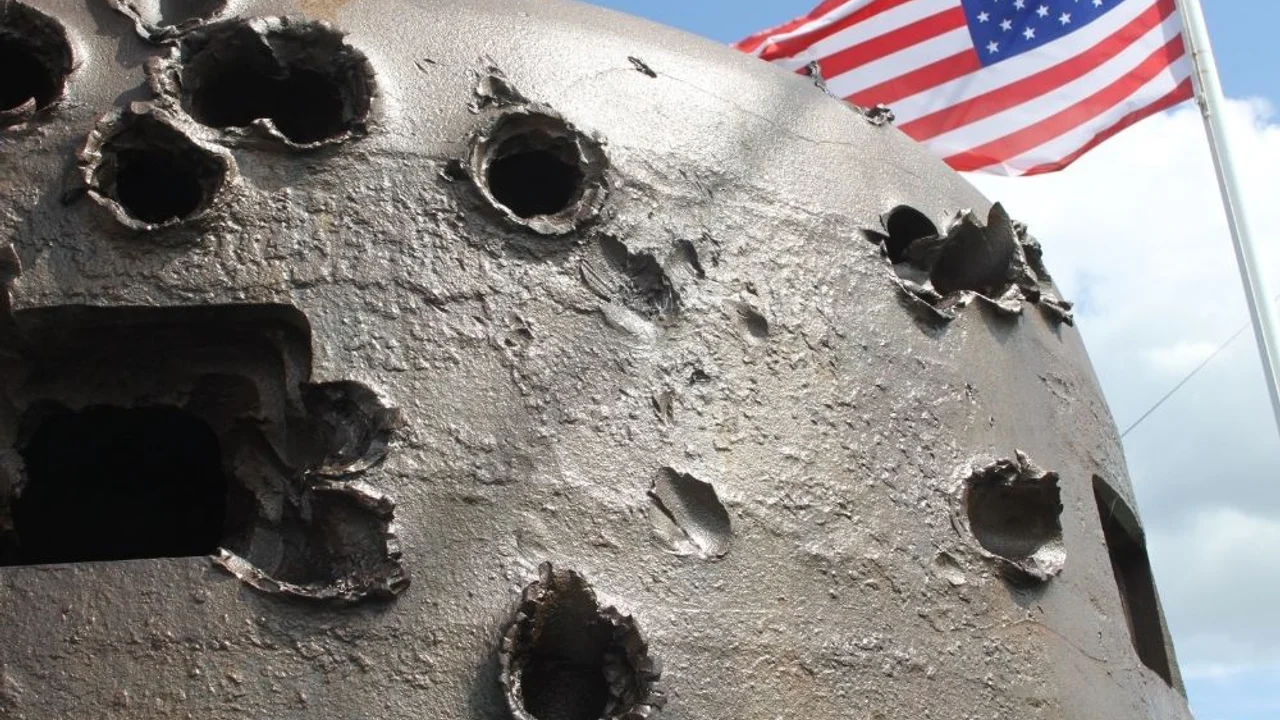 The bomb craters that still pit the cliffs at Pointe du Hoc, more than eighty years later
A Note from Bellidays
History does not live in textbooks. It lives in the land, in the stones, in the cemeteries where the names of real people are carved in white marble. When you stand at Pointe du Hoc and look at the bomb craters that still pit the cliffs, or when you walk through the silence of Sainte-Mère-Église where paratroopers landed in the church square, you are not visiting a monument to the past. You are standing in the place where the future was decided.
You feel it most sharply at a grave like the one shared by the Pieper twins. Ludwig and Julius were nineteen-year-old brothers from Esmond, South Dakota, who enlisted together and served together as radiomen, and who died together on June 19, 1944, when their ship struck a mine off the coast. Ludwig was found and laid to rest at Colleville soon after. Julius was lost. His remains were recovered only in 1961 and stayed unidentified for decades, until DNA finally gave him back his name in 2017. On June 19, 2018, seventy-four years to the day after they died, he was buried beside his brother. Two boys who had done everything side by side, together again above Omaha Beach. That is a story no film could invent, and it is the kind of history that waits for you here.
I invite my clients to arrive prepared. Not just with a knowledge of dates and operations, but with an understanding of the human beings who lived these events: the soldiers who crossed the Channel knowing many would not return, the women who ran resistance networks under constant threat of arrest and execution, the civilians who hid Jewish neighbors, the artists who painted knowing they were running out of time, the men who chose to disobey orders and save a city.
That is the history I bring to life on my tours. If your family has a connection to this coast, a name, a regiment, a story passed down, tell me about it and I will build the day around it.
Contact me to plan your private WWII tour of Normandy and Brittany →
Belinda C.