Inside the rare Breton butter made from the milk of the Froment du Léon, a cattle breed that almost vanished. Why food lovers travel to Brittany to taste Beurre de Madame.
Most people who come to Brittany in search of exceptional butter know one name: Bordier. Jean-Yves Bordier’s baratte butter from Saint-Malo is, without question, one of the great dairy products of France, and visitors queue down rue de l’Orme to bring blocks of it home. But after eighteen years guiding travellers through this region, I have learned that the most interesting things are rarely the most famous ones. The butter I want to tell you about today is made by a man named Thierry Lemarchand, sold under the name Beurre de Madame, and produced from the milk of a breed so rare it nearly vanished from the face of Brittany entirely.
It is, in my honest opinion, one of the finest butters being made in France right now. Almost nobody outside Brittany knows it exists.
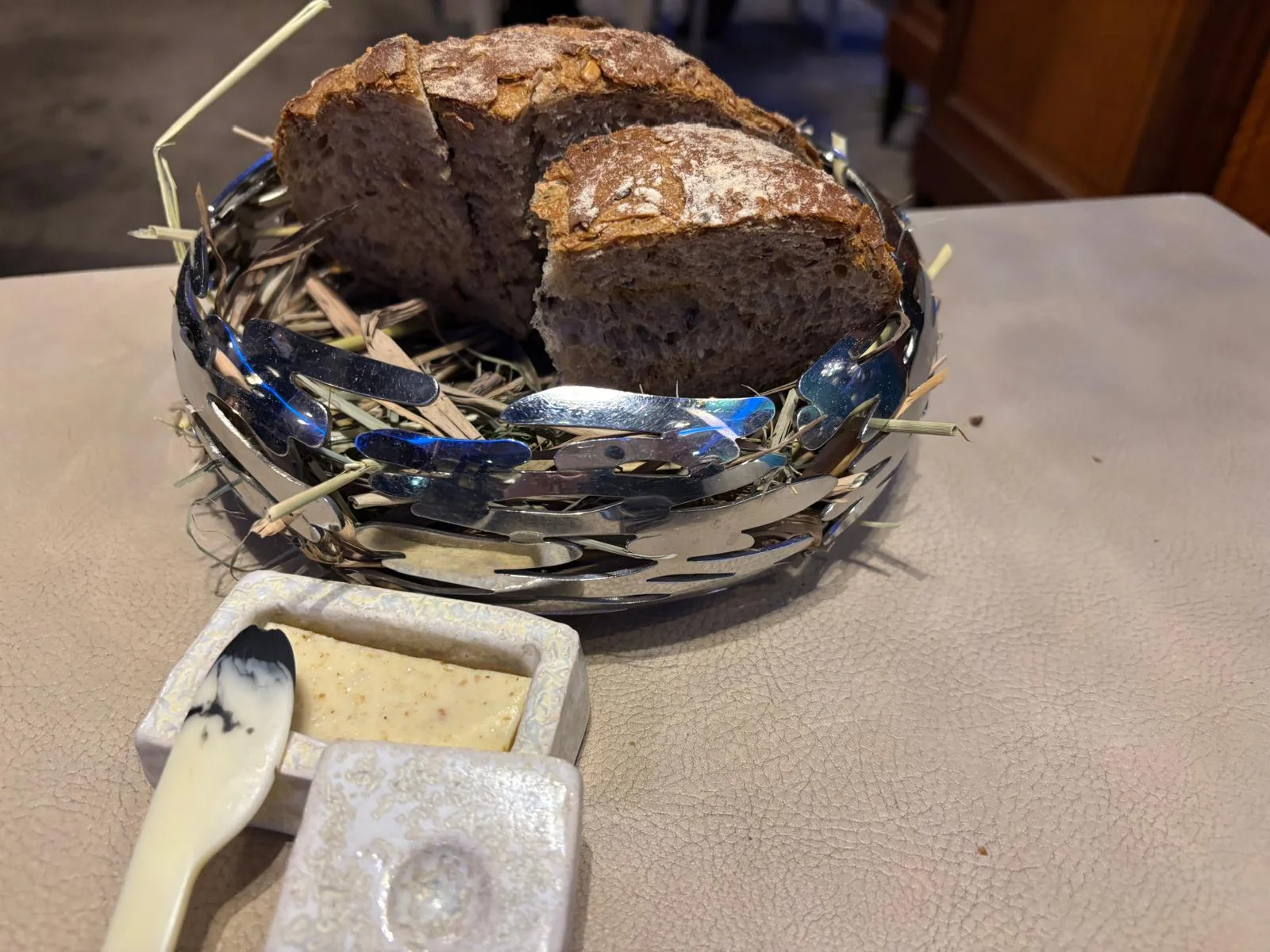 Beurre de Madame served in its ceramic dish at a Breton restaurant, alongside a basket of sourdough on hay
The Cow That Almost Disappeared
The Froment du Léon is a Breton cattle breed so old it is mentioned in historical records going back centuries. Its name comes from the Pays du Léon, the northwestern tip of Finistère, the ancient heartland of Breton agriculture. The coat is the colour of ripe wheat, which is what froment means in French, and the animal is compact, hardy, and built for the salt-laced coastal pastures of northern Brittany rather than for the efficiency demands of modern industrial dairying.
By 1980, there were fewer than thirty of them left. Thirty animals, on the entire planet. The breed had been effectively wiped out in a single generation by the productivism of the postwar decades, when French agriculture bet everything on yield and volume. A Prim Holstein produces around 9,000 litres of milk per year. A Froment du Léon, in a good year, gives 4,000. The arithmetic was brutal and the choice was made quickly.
What the arithmetic missed was quality. It takes only 17 litres of Froment milk to produce one kilogram of butter. A standard dairy cow requires 22. The reason is the milk itself: dense, rich in large fat globules, naturally high in omega-3 and omega-6 fatty acids, and coloured a pale yellow that turns almost golden at the cream stage, because the Froment’s body fixes the beta-carotene from the grass directly into the fat rather than converting it. The butter that comes from this milk is the colour of a buttercup. It tastes the way butter is supposed to taste, before the world decided that pale and bland was acceptable.
A slow conservation programme eventually brought the breed back from the edge. Today there are around 280 Froment du Léon spread across 75 breeders in Brittany, of which only six are professional operations and only two are producing milk commercially. Thierry Lemarchand’s farm is one of them.
Beurre de Madame: What’s in a Name
The Froment du Léon has always had a nickname. Local farmers called her la vache à madame, the lady’s cow, or sometimes la vache des châteaux, the castle cow. The breed was associated with smaller, more refined operations, with the kind of farm where quality mattered more than volume, where the milk was destined for cream and butter rather than industrial processing. Thierry Lemarchand chose to honour that history directly. His butter is called Beurre de Madame.
It is a name that carries everything: the femininity of the animal, the tradition of the breed, the idea that this is butter made with care for someone who will notice the difference. The packaging, a round ceramic-style pot with a graphic black-and-white lace border and the yellow La Froment du Léon cow logo, is quietly beautiful. It looks like something that should be on a table in a very good restaurant. It is.
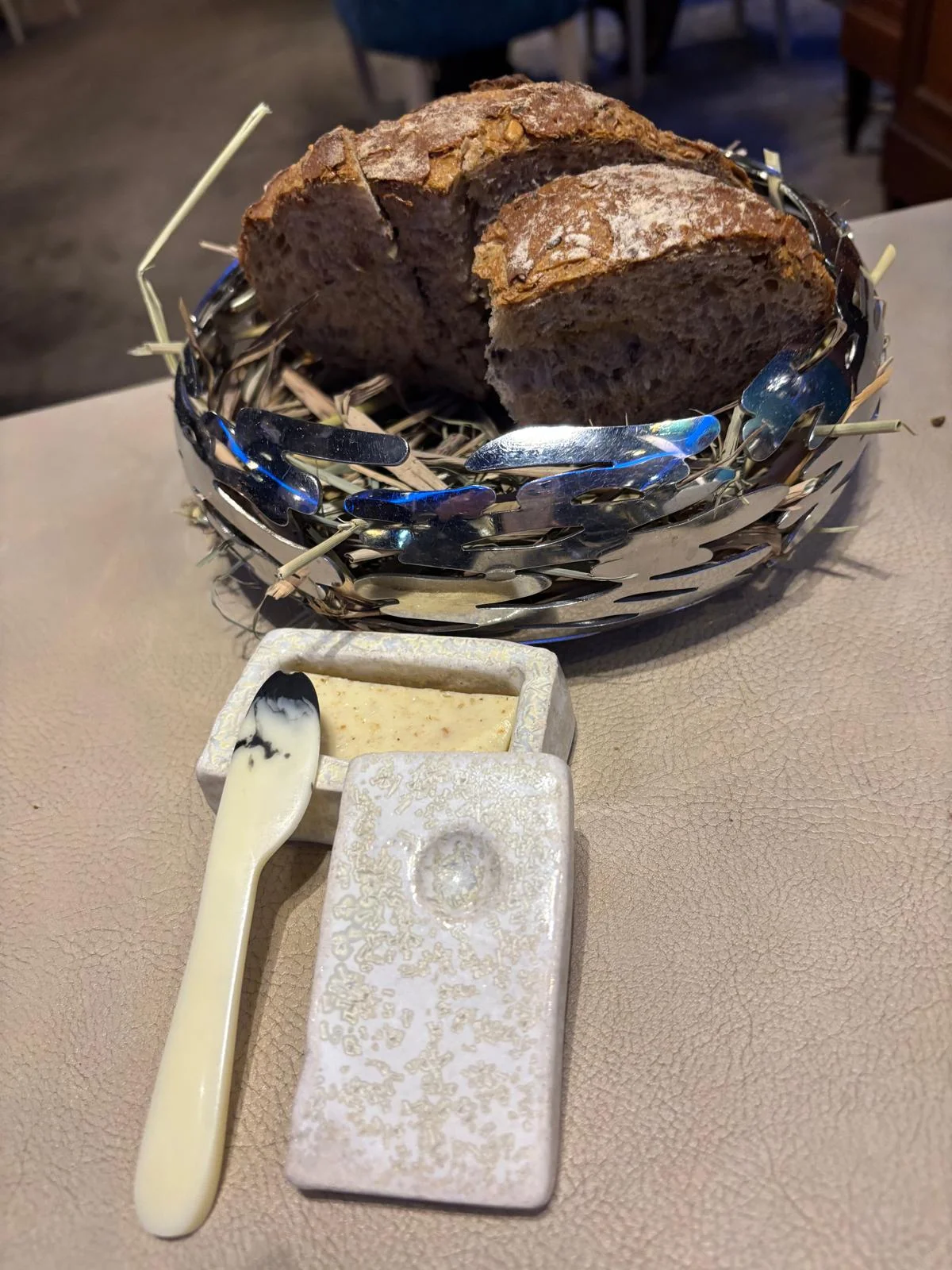 The Beurre de Madame pot with its marbled ceramic spoon, the way Breton restaurants serve it
What Beurre de Madame Tastes Like
The first thing you notice is the colour. Beurre de Madame is the deepest yellow of any butter I have tasted outside of a high-mountain alpage. This is not dye. This is beta-carotene from grass, fixed by an animal whose biology was shaped over centuries for exactly this purpose.
The second thing you notice is the texture. It is dense without being hard, and it spreads with a smoothness that industrial butter simply cannot replicate. This is what good fat globules do: they give butter a pliability, a willingness to yield, that makes the experience of spreading it feel entirely different from the waxy resistance of a supermarket block.
The flavour is deep and grassy with a long finish. There is a faint herbaceous quality that comes directly from the pasture, from the particular grasses and coastal plants of the Léon countryside. It is salted, in the Breton tradition, and the salt is present but never aggressive. What lingers on the palate is cream, not salt. You find yourself going back for a second taste not because the first was insufficient but because you want to understand it better.
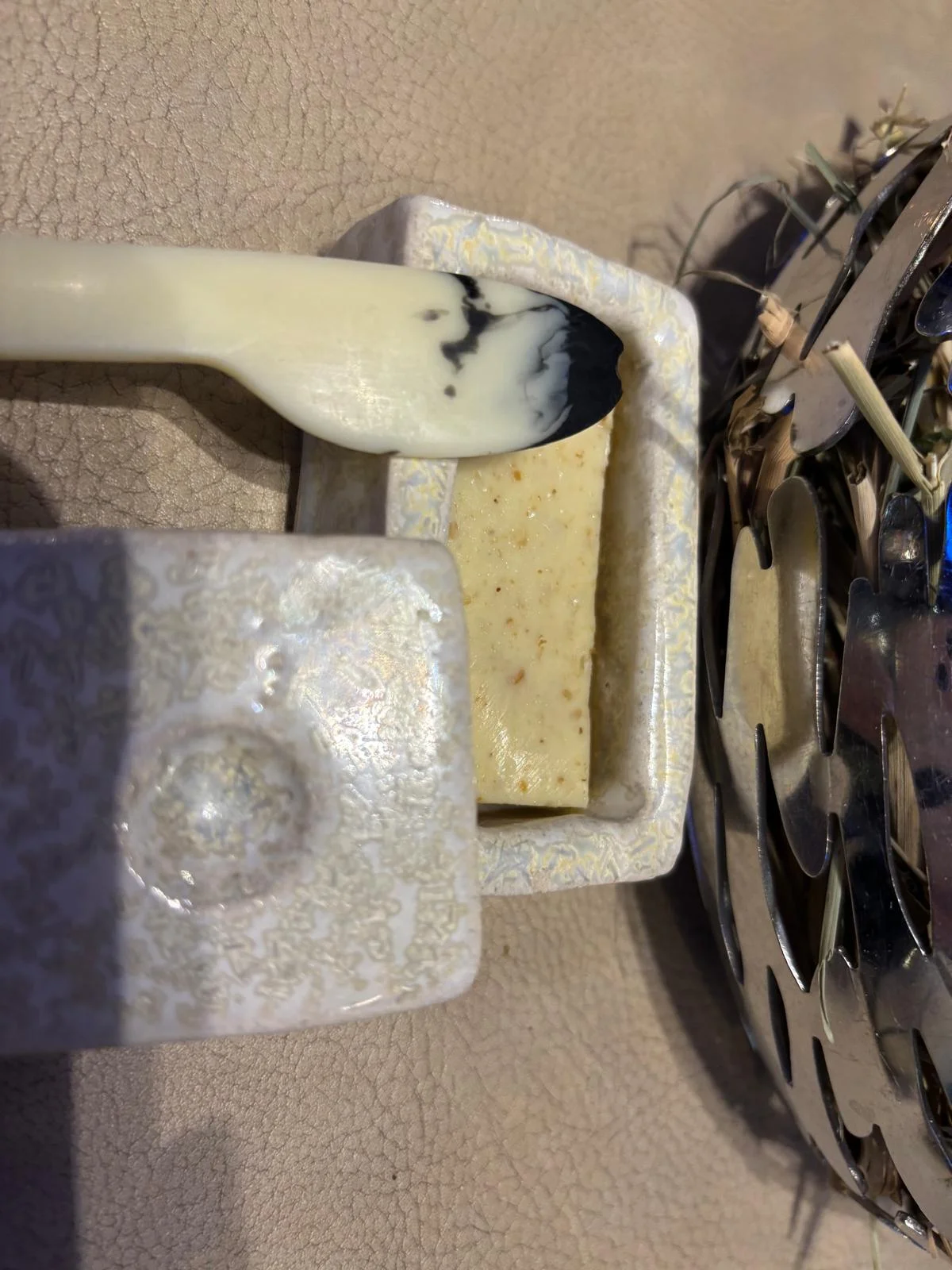 The colour of buttercups, fixed by an animal whose biology was shaped for exactly this purpose
On a warm slice of pain de campagne it is revelatory. On a buckwheat galette it makes the galette taste more Breton than the buckwheat does. On a scallop, simply melted in a pan with nothing else, it is a complete sauce.
Two Great Butters, Two Different Stories
I am sometimes asked, by clients who have read my piece on Bordier, whether they should choose one or the other. The question misses the point. Bordier and Beurre de Madame are doing different things.
Bordier is an artisan in the creamery tradition: he works with cream sourced from Breton farms, churns it slowly in a wooden baratte, and transforms it through technique and flavour into something extraordinary. His genius is in the making. His flavoured butters, the seaweed, the Espelette pepper, the buckwheat, are the product of a craftsman’s imagination applied to exceptional raw material.
Beurre de Madame begins one step earlier. Thierry Lemarchand’s genius is in the animal and the land. He has chosen to raise a nearly extinct breed on pasture, to produce a milk so nutritionally dense and flavourfully distinct that the butter almost makes itself. His work is farming as much as it is dairying, and the result is a butter whose character comes not from what is added to it but from what the cow ate, where she grazed, and what her breed has always been.
One is an argument for craft. The other is an argument for terroir. Both are worth making.
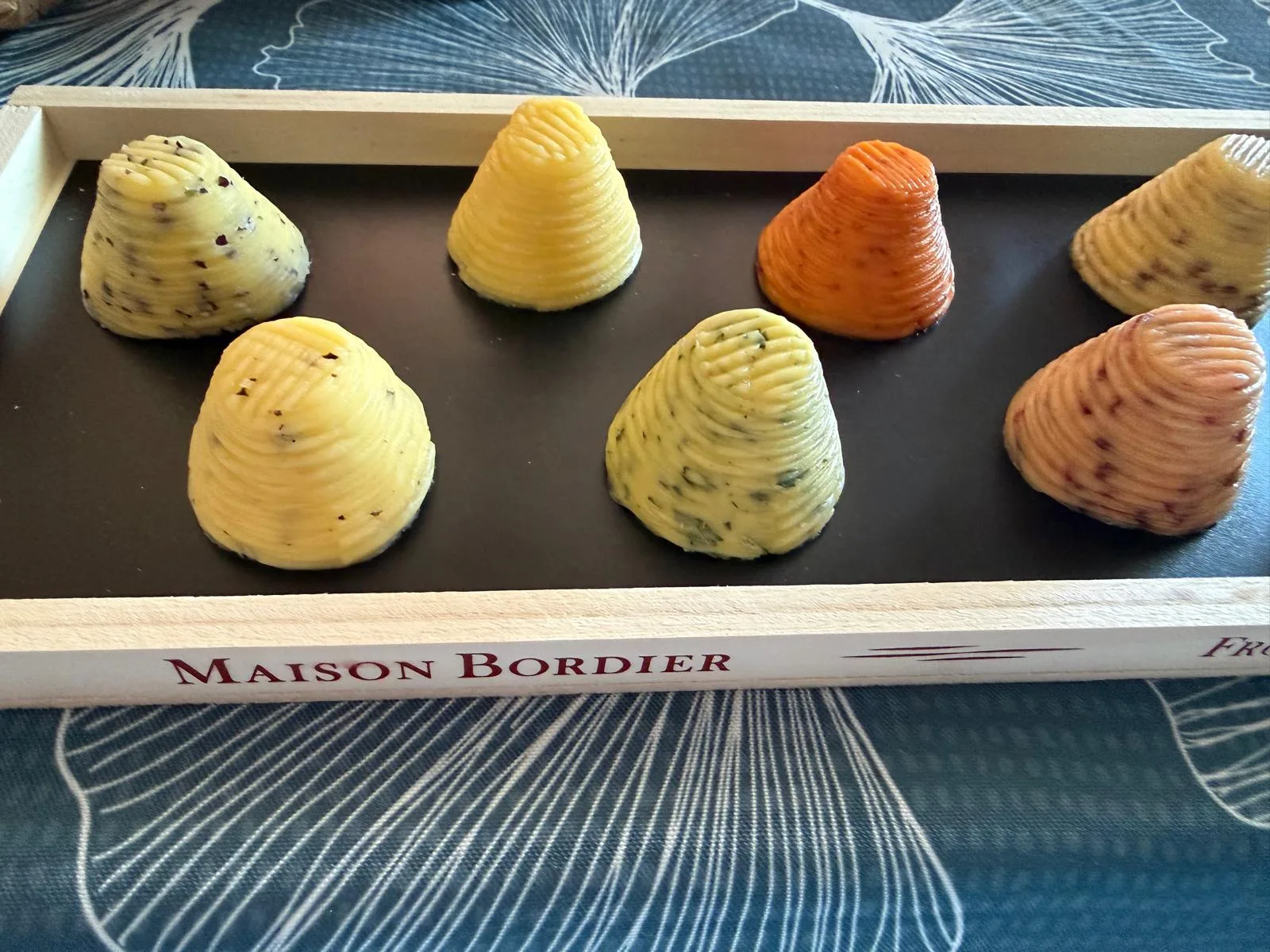
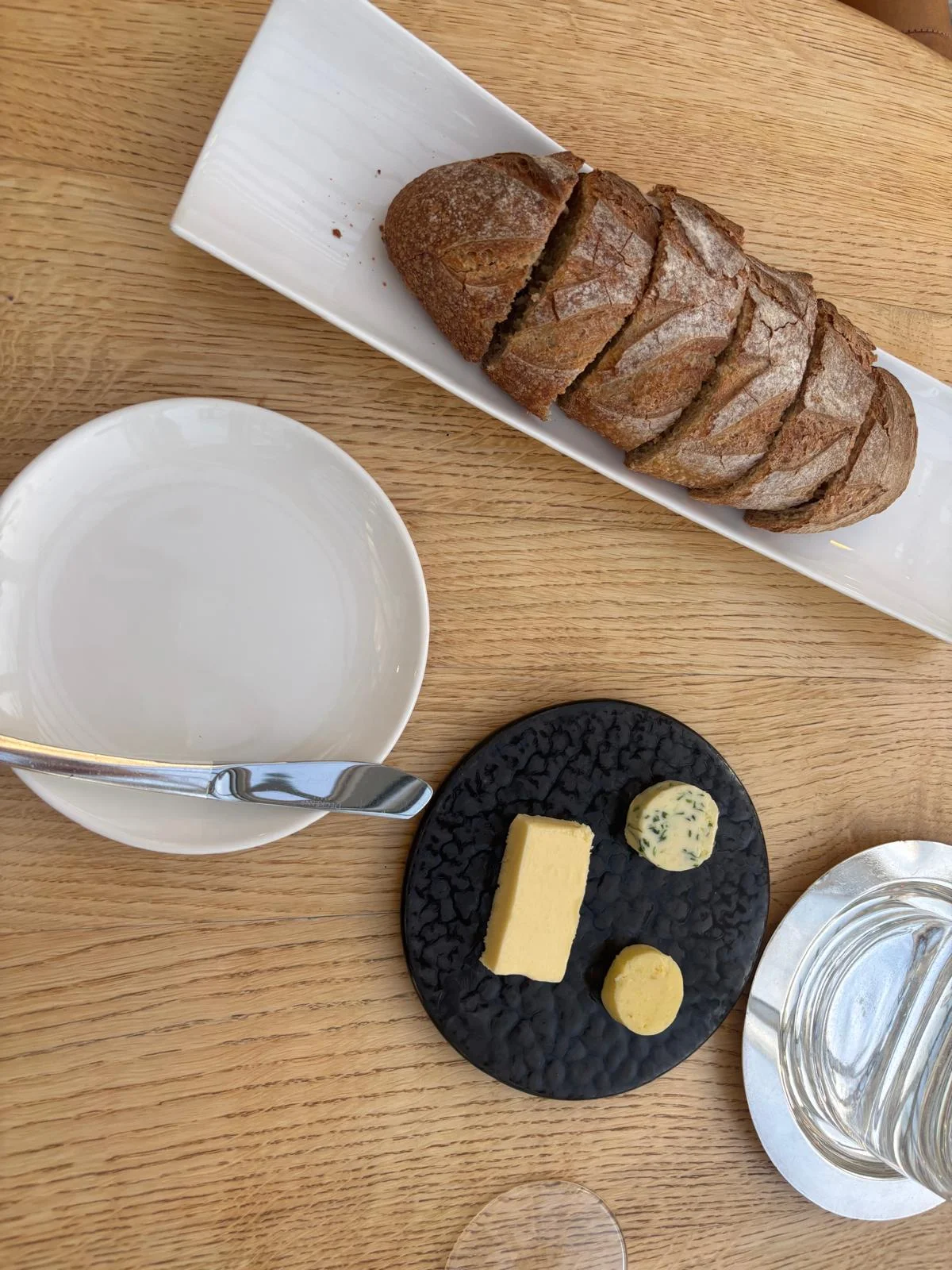 A side-by-side flight of three Breton butters and a sliced sourdough, the way a private tasting opens
Where to Taste Beurre de Madame in Brittany
Beurre de Madame is not widely distributed. It is not on the shelves of every fromagerie in Brittany, and it is emphatically not available in the United States. This is part of what makes it worth seeking out. The production is small by definition: when your herd is rare, your milk is finite, and your butter is rationed accordingly.
The most reliable places to find it are at gastronomic restaurants in northern Brittany and at a handful of selected fine-grocery shops in Saint-Malo, Dinan, and the Pays du Léon. A few Michelin-listed addresses use it for their bread service, and one or two creperies in the Côtes d’Armor have begun pairing it with their galettes de sarrasin. The list changes from one season to the next, which is exactly why a guide who knows the region is useful.
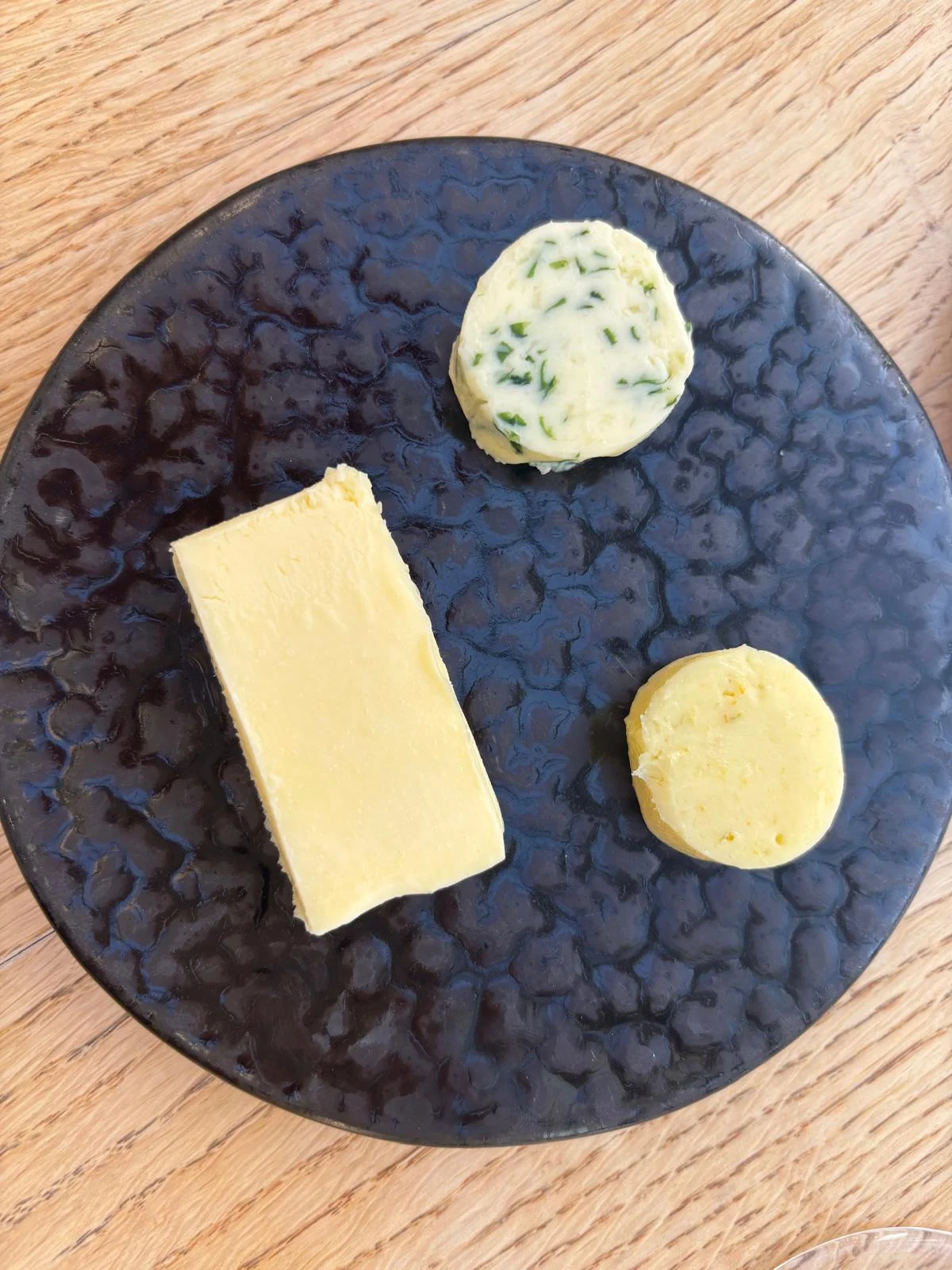 Three Breton butters side by side, the classic salted block, a herb butter, and a small round of Beurre de Madame
For travellers who want to taste it on their own, my best advice is to ask. Tell the maître d’hôtel that you are looking for Beurre de Madame. If they have it, they will be delighted to bring it out, because chefs who buy this butter are proud of it. If they do not, they will know where to send you.
A Private Butter Tasting with BELLIDAYS
I include Beurre de Madame in my private gastronomic tours when the itinerary allows for it, and I have introduced it to clients who came to Brittany specifically for Bordier and left talking about the other butter they had never expected to find. Some of the most memorable moments have been informal tastings at private manor houses and historic Breton homes, where Beurre de Madame arrives alongside local cheeses and a bottle of Breton cider, and the conversation turns, as it always does, to the question of why butter this good does not have a waiting list.
A typical tasting flight includes six to eight butters, paired with a slate of Breton breads, a flight of dry Breton cider or chilled Muscadet, and a guided walk through the history, the breeds, and the flavour notes. We can run the tasting in Saint-Malo, in Cancale paired with oysters, in the Grande Brière paired with a market lunch, or at a private château in the Loire for smaller groups who want a more intimate setting.
For travellers who want to go further, I also organise private Breton cooking classes that combine a galette and crepe workshop with a butter tasting flight, hands-on and in small groups. Clients leave with a recipe book, a better understanding of why Breton buckwheat tastes the way it does, and usually the firm intention to buy a billig before they fly home.
That is the experience I look for when I build a food itinerary: not the thing you already knew about, but the thing you will spend the next ten years recommending to other people.
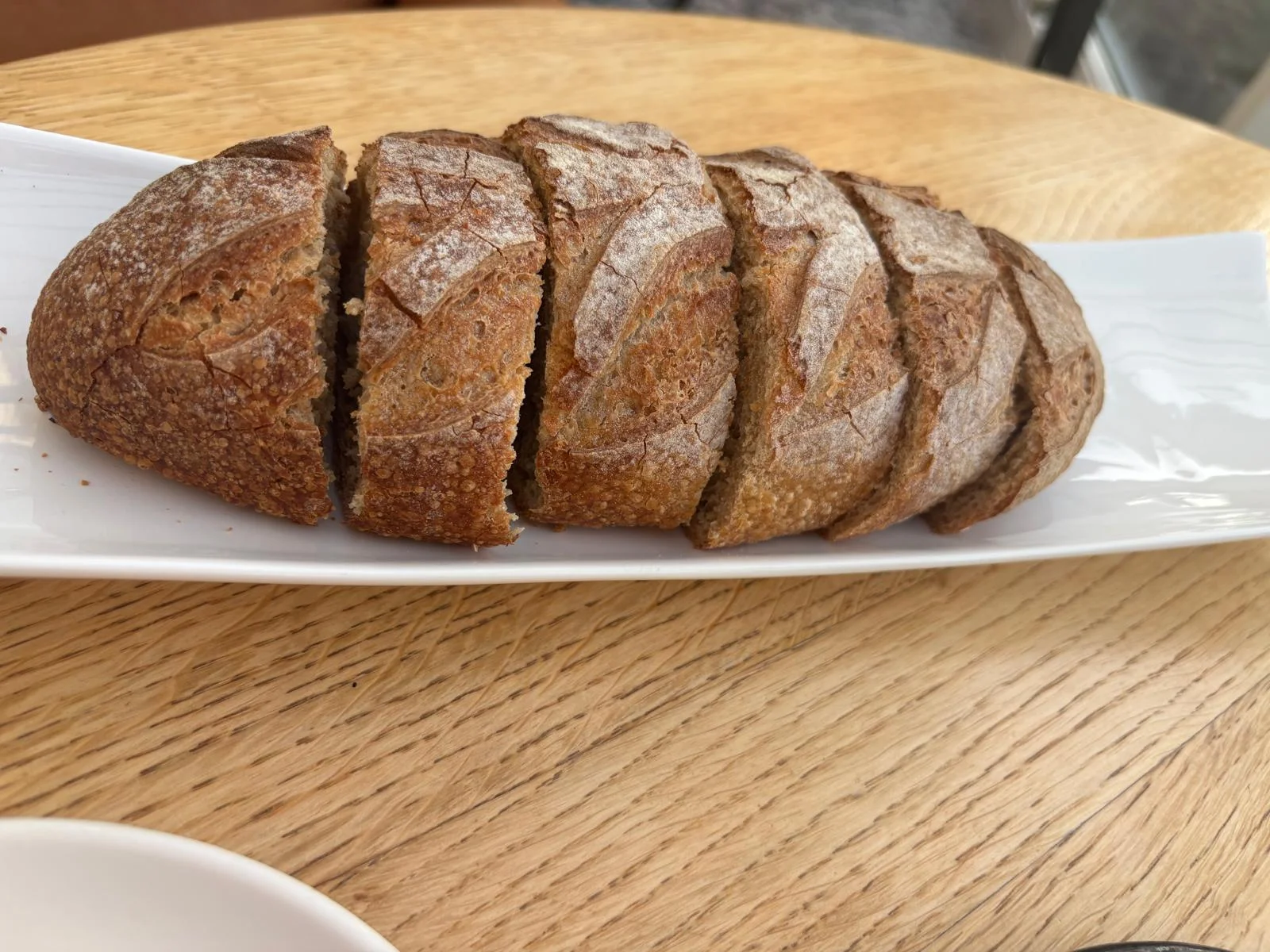 A sliced Breton sourdough, the natural partner to Beurre de Madame on every Breton table
Planning Your Brittany Food Trip
A butter tasting is a single experience inside a much larger food landscape. Brittany rewards travellers who give it time. A good itinerary will combine an oyster tasting at Cancale, a market morning in Dinan or Saint-Malo, a private galette workshop, a long lunch at a chef-driven restaurant in the Pays du Léon, and the kind of unhurried afternoons that only a private driver-guide can build into a schedule.
If you are new to the region, the honest guide to Breton food is a good place to start, and the best time to visit Brittany will help you choose your season.
Contact us to plan your Brittany food journey, including a private Beurre de Madame tasting →
Frequently Asked Questions
What is Beurre de Madame?
Beurre de Madame is a rare salted Breton butter produced by Thierry Lemarchand from the milk of the Froment du Léon, an almost extinct Breton cattle breed. It is sold in small ceramic-style pots with a black-and-white lace border and is considered one of the finest butters made in France today.
What is the Froment du Léon breed?
The Froment du Léon is a historic Breton cattle breed from the Pays du Léon in northern Finistère, named for the wheat-coloured coat of the animals. It was reduced to fewer than thirty surviving animals by 1980 and has been slowly restored through a conservation programme. Around 280 animals exist today, of which only two herds produce milk commercially.
Why is Beurre de Madame so yellow?
The deep yellow colour comes from beta-carotene in the grass of the Breton coastal pastures. The Froment du Léon fixes that beta-carotene directly into the milk fat rather than converting it, which gives the butter its natural buttercup colour. No dye is used.
How does Beurre de Madame compare to Bordier butter?
The two butters are different by design. Bordier is a craftsman who buys cream and transforms it through a slow wooden churn and a wide range of flavour infusions. Beurre de Madame is the work of a farmer who has revived a rare breed and produces butter whose character comes from the animal, the breed, and the pasture, with no added flavours.
Where can I taste Beurre de Madame in Brittany?
Beurre de Madame is served at selected gastronomic restaurants and creperies in northern Brittany, mainly in Saint-Malo, Dinan, the Côtes d’Armor, and the Pays du Léon. A private guide is the most reliable way to find a tasting that fits your itinerary.
Can I bring Beurre de Madame back to the United States?
Beurre de Madame is not commercially distributed in the United States, and the production is too small for export. The only way to taste it is to come to Brittany. Travellers visiting the region can carry a vacuum-sealed pot home in checked luggage as a personal-use dairy product, declared on the CBP customs form.
Do you organise private butter tastings in Brittany?
Yes. BELLIDAYS organises private butter tastings, Breton cooking classes, and gastronomic itineraries across Brittany, Normandy, and the Loire Valley. Tastings can be combined with an oyster stop in Cancale, a market morning in Saint-Malo, or a private chef-led dinner in the Pays du Léon. Available year-round with seasonal variations in the butter selection.
Article written by Belinda C., licensed private chauffeur-guide and founder of BELLIDAYS Travel Tours. Specialising in private gastronomic and cultural tours across Brittany, Normandy and the Loire Valley for international travellers. bellidays.com