Saint-Malo is one of France's most extraordinary cities: a granite fortress rising straight from the sea, built by corsairs, bombed to rubble, and rebuilt stone by stone. Your insider guide from a local expert based in Brittany.
There is a moment, when you first climb the ramparts of Saint-Malo, that stops most of my clients in their tracks. The wind comes off the Channel without warning, the granite walls drop sheer to the sea below, and the view stretches out to Fort National on its rocky island, to the offshore islets, to the open Atlantic beyond. And then someone always says the same thing: I had no idea it looked like this.
Saint-Malo is one of those rare cities that is even better than its reputation. I have been bringing travelers here for 17 years and it has never once disappointed anyone. Not once.
A City Built by Pirates, Destroyed by War, and Rebuilt from Memory
Saint-Malo’s history reads like a novel that nobody would believe if you made it up.
The city was founded by monks in the 6th century on a rocky island that was originally separated from the mainland at high tide. Over the following centuries, its position at the mouth of the Rance estuary made it one of the most strategically important ports on the French Atlantic coast, and one of the wealthiest.
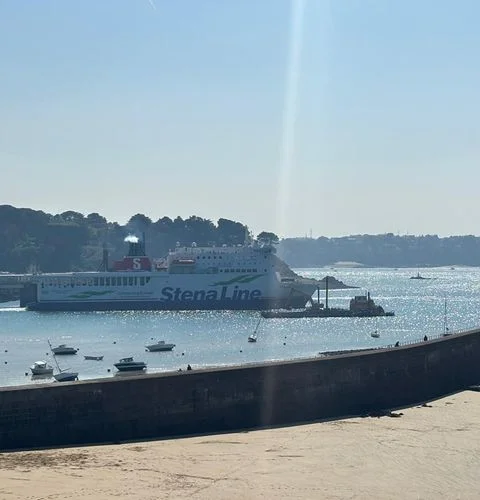 The port of Saint-Malo, where corsairs once returned with their fortunes
The wealth came from the corsairs: officially licensed privateers who operated under royal authority to raid enemy shipping, primarily British and Dutch. They were not pirates in the outlaw sense, though the distinction was often subtle. They were extraordinarily effective. Saint-Malo’s corsairs brought fortunes back to the city, built the tall granite townhouses that still line the intra-muros streets, and made the Malouins fiercely proud and fiercely independent. They still are.
The most famous were Robert Surcouf, who captured over 40 British ships in the late 18th century, and Rene Duguay-Trouin, who sacked Rio de Janeiro in 1711. Their statues stand in the city today, and the Malouins talk about them as if they left last week.
Then came August 1944. Allied bombing and German artillery destroyed 80% of the intra-muros in the final weeks of the Liberation. What you see today is a reconstruction, completed in 1960, painstakingly faithful to the original 17th and 18th century architecture: the same granite, the same proportions, the same street layout, rebuilt from old photographs, paintings, and the memory of the people who lived there. It is one of the great acts of collective will in modern French history, and the result is extraordinary.
Walking the Ramparts: The Essential Saint-Malo Experience
The first thing you do in Saint-Malo is walk the ramparts. There is no debate about this.
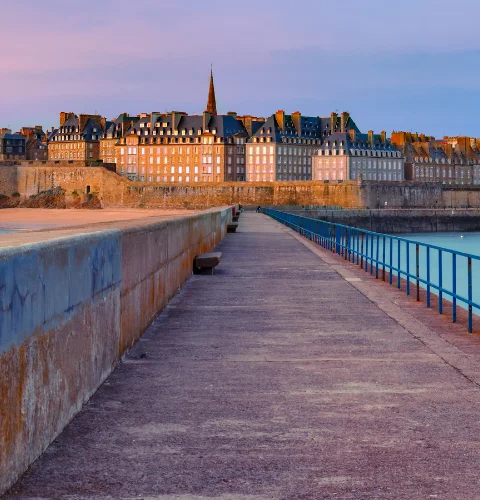 The ramparts of Saint-Malo, where the city meets the sea
The complete circuit is just under two kilometers and takes between 45 minutes and two hours depending on how often you stop to look at the sea, which will be frequently. The walls date from the 12th century and were progressively reinforced and extended under the supervision of Vauban, Louis XIV’s military architect, in the late 17th century.
The views from the ramparts change completely depending on the tide. At high tide, the sea surrounds the walls on three sides and the city feels like a ship. At low tide, vast stretches of golden sand emerge, Fort National appears on its rocky plateau, and the Grand Be and Petit Be islands are accessible on foot.
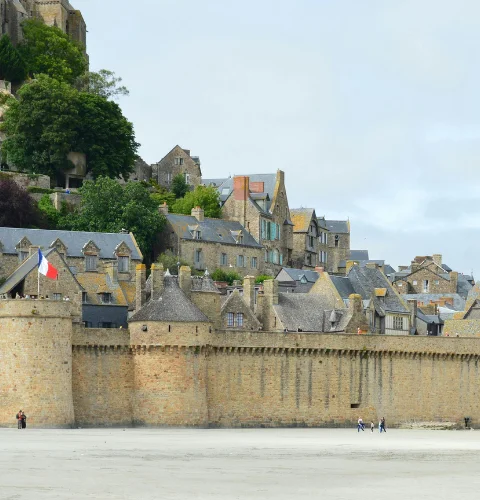 On a clear day, the silhouette of Mont-Saint-Michel is visible from the western ramparts
Timing your rampart walk around the tide is the kind of insider detail that makes the difference between a good visit and an exceptional one. This is what I am here for.
The Intra-Muros: Inside the Walls
Within the walls, the intra-muros is compact enough to explore comfortably on foot in half a day, but rich enough to fill two full days if you let yourself slow down.
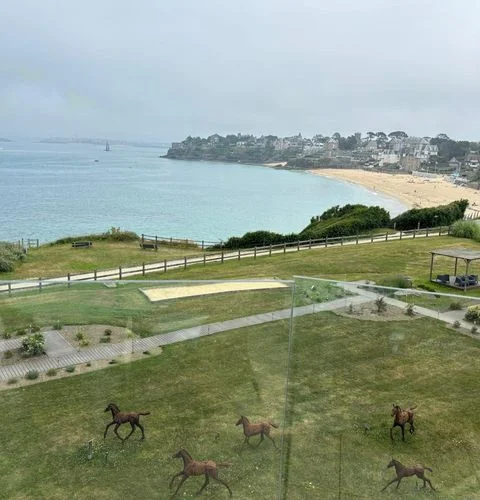 Inside the walls, granite townhouses built by corsair merchants line the narrow streets
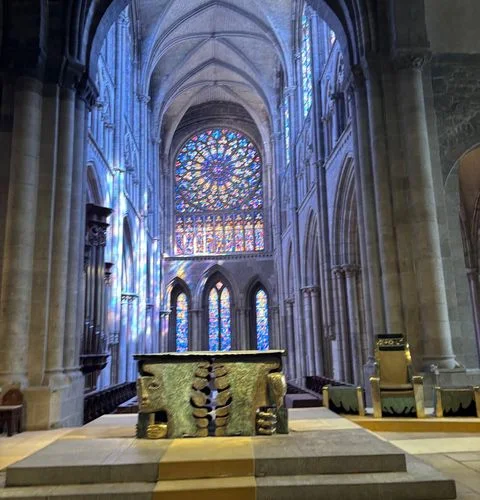
The Cathedral of Saint-Vincent sits at the heart of the old city and combines Romanesque solidity with Gothic light in a way that rewards a careful look. The modern stained glass, installed after the war damage, is particularly striking. Jacques Cartier, the explorer who claimed Canada for France in 1534, received his blessing here before departing.
Place Chateaubriand honors the city’s most famous son, the Romantic writer and statesman Francois-Rene de Chateaubriand, born here in 1768. The square is lined with cafe terrasses and anchored by the Chateau de Saint-Malo, which houses the excellent city museum. If you have time for one museum in Saint-Malo, this is it: the corsair history is presented with real panache.
The streets themselves are the main attraction. The narrow lanes between the tall granite houses, the covered arcades, the sudden openings onto small squares: the intra-muros rewards wandering without a plan. The best seafood restaurants are on the side streets, not on the main tourist drags.
All the Light We Cannot See: When Fiction Brings History to Life
If you have read Anthony Doerr’s Pulitzer Prize-winning novel, you already know Saint-Malo differently. The book is set largely within the intra-muros during the final weeks of the German occupation in August 1944, and Doerr’s descriptions of the granite streets, the ramparts, the tall narrow houses, and the bombardment that destroyed the city are so precise that readers who visit afterward often feel they are walking through a place they already know.
Standing on the ramparts and looking out to sea, knowing that 80% of what surrounds you was rubble in 1945 and rebuilt stone by stone from memory and old photographs, gives the city a completely different weight. The Netflix adaptation has brought a new generation of visitors to Saint-Malo who arrive with the book in hand, and I find that the best conversations I have on the ramparts are often with people who have read it.
The Memorial 39-45, located within the Chateau de Saint-Malo, tells the story of the siege and liberation of the city in August and September 1944 with remarkable detail and genuine emotion. It is not a large museum, but it is an honest one, and the photographs of the devastation sit alongside the account of the reconstruction in a way that makes the city’s resilience feel very real. I recommend it to every visitor, not just history enthusiasts.
Beyond the Walls: Fort National, Grand Be, and Dinard
Fort National sits on a rocky islet just off the ramparts and is accessible on foot at low tide across the beach. Built by Vauban in 1689, it served as a prison, a lookout post, and a military stronghold. The view back to the city walls from the fort is one of the great photographs of Brittany.
 At low tide, golden sand stretches out from the ramparts toward Fort National
Grand Be is the larger island accessible at low tide, famous for the dramatic clifftop tomb of Chateaubriand, who asked to be buried there facing the sea. It is not obviously spectacular, but it stays with you.
Dinard, just across the Rance estuary (ten minutes by ferry from the Saint-Malo port), is the Brittany that the British aristocracy discovered in the 19th century and never really left. Belle Epoque villas line the coastal paths, the casino overlooks the beach, and the whole town feels like a slightly sunnier, slightly more elegant version of a south England seaside resort. Alfred Hitchcock filmed there. The annual film festival that bears his name takes place every October.
Beyond the Obvious: Malouinieres, Food Experiences, and the Sea
The Malouinieres are the grand country houses built by Saint-Malo’s corsair merchants in the 17th and 18th centuries in the countryside surrounding the city. Having made their fortunes at sea, the Malouins built these elegant manor houses as summer retreats: imposing facades, formal French gardens, and an air of restrained aristocratic confidence. Several are open to visitors by appointment, and touring one of these private estates is a glimpse into the life of the corsair elite that no museum can quite replicate. Contact me and I can arrange access.
Food tours and cooking classes are a wonderful way to spend a half-day in Saint-Malo. A guided tour of the market, the creperie, the fromagerie, and the fishmonger teaches you more about Breton food culture in two hours than a week of restaurant meals. Cooking classes focused on galettes and kouign-amann are available with local chefs and fill up quickly in season. I can recommend and book both depending on your interests and dates.
Private boat trips on the bay of Saint-Malo offer a completely different perspective on the city and the coast. Seeing the ramparts from the water, with Mont-Saint-Michel visible on the horizon on a clear day, is one of those views that you do not forget.
What to Eat in Saint-Malo
Oysters from Cancale, 15 minutes east along the coast, are the obvious starting point. The Cancale market, where you buy directly from the producers and eat standing up overlooking the bay, is one of those simple experiences that becomes a trip highlight. I include it in almost every Saint-Malo day, because why would you not.
Galettes de sarrasin are the Breton staple: buckwheat crepes, savory, eaten with salted butter, ham, egg, and cheese in the classic formulation. The rule is simple: the further from the tourist main street, the better the galette.
Coquilles Saint-Jacques in season (October to April) are extraordinary in Brittany: fat, sweet, and scallops from the bay that taste of the sea in a way that scallops from a supermarket simply do not.
And kouign-amann: the Breton butter cake from Douarnenez that has quietly become one of the most imitated pastries in the world. The original is still the best. There is a good bakery just inside the Porte Saint-Vincent that makes one worth the detour.
Saint-Malo as a Base: Day Trips Worth Taking
Saint-Malo is one of the best bases in northern Brittany, within easy reach of several of the region’s most compelling destinations.
- Mont-Saint-Michel: 45 minutes by car. Arrive before 9am when the crowds are thin and the light on the bay is extraordinary.
- Cancale: 20 minutes and deserves at least two hours, ideally around the morning market and oyster stands.
- Dinan: 30 minutes inland and one of the best-preserved medieval towns in France. The combination of Saint-Malo in the morning and Dinan in the afternoon is one of my favourite one-day circuits in all of Brittany.
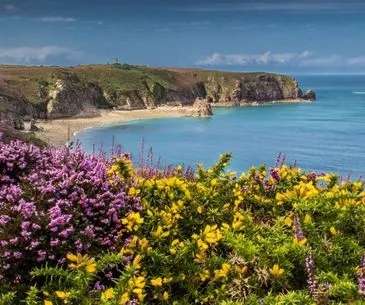
- Cap Frehel and Fort La Latte: The Emerald Coast heading west offers some of the most dramatic coastal scenery in the region. The cap itself, 70 metres of sheer cliff above the Channel, is a landscape that stays with you.
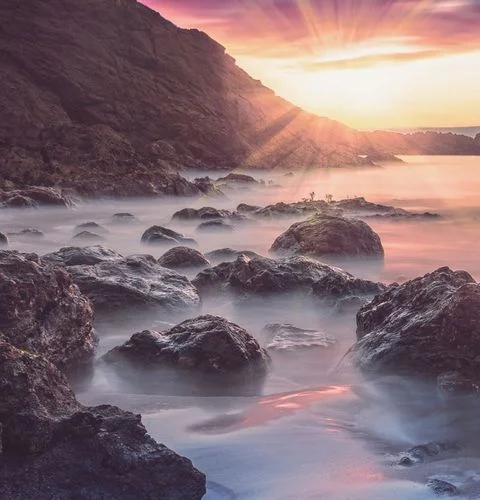 The Emerald Coast at golden hour, looking west from Saint-Malo
Plan Your Saint-Malo Visit with BELLIDAYS
Saint-Malo is one of those cities that rewards the kind of attention a private guide can give it. The corsair history is rich and layered, the tidal logic takes a moment to understand, and the difference between the obvious tourist circuit and the real Saint-Malo is significant.
As a licensed private chauffeur-guide based in Brittany, I offer private tours of Saint-Malo and the surrounding region for groups of one to seven people, guided in English, Spanish, Italian, or Portuguese. Every itinerary is built around your interests, your pace, and your time.
Saint-Malo also makes an ideal starting or ending point for a broader Brittany circuit, combined with Normandy to the east for the D-Day beaches and Mont-Saint-Michel, or continuing west along the Breton coast toward the Pink Granite Coast and Finistere.
Contact us to start planning your Saint-Malo experience →
Frequently Asked Questions
Is Saint-Malo worth visiting?
Without question. Saint-Malo is one of the most visually dramatic and historically rich cities in France. The combination of the granite ramparts, the corsair history, the extraordinary tidal landscape, and the quality of the food makes it a destination that consistently exceeds expectations.
How long do you need in Saint-Malo?
One full day is enough to see the essential Saint-Malo: the ramparts, the intra-muros, Fort National at low tide, and a proper seafood lunch. Two days allow you to explore at a more relaxed pace and add Cancale and Dinard. Three days open up Mont-Saint-Michel and Dinan as well.
Is Saint-Malo easy to visit from Paris?
Yes. The TGV from Paris Montparnasse reaches Rennes in 1h30, and Saint-Malo is 1 hour from Rennes by car. A private chauffeur-guide picks you up directly from Rennes train station and takes you to Saint-Malo for a full day before returning you to the station.
When is the best time to visit Saint-Malo?
September and early June are ideal: good weather, manageable crowds, and full availability at restaurants and hotels. July and August are beautiful but busy. Saint-Malo also works well in spring, when the light is clear and the coastal paths are empty.
What is the best thing to do in Saint-Malo?
Walk the ramparts at high tide. Everything else follows from there.
Can I combine Saint-Malo with Mont-Saint-Michel?
Absolutely, and I highly recommend it. The two sites are 45 minutes apart by car and make a natural pairing: the corsair granite city and the tidal island abbey are two of the most iconic sights in northern France. A private guide can time both visits perfectly around the tides.
Is All the Light We Cannot See set in Saint-Malo?
Yes. Anthony Doerr’s Pulitzer Prize-winning novel is set largely within the intra-muros of Saint-Malo during the German occupation and the Allied bombardment of August 1944. The Netflix adaptation has brought many new visitors to the city who arrive wanting to walk in the footsteps of the characters. The Memorial 39-45 in the Chateau de Saint-Malo brings this history to life with remarkable precision.
Article written by Belinda C., licensed private chauffeur-guide and founder of BELLIDAYS Travel Tours. Specialising in private tours across Brittany, Normandy and the Loire Valley for international travellers. bellidays.com