A hidden gem in Normandy, hiding in plain sight between the D-Day beaches and Bayeux. Thirteenth-century stone vaults, a sole meunière worthy of Julia Child, and eight hundred years of history. Worth every mile of the drive.
There are restaurants you find by searching, and there are restaurants you find by knowing. The Hostellerie Saint-Martin in Creully-sur-Seulles falls firmly into the second category. Tucked into the medieval heart of a quiet Calvados village, just a few miles from the D-Day landing beaches, this is the kind of place your French neighbours have been going to for decades without ever telling you about it. If you are looking for the best dining experience near the Normandy beaches, you have just found it. Tonight, seated under thirteenth-century stone vaults with a glass of champagne in hand, I am happy to break that silence.
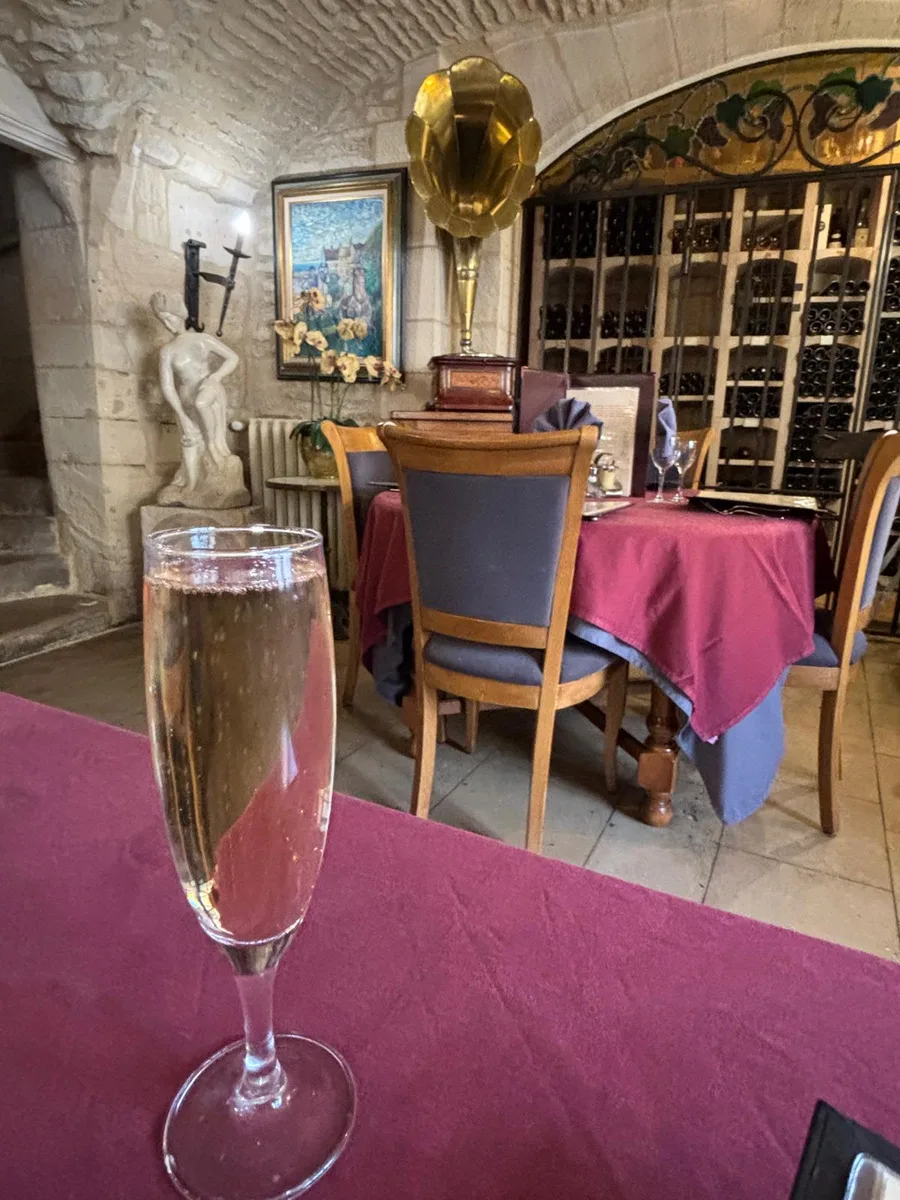 A glass of champagne under the thirteenth-century vaults, where the evening begins
A Building That Has Witnessed Everything
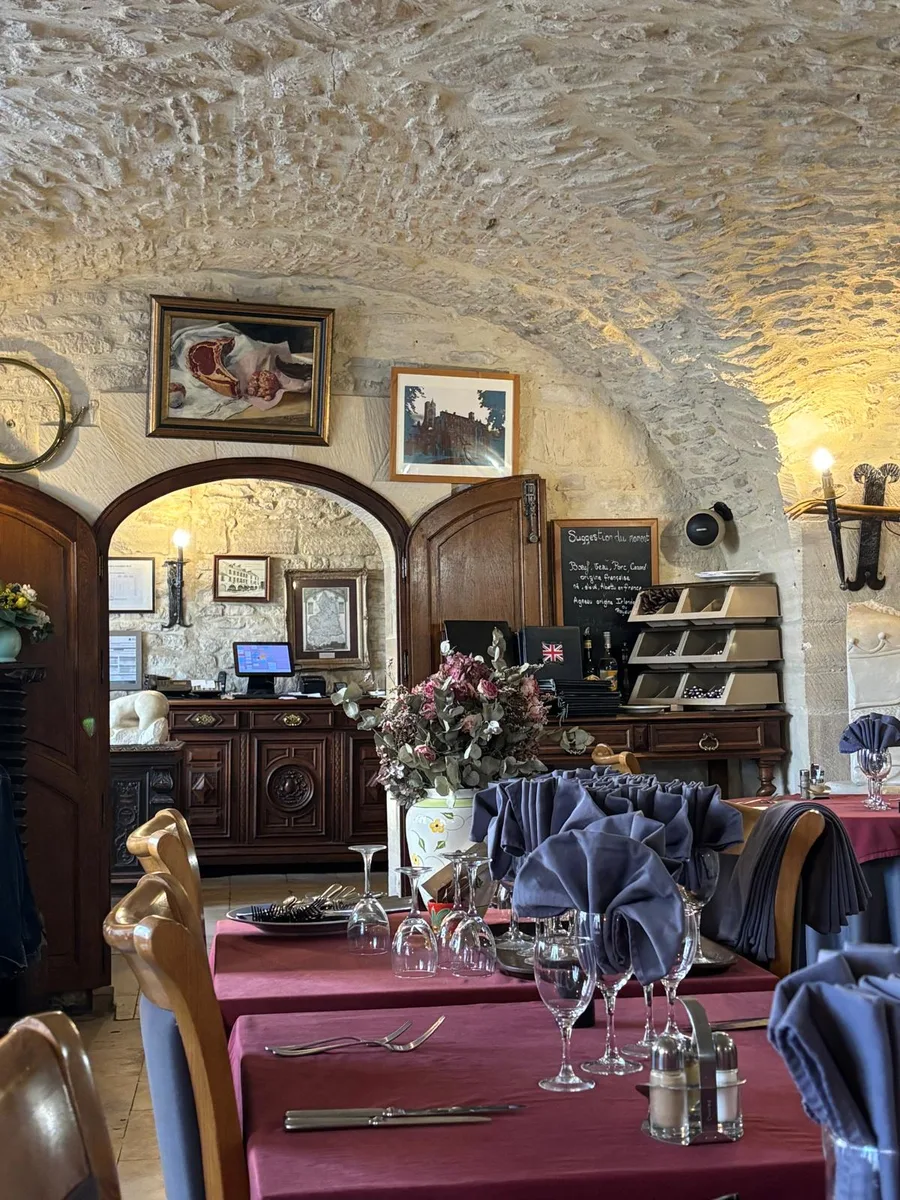
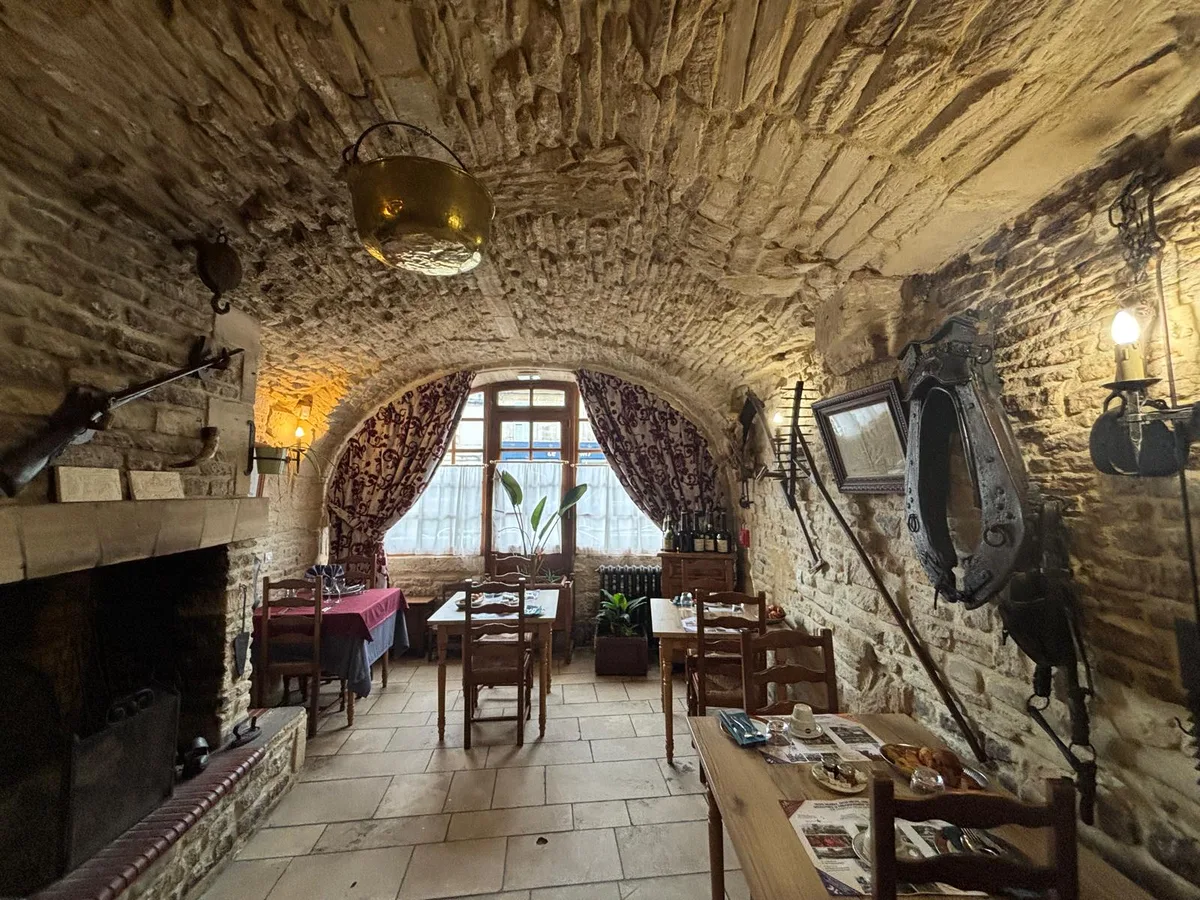
The Hostellerie occupies what were once the medieval market halls of Creully, a building that has stood since the thirteenth century. Stone vaults arch overhead, exposed walls carry eight hundred years of history in their texture, and the dining room feels like a place where time has agreed to slow down. This is not a chateau converted into a hotel for appearances. The building itself is the story.
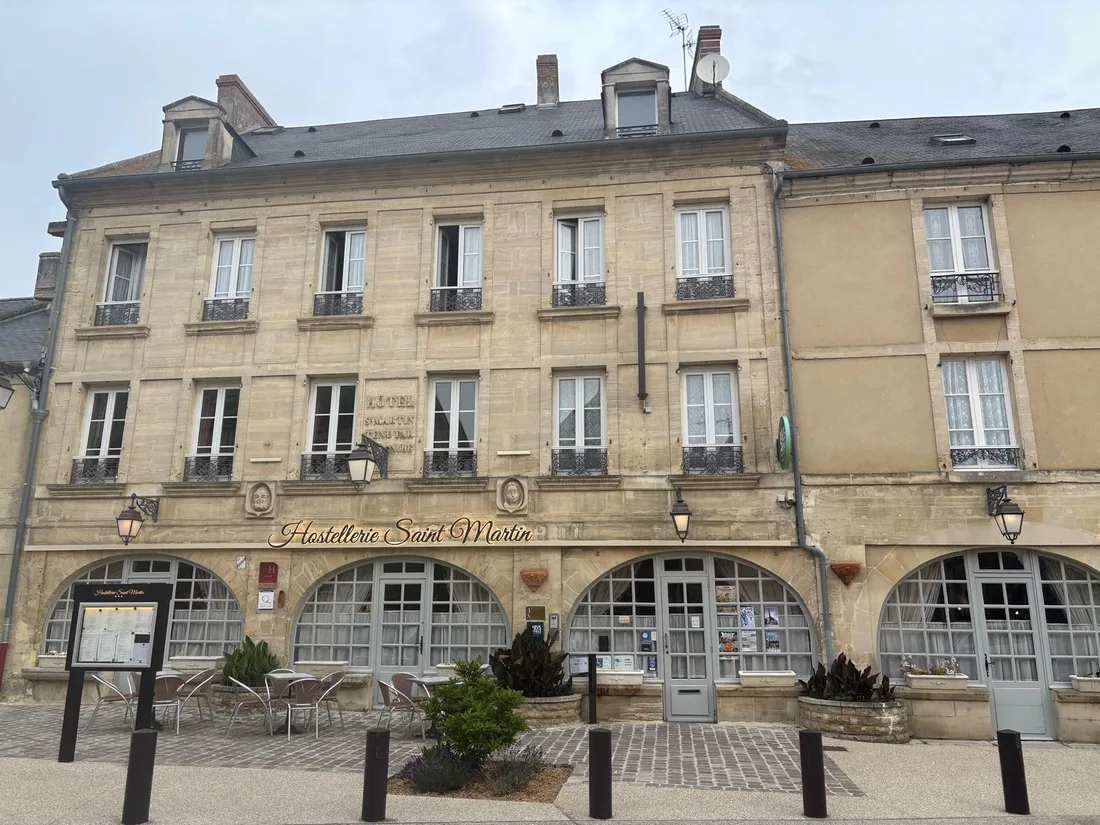
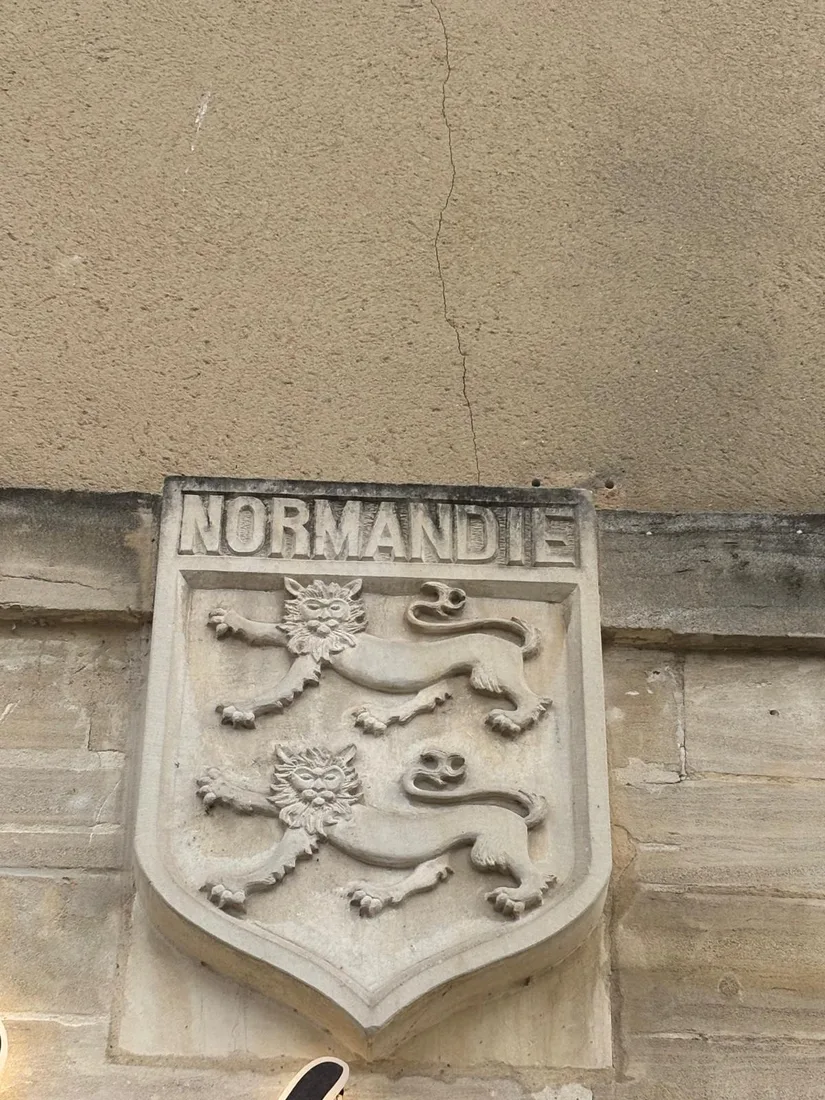
The honey-stone facade on the village square, and the two leopards of Normandy carved above the door
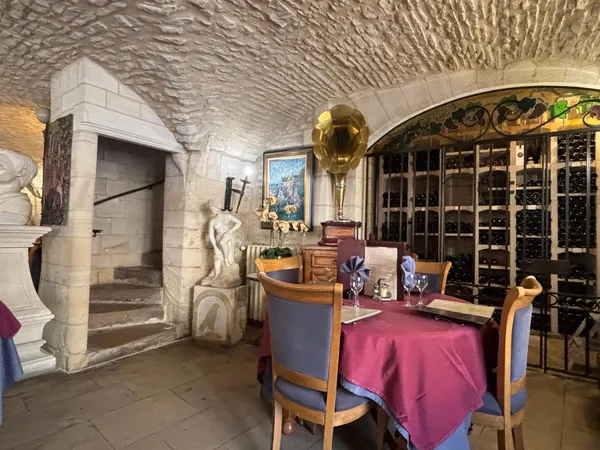
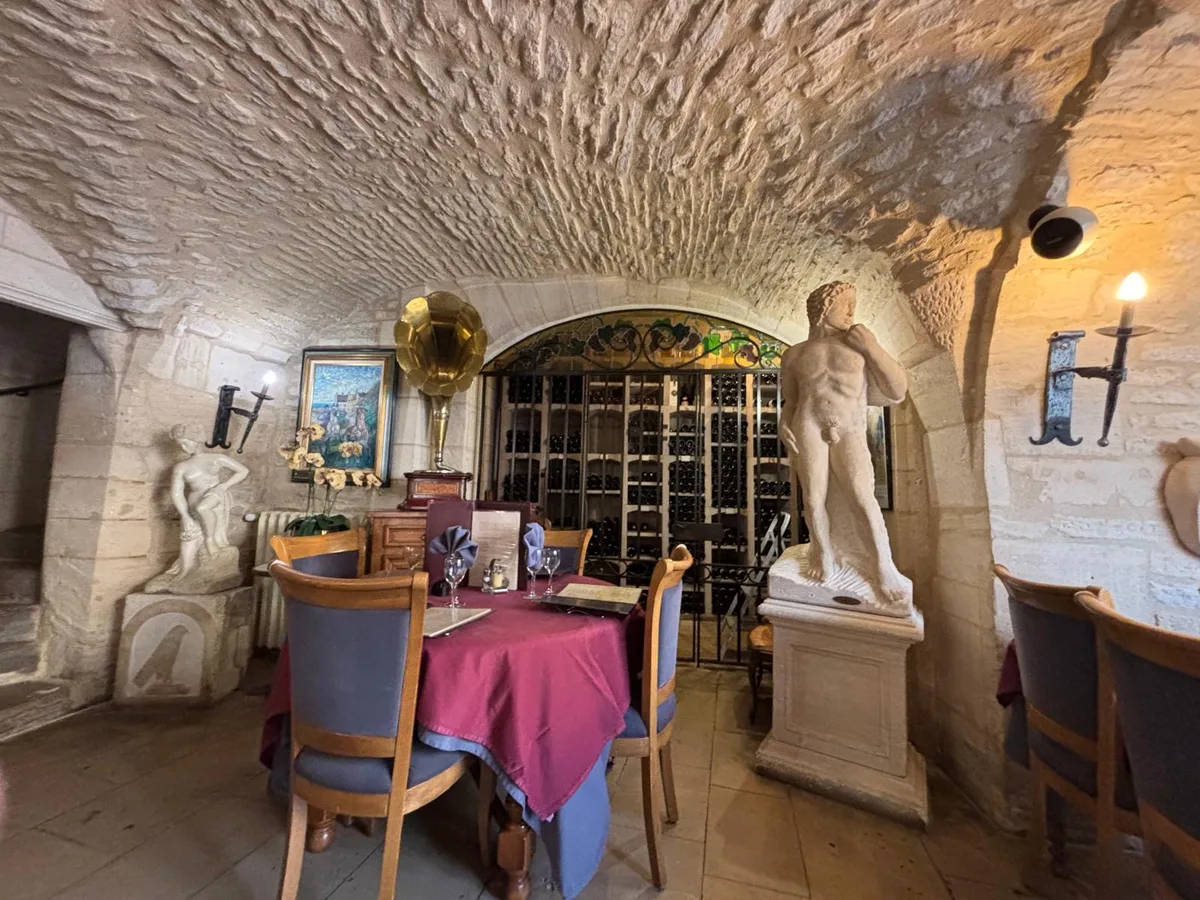
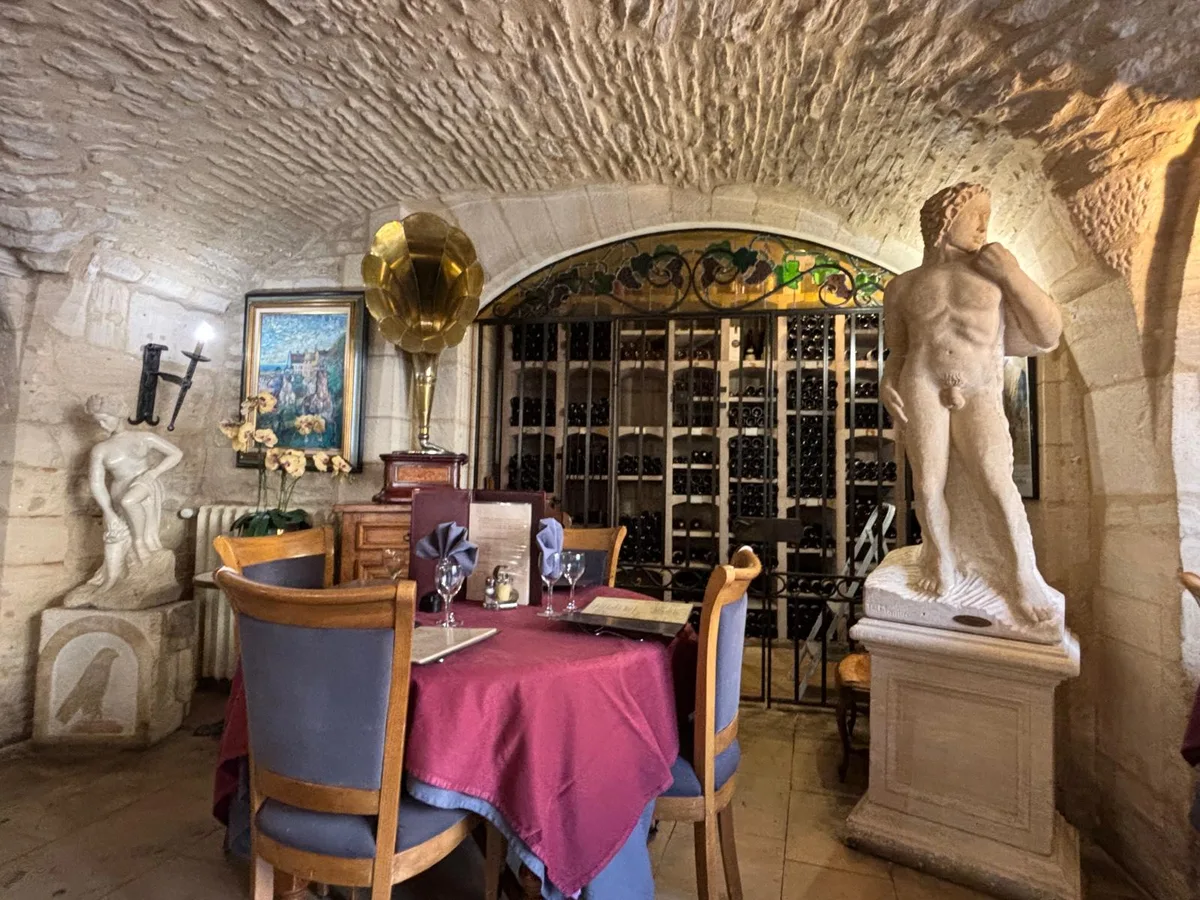
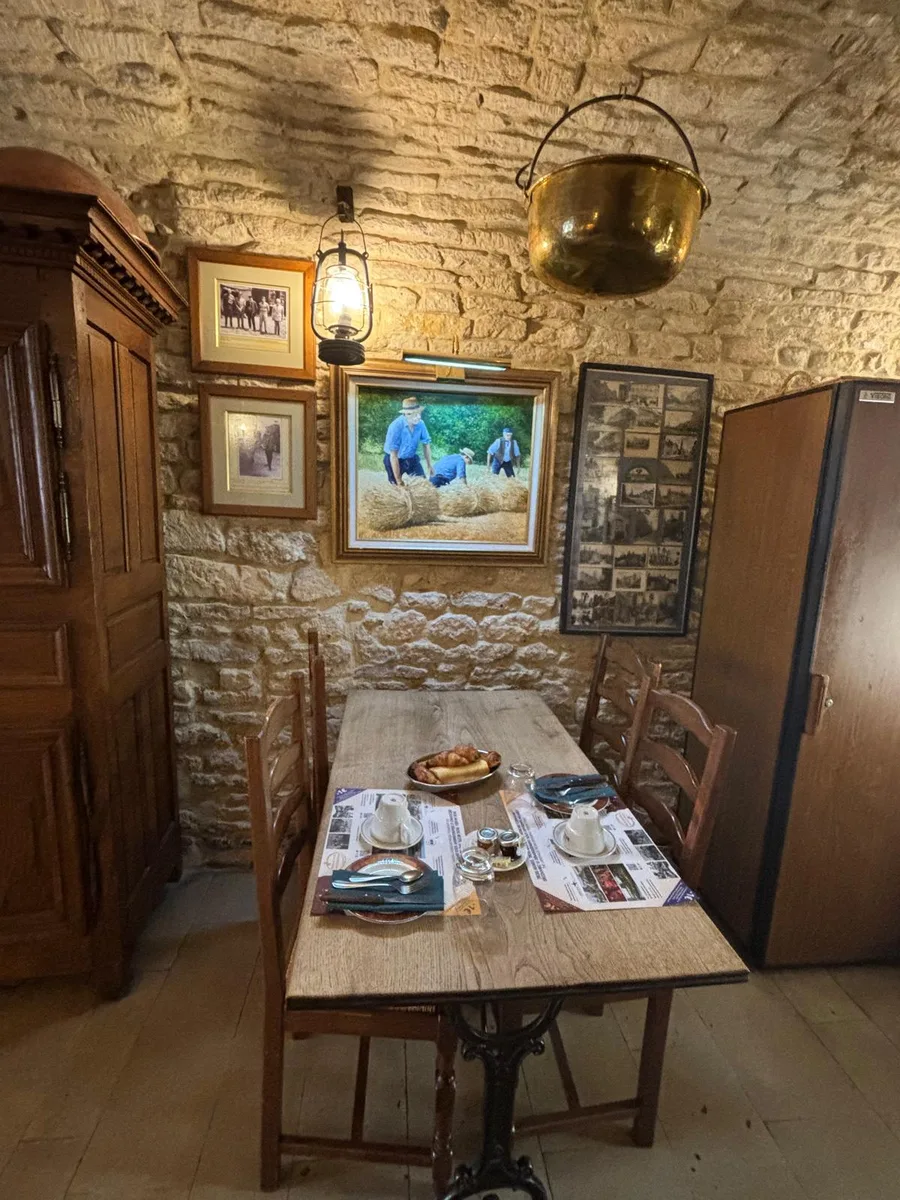
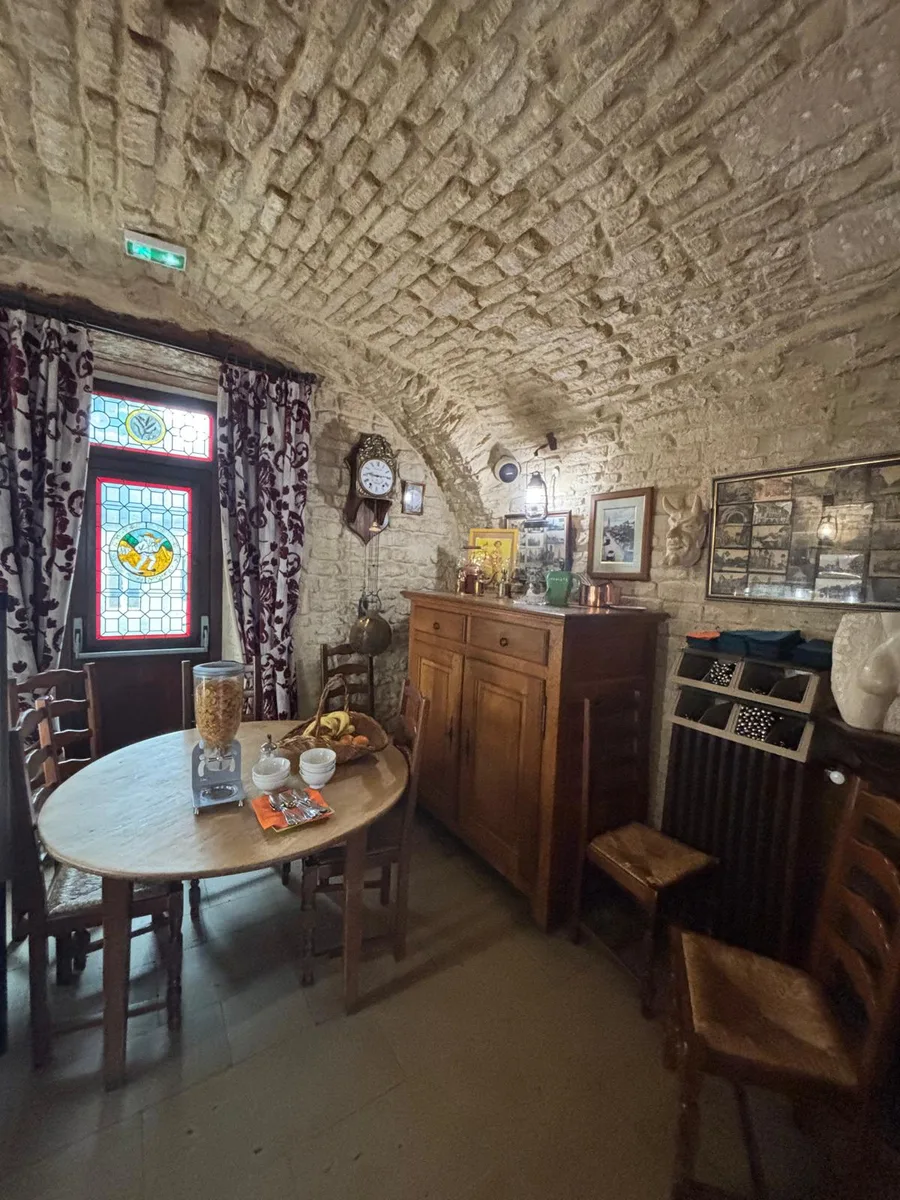
Step inside and the centuries fold in on themselves. A brass gramophone sits beside a wall of wine, classical statues stand guard in the candlelight, stained glass filters the last of the daylight, and the vaulted ceiling presses low and close like the inside of a ship’s hull. Every table has its own small museum: a grotesque carved face peering from the stone, a copper cauldron suspended overhead, an antique rifle resting above a great open fireplace. You do not simply dine here. You travel back in time.
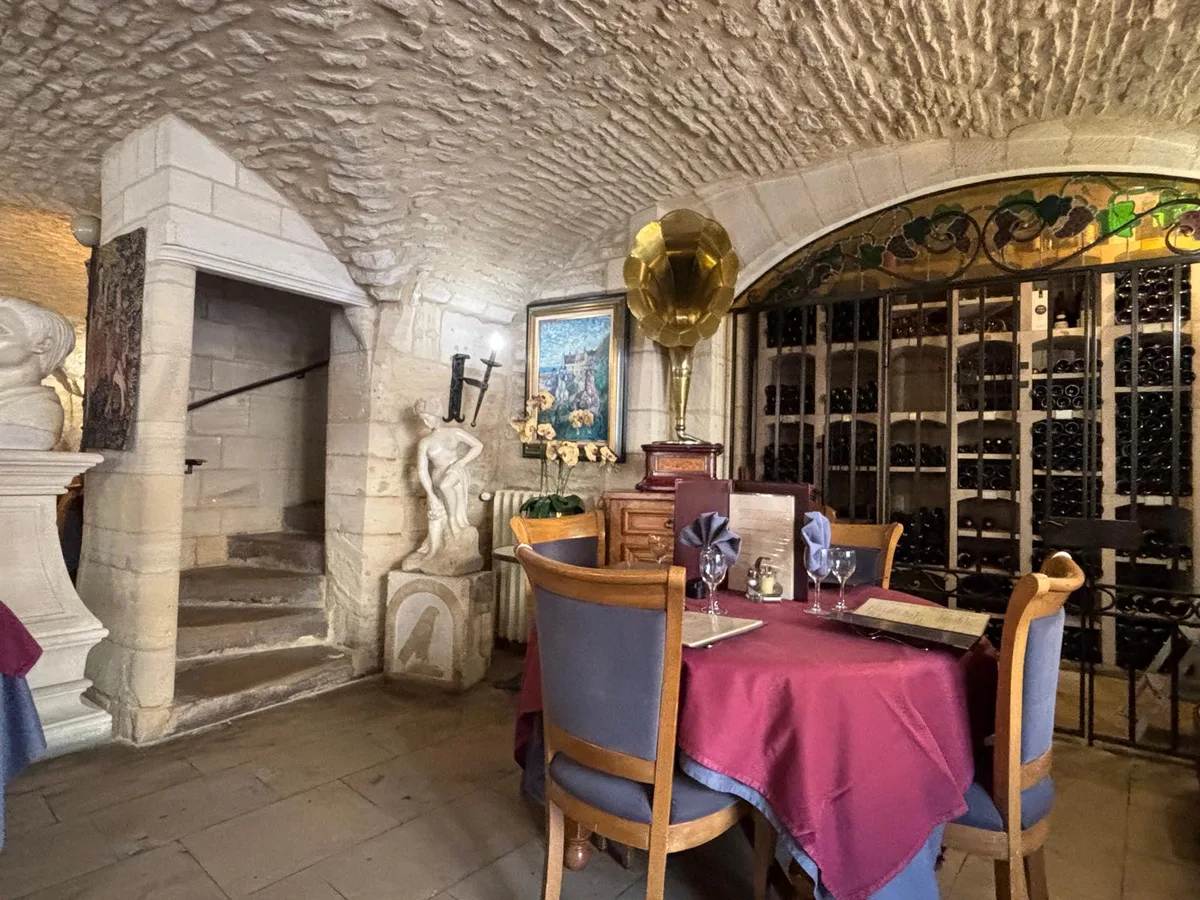 The vaulted cellar room, brass gramophone, statues, and a wall of Norman wine
Creully is no ordinary Norman village. Its medieval castle, one of the most important in the Calvados after those of Caen and Falaise, has connections going back to William the Conqueror himself. On June 6, 1944, Canadian soldiers of the Royal Winnipeg Rifles fought their way into the village while Sherman tanks engaged German armour across the Seulles river. Within days of liberation, the BBC had installed its war correspondents in the castle’s square tower to broadcast news of the Normandy campaign to the world. The Hostellerie became a Logis de France in 1948, three years after the Liberation, welcoming travellers back to a village that had just lived through the hinge of history.
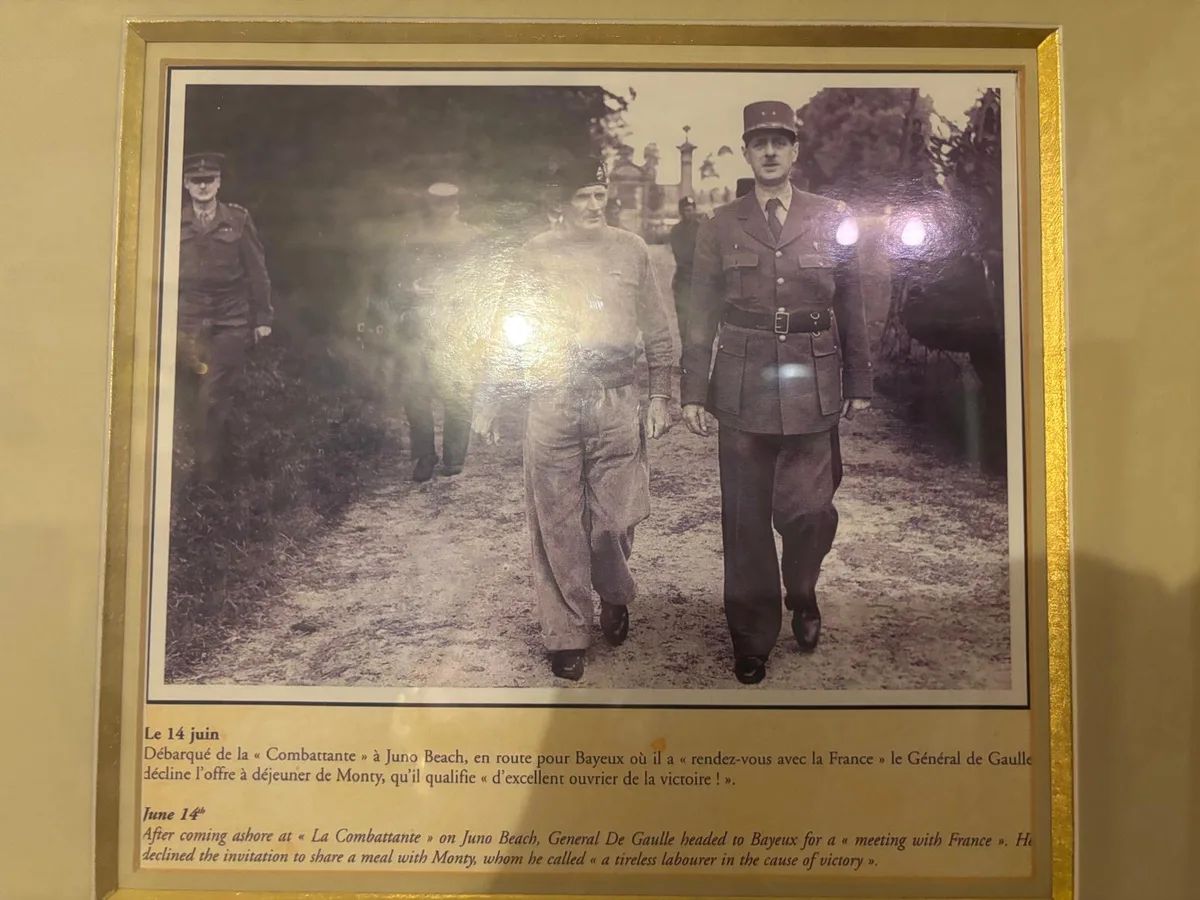 On the wall, a photograph that says everything about this ground: on June 14, 1944, General de Gaulle came ashore from the Combattante at Juno Beach, a few kilometres from here, on his way to Bayeux for his rendezvous with France. He declined Montgomery’s invitation to lunch, calling him an excellent labourer in the cause of victory
The Legrand family is itself a custodian of that local memory. The brothers have shared rare German military maps showing troop positions around Creully in 1944 with local historians. When you dine here, you are in the hands of people who understand exactly what this ground means. The walls carry the proof: an eight-hundred-year-old charter sealed in wax, framed photographs of soldiers, the patient accumulation of a place that has kept everything.
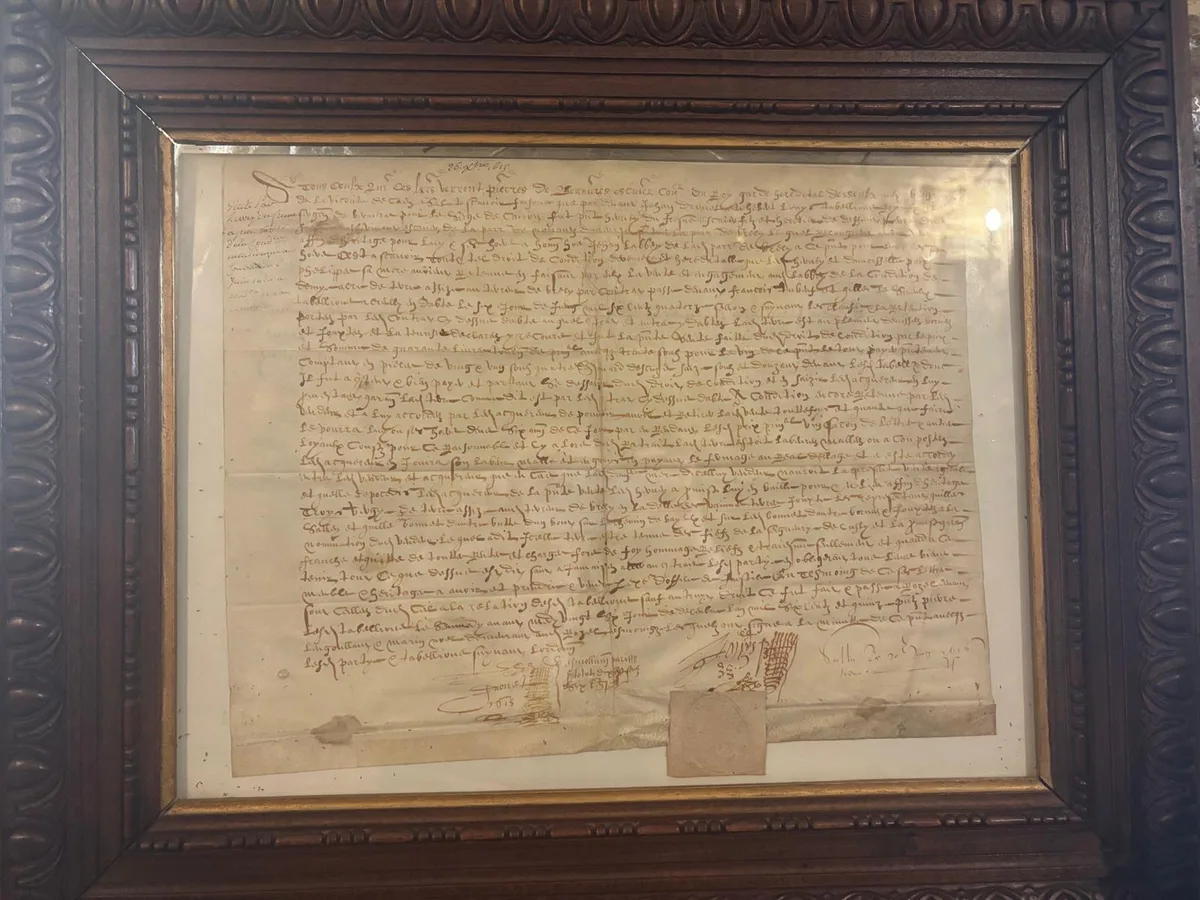
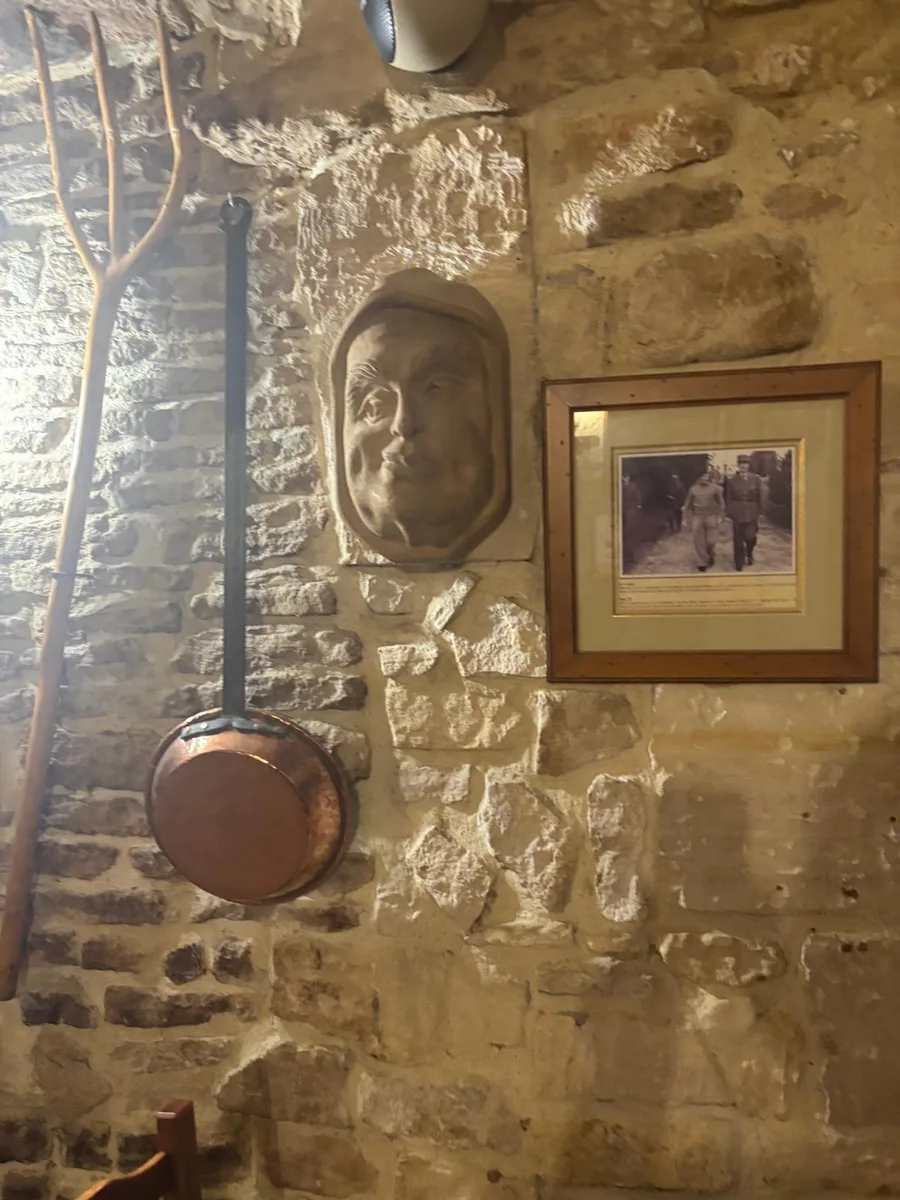
A medieval charter sealed in wax, and the old photographs that watch over the room
The Twins in Matching Uniforms
The Hostellerie has been in the Legrand family for years, run today by Alain, the chef, and his two sons who manage the dining room together. The two brothers are identical twins. They dress alike. They move with the same quiet efficiency. Within minutes of being seated, a neighbouring table and I were already exchanging glances, attempting to tell them apart. We eventually found our answer in their shoes, the only detail that differs. They are aware of the effect they produce and, it must be said, they do not seem to mind one bit. It adds an unexpected note of warmth and humour to a room that already has plenty of soul.
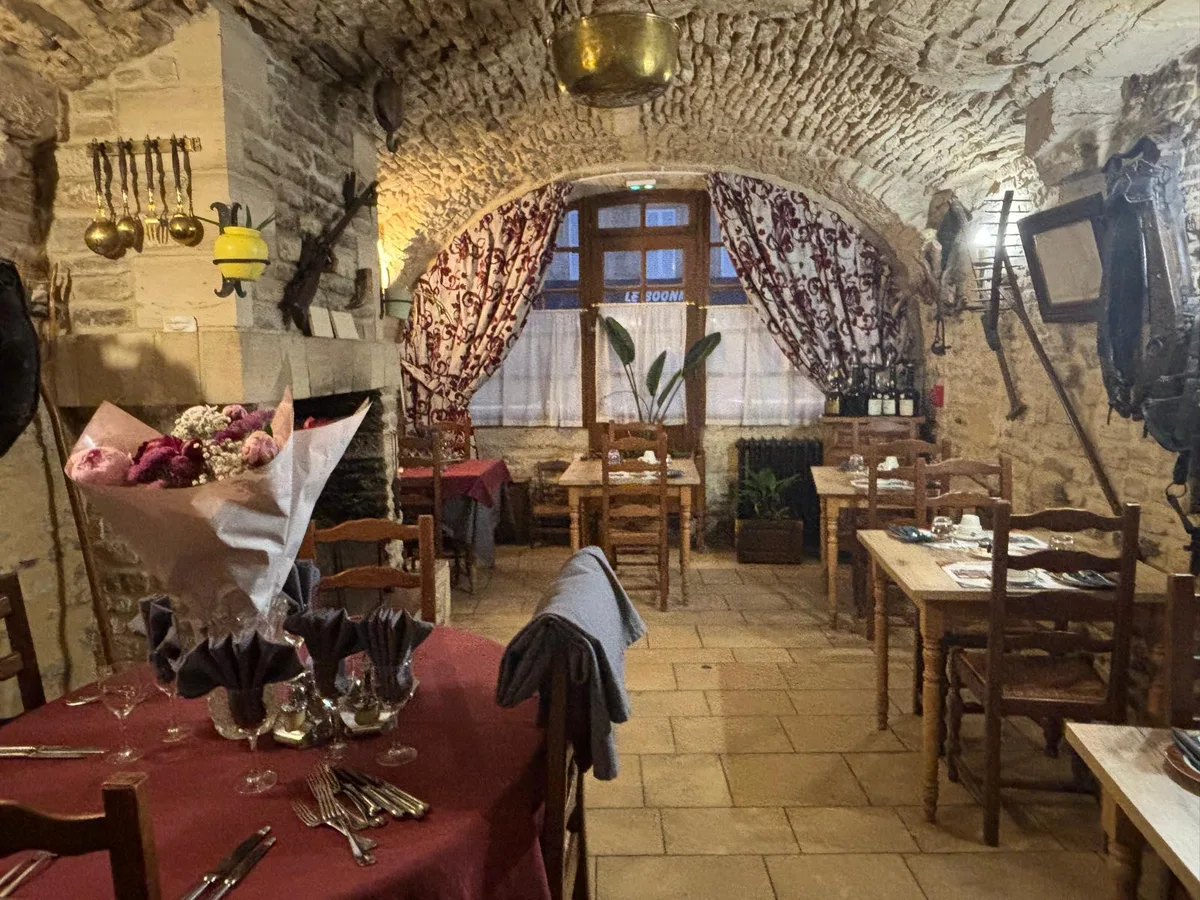
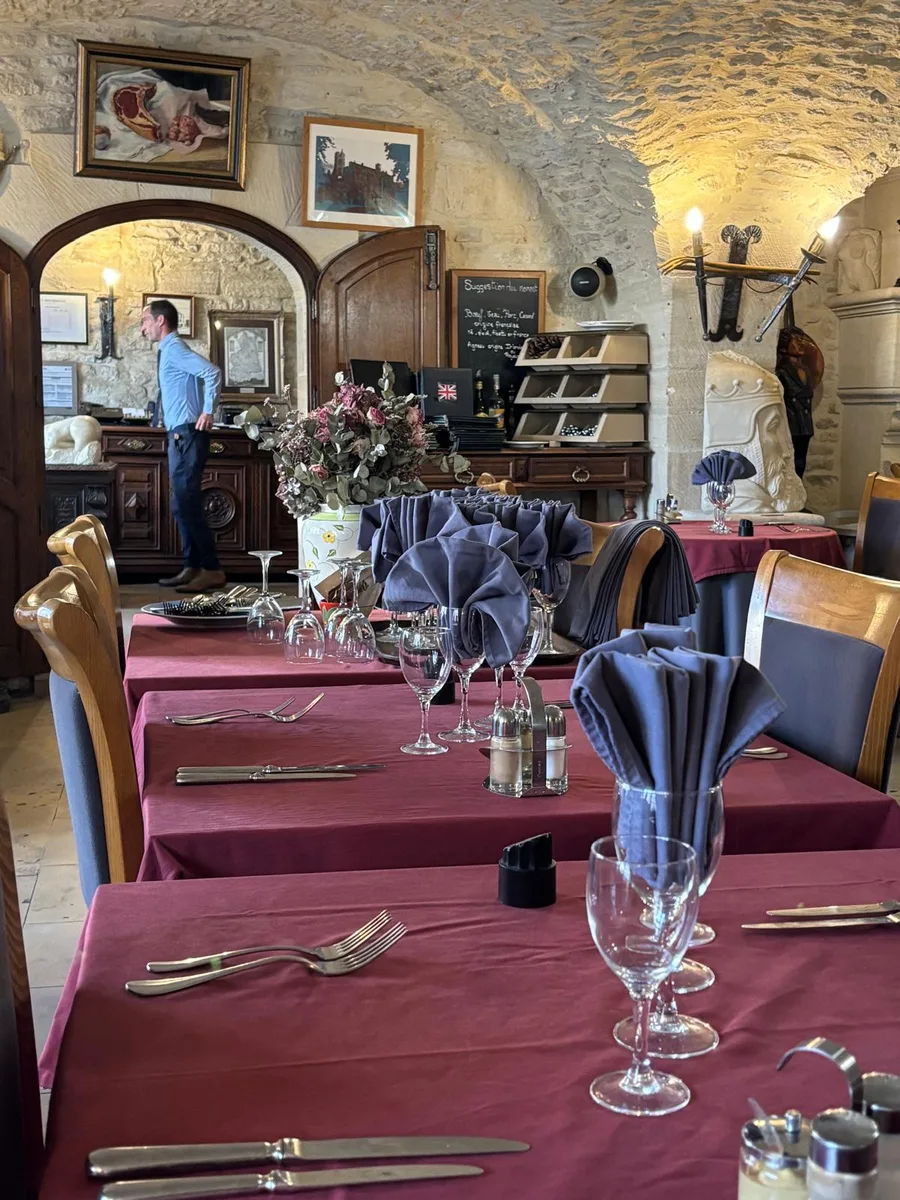 Tables dressed in deep red linen and pleated napkins, the room set and waiting
The Kind of Service You No Longer Expect
Dishes arrive under a silver cloche. This is rarer than you might think. Even in establishments far more expensive and decorated than this one, the practice has largely disappeared. Here it survives, unpretentiously, as simply the way things are done. The silverware is traditional, the linen deep red, the saucière that arrives alongside the fish is heavy and properly filled. There is generosity in everything, without theatre.
I ordered the sole meunière. The fish was perfectly cooked, the butter sauce golden and abundant enough that I did not hesitate to ask for a little more. The accompaniments were simple and honest: a steamed potato, a small carrot and potato puree. Nothing invented, nothing unnecessary. The produce did all the talking.
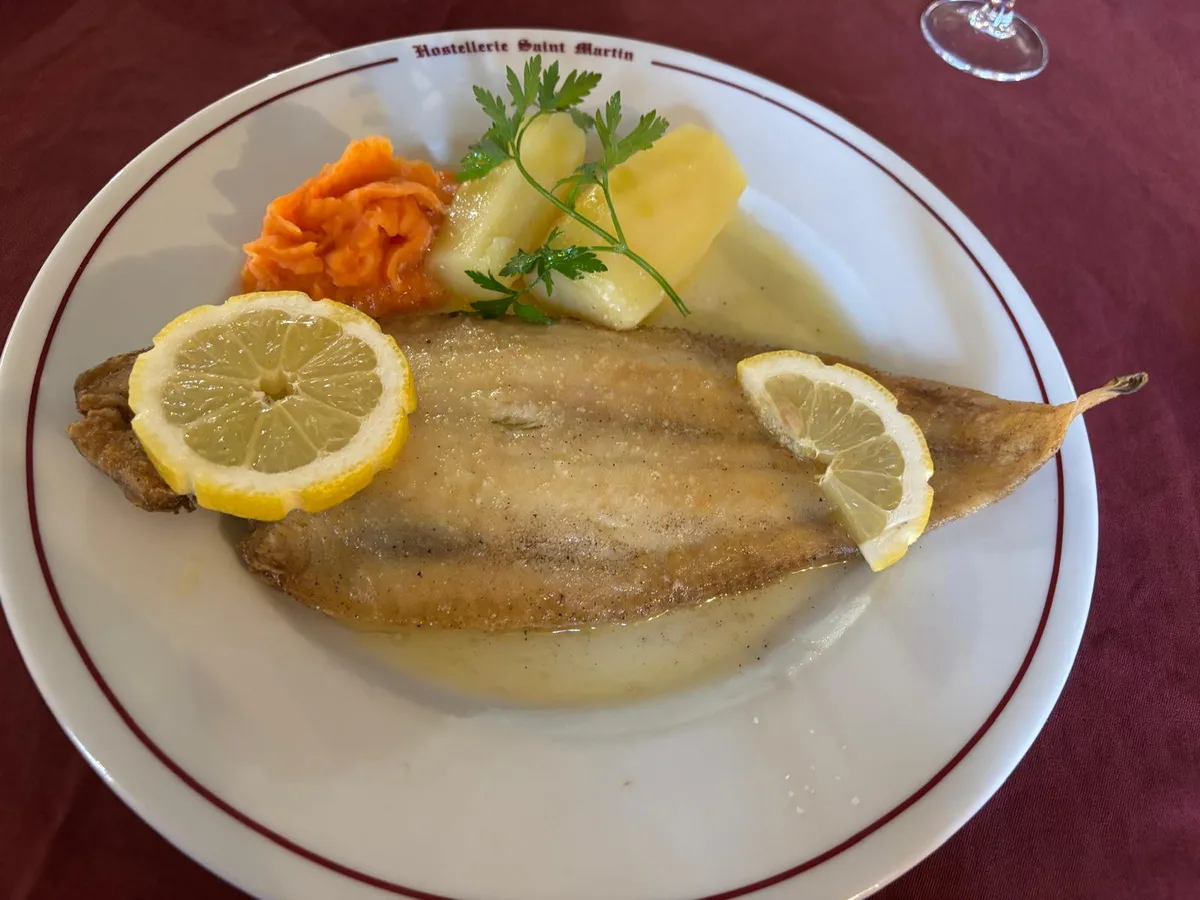
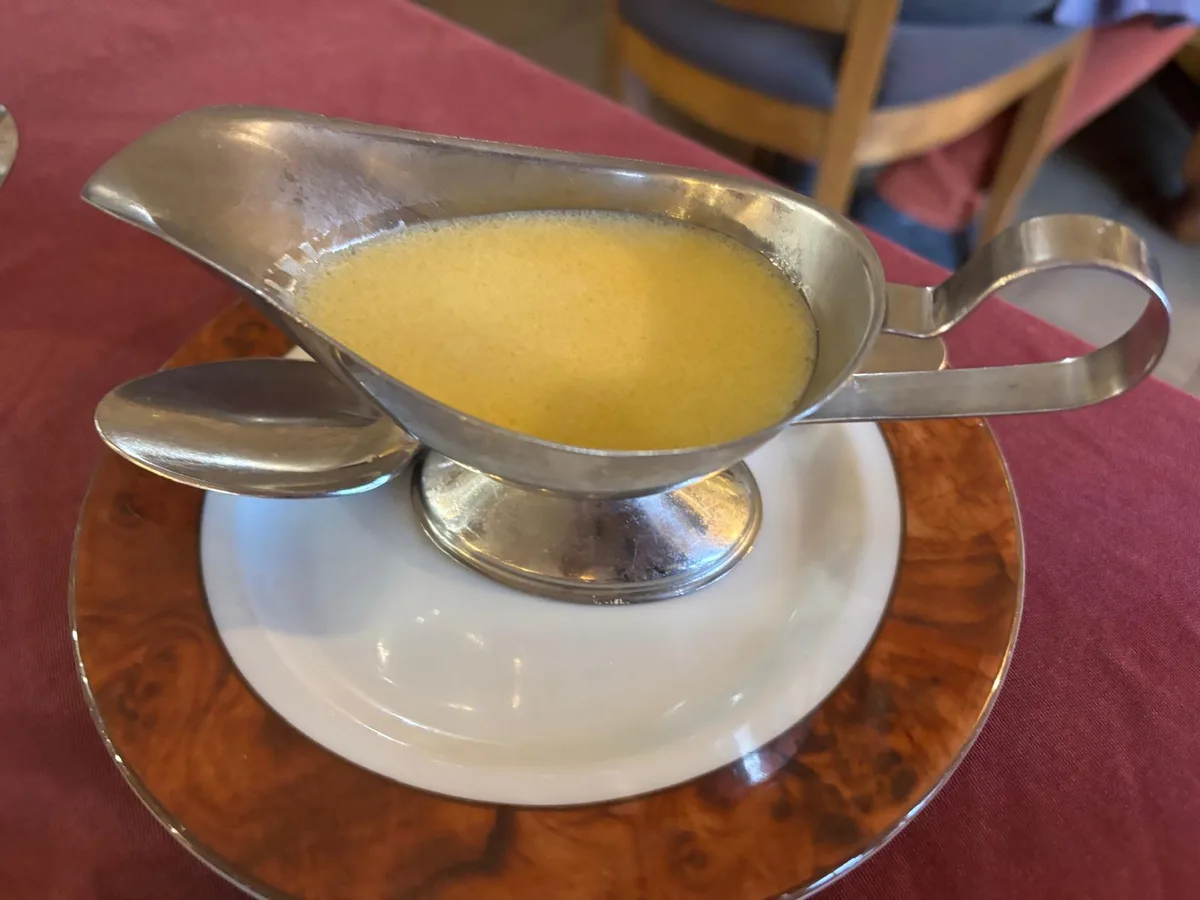
The sole meunière on the house plate, and the silver saucière of golden butter sauce, filled to the brim
A word about sole meunière in Normandy. Julia Child famously described her first encounter with the dish, in Rouen in 1948, as a revelation that changed her relationship with food forever. Eating it here, in a medieval vaulted room a few miles from the beaches where history turned, feels like a small, private tribute to that tradition.
A Genuinely Norman Table
The menu reads like a love letter to the Norman larder. Homemade duck foie gras, turbot grilled with beurre blanc, sole meunière, rack of lamb with walnuts, magret de canard with honey, apple tart flambeed in Calvados. The apéritif list is equally local: the house cocktail, Le Saint Martin, combines cassis, Calvados and cidre. The Pommeau flows freely. The cheese board features regional producers by name.
I finished with a crème brûlée, served in a terracotta ramekin with a caramelised crust that cracked exactly as it should. The ice cream, listed on the menu, comes from a local farm. Nothing here is imported from a supplier’s catalogue. You sense that in every bite.
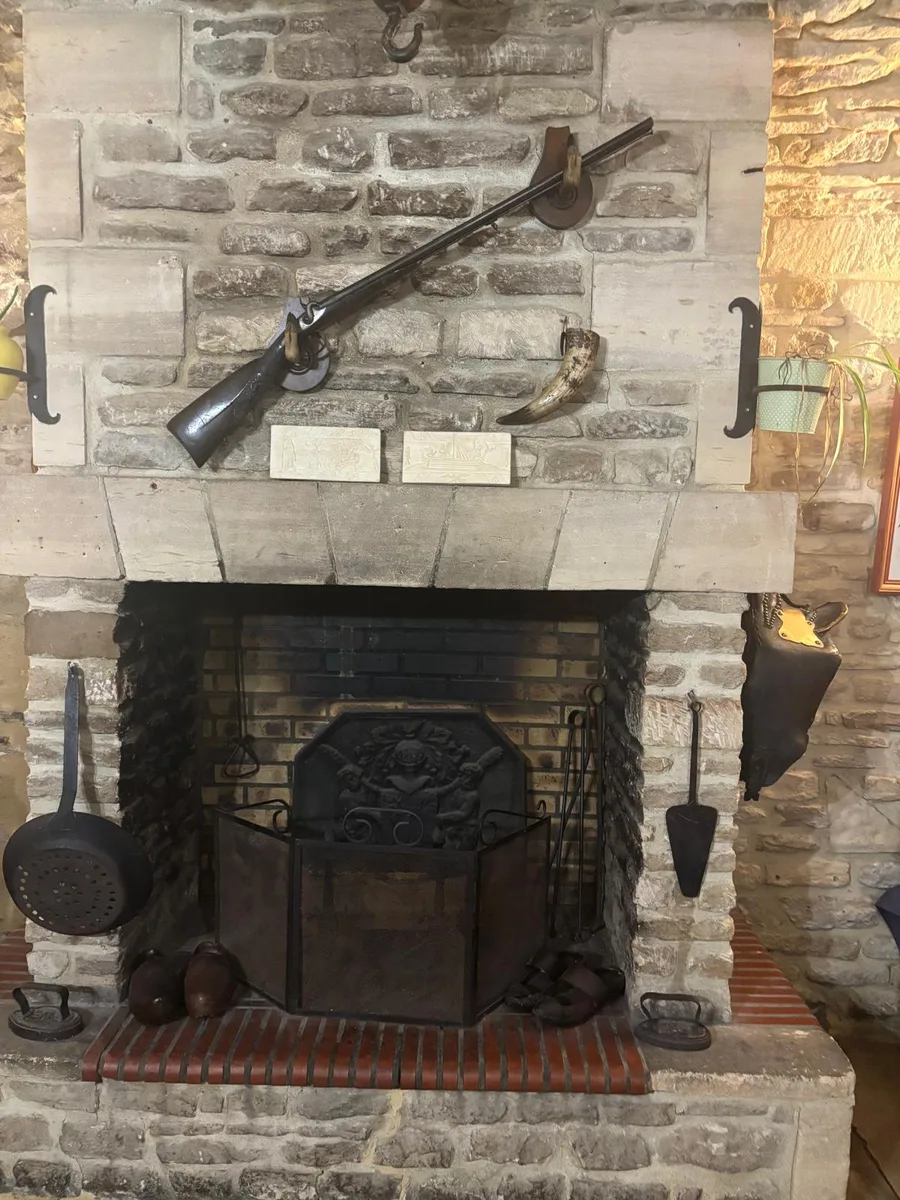
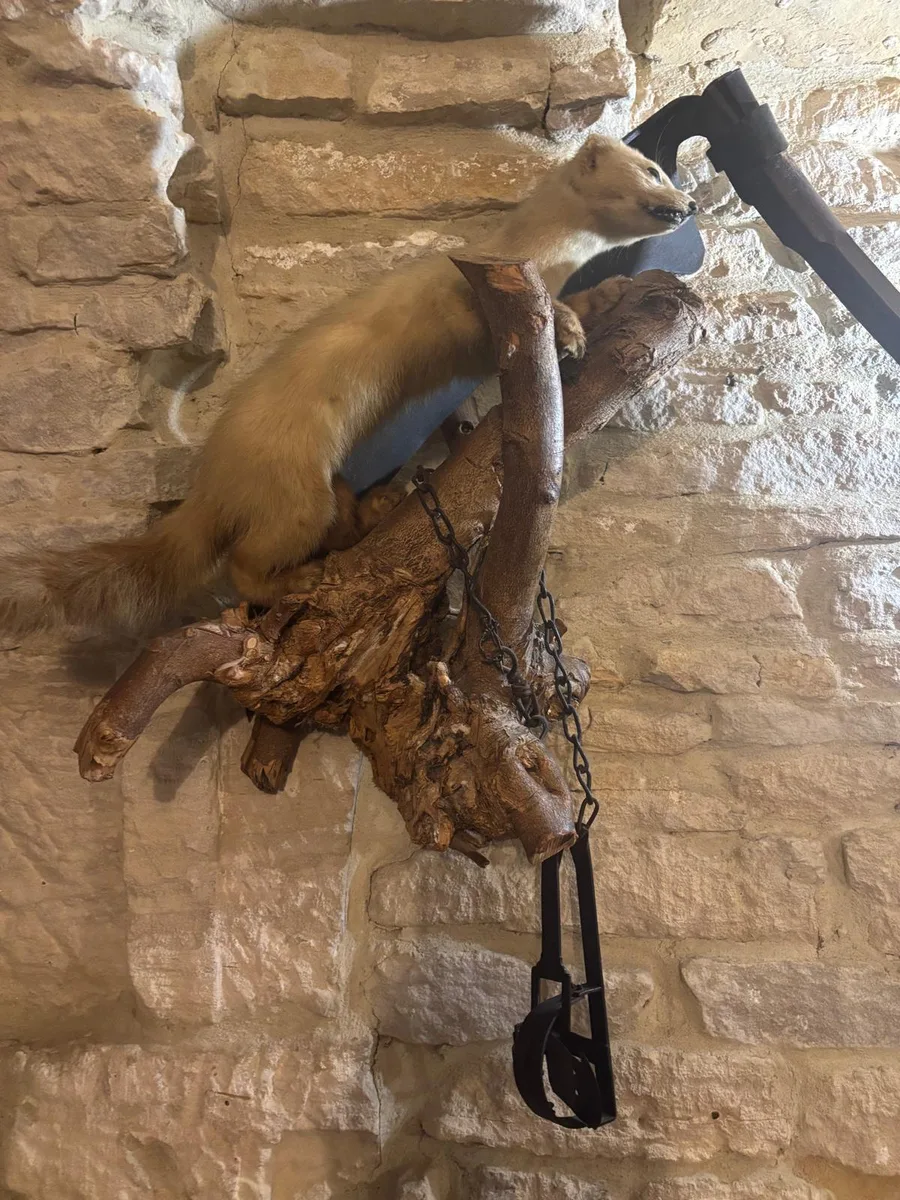
Around you, the room keeps telling its story. A great stone fireplace holds an antique rifle and a cast-iron fireback. Copper ladles and a pichet hang from iron hooks. Even a stuffed pine marten, caught mid-leap with an old trap, watches from the wall. It is the kind of decor that has accumulated slowly, over generations, never staged, always lived in.
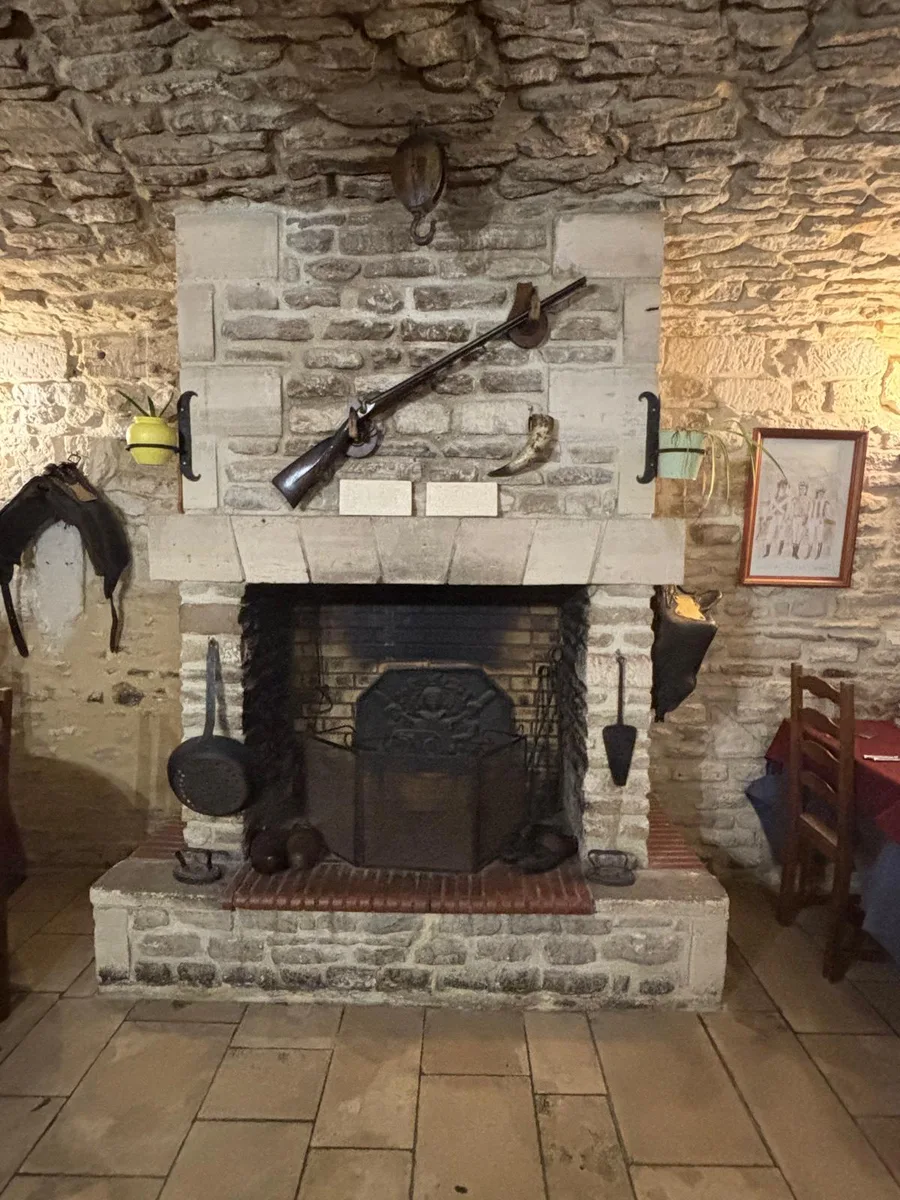
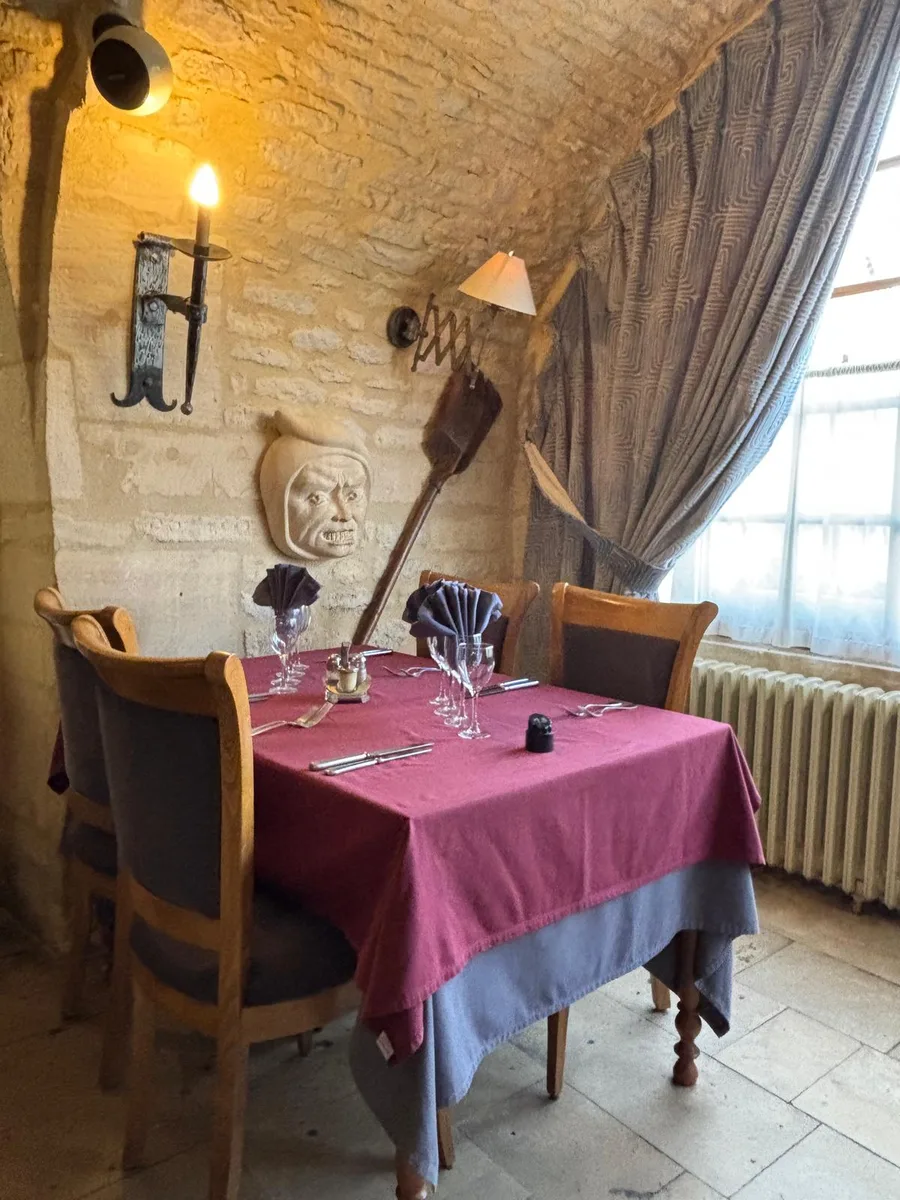
The great fireplace with its antique rifle, and a table watched over by a carved stone face
Worth the Drive: A Local Secret, and Why That Matters
On the evening I visited, the room was three-quarters full of French diners, mostly local couples and families. At the table beside me, the conversation was about football. Not D-Day. Not the anniversary. Not the 9,387 Americans buried eight miles away at Colleville-sur-Mer.
I am not sharing this as a reproach. I am sharing it as a fact that I believe American travellers will understand instinctively. This village, these stones, this river, this soil, carry a weight that visitors from across the Atlantic often feel more acutely than anyone. If you are coming to Normandy to walk the beaches, to stand at the cemetery, to understand what happened here, then the Hostellerie Saint-Martin is exactly where you should end your evening. It is not a museum. It is not a memorial. It is a living Norman house, warm and generous, that has stood through all of it, and is still here.
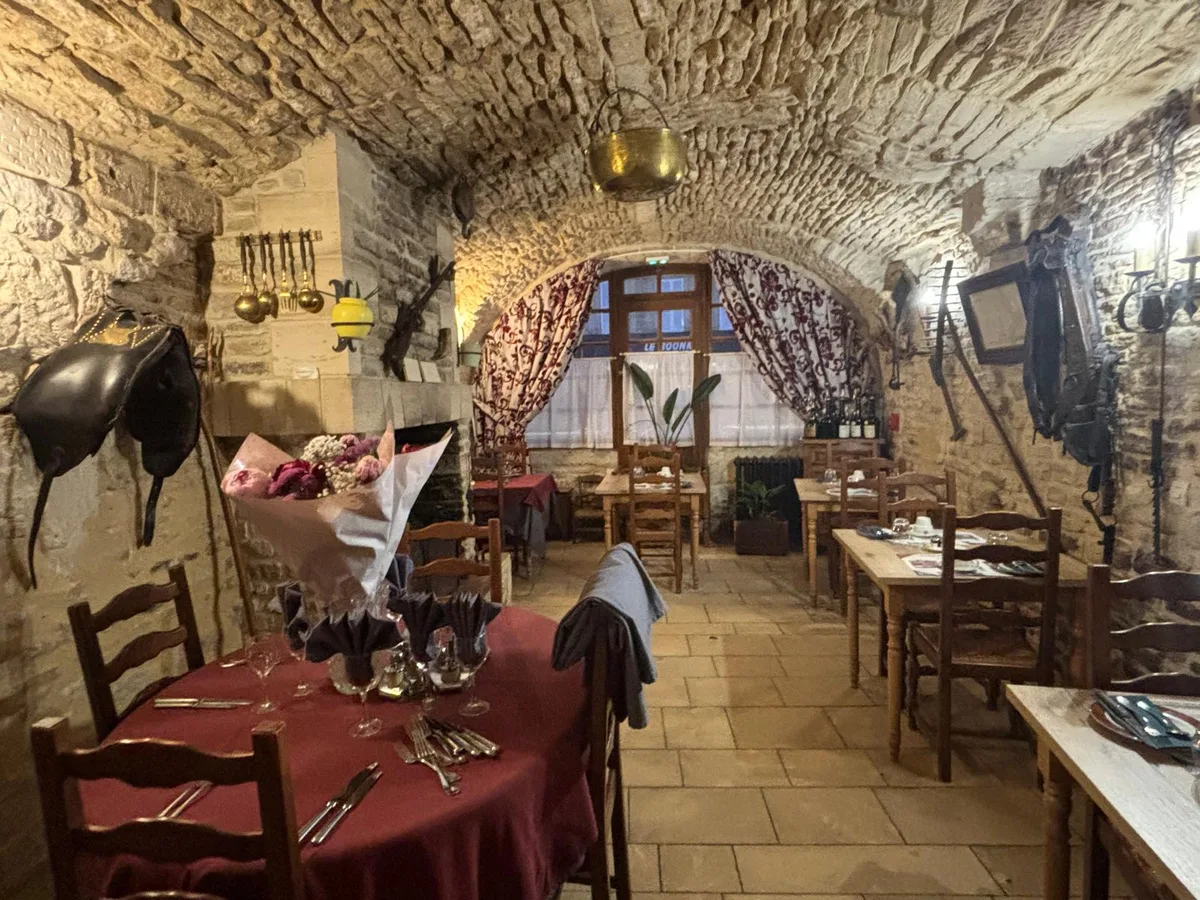 A rustic vaulted room, copper cauldron overhead, the evening light through the curtains
Plan Your D-Day Experience with BELLIDAYS
This is exactly the kind of address that does not appear on most tourist itineraries, and that is precisely why it belongs on yours. A meal at the Hostellerie Saint-Martin is the perfect close to a day spent on the D-Day landing beaches, at the Normandy American Cemetery, or in the medieval streets of Bayeux.
As a licensed private chauffeur-guide, I can build a fully tailored itinerary through the American sector, Omaha and Utah, Pointe du Hoc, Sainte-Mère-Église, the cemetery at Colleville-sur-Mer, and bring the day to a close under the stone vaults of Creully, with a glass of Pommeau and a sole cooked the way it has been cooked here for generations.
Whether you arrive by private car, taxi, or as part of a guided tour, I will take care of everything.
Contact me to start planning your Normandy journey
Practical Information
- Hostellerie Saint-Martin 6 Place Edmond Paillaud, 14480 Creully-sur-Seulles, Calvados
- Logis de France since 1948, Maître Restaurateur, listed in the Michelin Guide
- 12 rooms available, open year-round for lunch and dinner
- Menus from 20 to 43 euros, private parking on site
- Distance from key sites: Juno Beach 9 km, Bayeux 18 km, Caen 20 km, American Cemetery at Colleville-sur-Mer 35 km
- Website: hostelleriesaintmartin.com
Photo Gallery
Article written by Belinda C., licensed private chauffeur-guide and founder of BELLIDAYS Travel Tours. Specialising in private tours across Brittany, Normandy and the Loire Valley for international travellers. bellidays.com