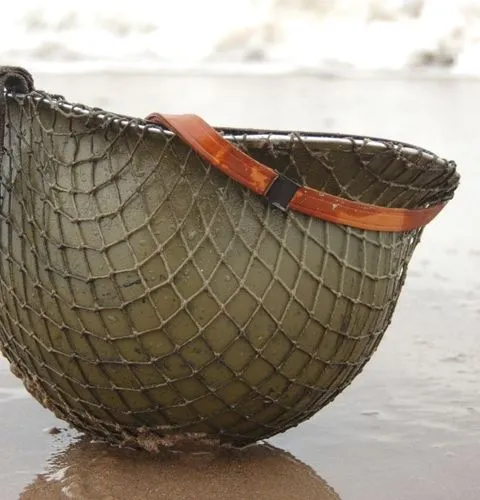
Omaha, Utah, Juno, Gold, Sword: a complete insider guide to visiting the D-Day landing beaches of Normandy, from a licensed private guide based in the region with 17 years of experience on the ground.
There are places in the world where the ground itself holds memory. The D-Day beaches of Normandy are among the most powerful of them.
I have been guiding visitors along this coastline for 17 years. I have stood on Omaha Beach in June with American veterans who came back to say goodbye, and in November with grandchildren who came to understand. I have watched people who thought they were coming for a history lesson leave having experienced something they were not prepared for.
The D-Day beaches are not a tourist attraction. They are a place of profound human significance. And they deserve more than a rushed bus tour.
June 6, 1944: What Happened Here
Operation Overlord was the largest seaborne invasion in history. In the early hours of June 6, 1944, more than 156,000 Allied troops crossed the English Channel and landed along a 50-mile stretch of the Normandy coast, divided into five sectors: Utah and Omaha for the Americans, Gold and Sword for the British, and Juno for the Canadians.
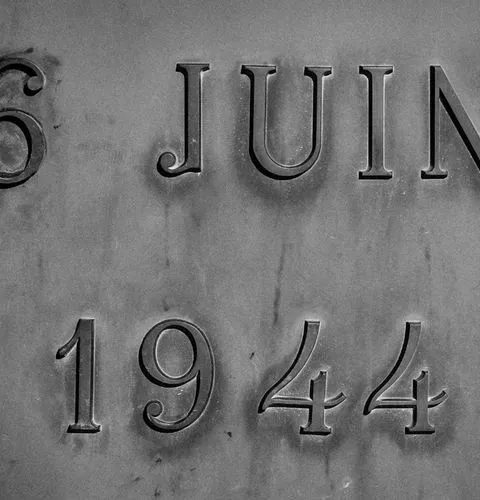
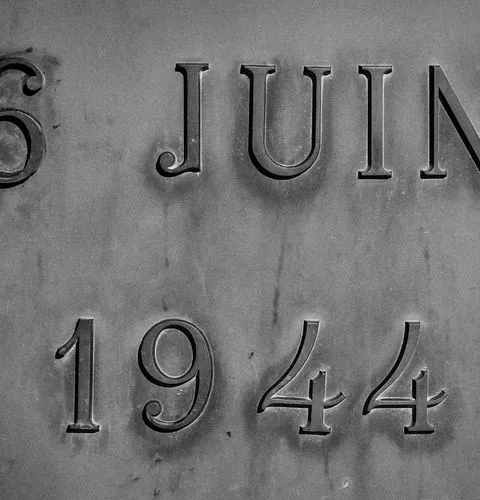
 A memorial inscription on the Normandy coast, marking the ground where history was made
The airborne operation had begun overnight: American paratroopers of the 82nd and 101st Airborne Divisions dropped behind Utah Beach, while British paratroopers secured the eastern flank near Sword. By the time the first landing craft hit the beaches at dawn, thousands of men had already been fighting in the dark for hours.
The casualties were staggering, particularly at Omaha, where the combination of German fortifications, cliffs, and a devastating lack of armored support turned the beach into what Eisenhower later described as the bloodiest single day of the war for American forces. Roughly 2,000 Americans were killed, wounded, or went missing on Omaha alone on June 6th.
By the end of the day, the Allies had secured a foothold in Nazi-occupied Europe. Eleven months later, Germany surrendered.
Understanding what happened here before you arrive changes everything about the experience. This is why I always recommend doing some reading before your visit, and why I spend the drive from your hotel going through the context before we step onto the first beach.
The Five Beaches: What to See and Why It Matters
Omaha Beach: The Bloodiest Shore
Omaha is the beach most Americans know, and it is the one that demands the most time.
Standing on the sand today, looking up at the bluffs, it is almost impossible to comprehend what happened here. The beach is wide, the bluffs are high, and the German positions above had clear fields of fire in every direction. The men who came ashore here had almost no cover and almost no armor. Many never made it past the waterline.
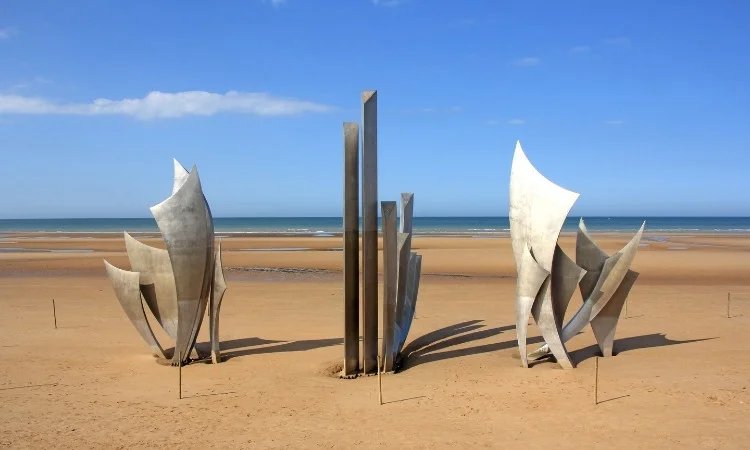
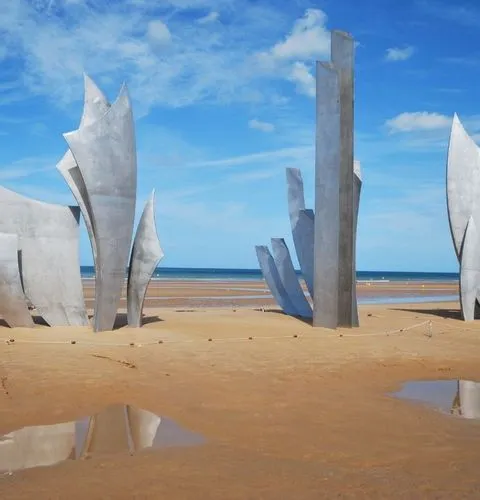 The Omaha Beach memorial, where the sand itself is sacred ground
The American Cemetery at Colleville-sur-Mer sits on the bluffs directly above Omaha Beach. 9,387 white marble crosses and Stars of David mark the graves of American soldiers, arranged in perfect rows across 172 acres of Normandy countryside given to the United States in perpetuity by France. The visitor center is outstanding: personal stories, operational maps, photographs, and film footage that give human faces to the numbers. I never rush this visit. Take as long as you need.
 9,387 white marble crosses at the American Cemetery, on ground given to the United States by France
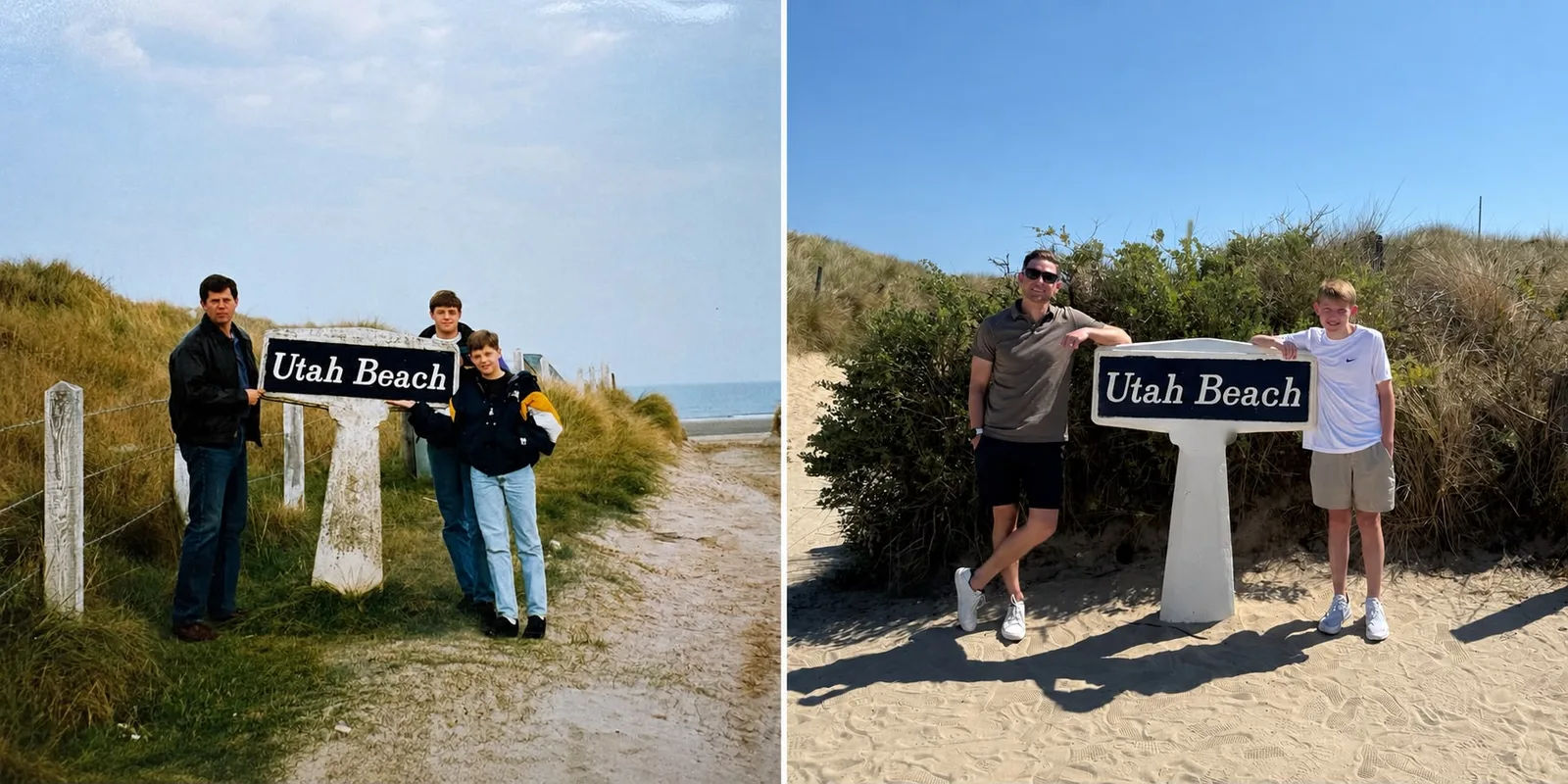
Utah Beach: The Successful Landing
Utah is often overshadowed by Omaha, but it deserves equal attention and offers a very different story.
The landing at Utah was, by the standards of that day, a success. A navigational error pushed the first wave slightly south of their intended position, where the German defenses happened to be lighter. Brigadier General Theodore Roosevelt Jr., the oldest man on the beaches that day and the only general to land in the first wave, famously said “We’ll start the war from right here” and led his men inland. He was awarded the Medal of Honor for his actions that day.
The Utah Beach Museum is one of the finest D-Day museums in Normandy: well-organized, emotionally intelligent, and rich in authentic artifacts including a restored landing craft and several vehicles recovered from the sea.
Pointe du Hoc: The Most Dramatic Site in Normandy
If you visit only one site beyond the beaches themselves, make it Pointe du Hoc.
This rocky promontory between Utah and Omaha was one of the most heavily fortified German positions on the Normandy coast. On the morning of June 6th, 225 Rangers of the 2nd Ranger Battalion scaled the 30-meter cliffs under fire, using ladders and grappling hooks, to neutralize the gun battery that threatened both beaches.
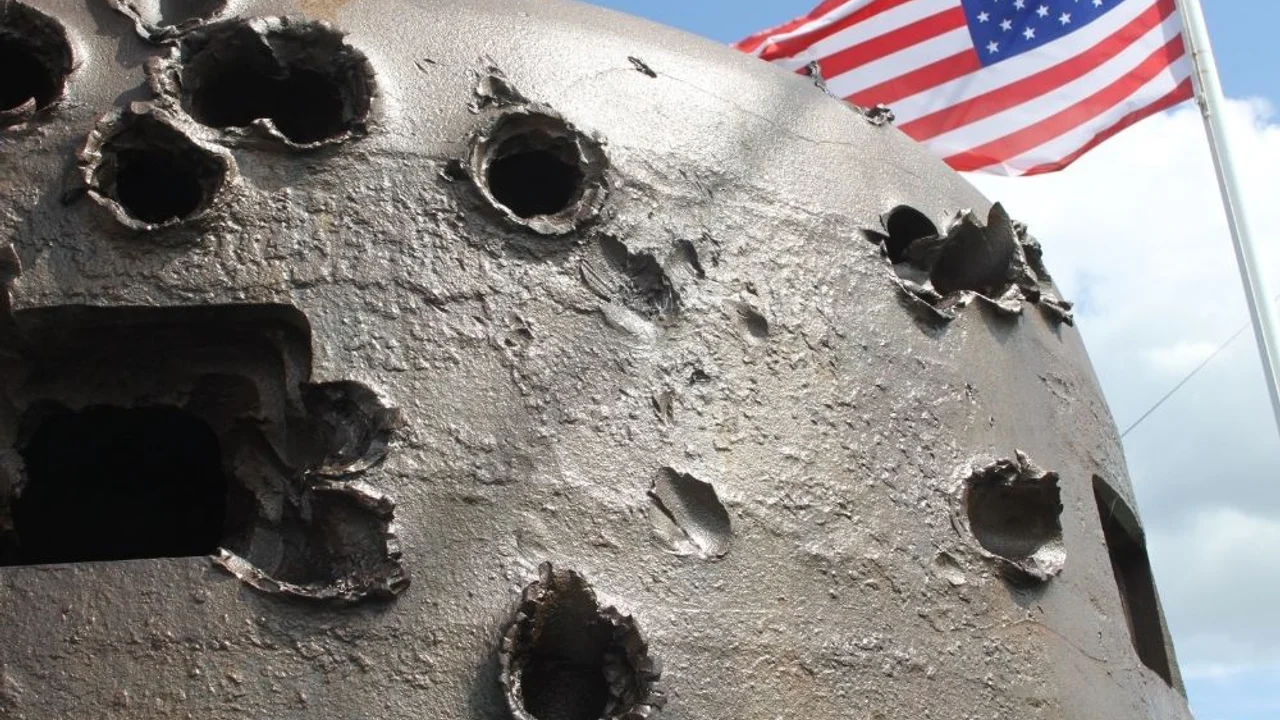 The bomb craters of Pointe du Hoc, preserved exactly as they were left in 1944
The site has been preserved exactly as it was left in 1944. The craters from the pre-invasion bombing, some of them 10 meters deep and 20 meters wide, still pockmark the landscape. The concrete bunkers still stand. Walking Pointe du Hoc is one of the most visceral experiences on the entire D-Day coast. Nothing needs to be explained. The landscape explains itself.
Juno Beach: Canada’s D-Day
The Canadian landing at Juno Beach is one of the least known chapters of June 6th for American visitors, and one of the most remarkable. Canadian forces suffered the second highest casualty rate of the day after Omaha, fighting their way through heavily defended seaside villages to push further inland than any other Allied unit by the end of June 6th.
The Juno Beach Centre, opened in 2003 and operated by a Canadian foundation, is an excellent museum that tells the Canadian story of the Second World War with depth and honesty.
Gold and Sword: The British Beaches
Gold and Sword complete the picture of the multinational effort that was Operation Overlord.
At Arromanches, between Gold and Omaha, you can see the remains of Mulberry Harbor B, the extraordinary prefabricated artificial harbor towed across the Channel within days of the landing. More than 70 concrete caissons, each the size of a five-story building, were sunk in position and handled 9,000 tons of supplies per day at their peak.
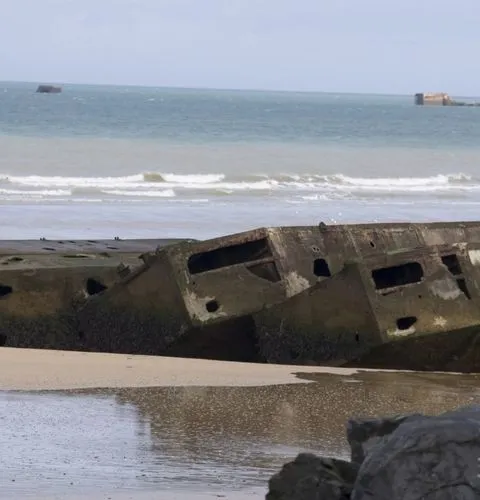 The remains of Mulberry Harbor at Arromanches, still visible from the beach more than 80 years later
Sword Beach at Ouistreham is where French commandos of the 1st Battalion de Fusiliers Marins came ashore to liberate their own country.
Beyond the Beaches: Essential Stops
The Airborne Museum, Sainte-Mere-Eglise
Sainte-Mere-Eglise was the first French town liberated on June 6th, captured by American paratroopers of the 82nd Airborne in the early hours of the morning. The church steeple is famous for the story of Private John Steele, whose parachute caught on it during the night drop.
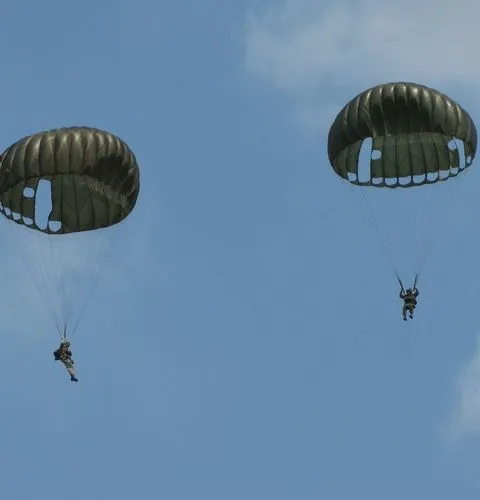 Remembering the paratroopers who dropped behind enemy lines in the hours before dawn
The Airborne Museum is one of the best military museums I have ever visited. Two spectacular hangar buildings house an original C-47 transport aircraft, a WACO glider, vehicles, weapons, and uniforms. Allow at least two hours.
La Cambe German Military Cemetery
This is the visit that most tour operators skip, and the one I always include.
La Cambe is the German military cemetery, 5 km from Omaha Beach, where 21,222 German soldiers are buried under flat basalt crosses. It is a place of very different atmosphere from the American Cemetery: darker, quieter, more somber. Many of the men buried here were very young, some barely 18.
I include it because understanding June 6th means understanding that there were human beings on both sides of it. The soldiers buried at La Cambe did not choose the regime they served. That reflection matters.
How to Visit the D-Day Beaches: Practical Advice
One day or two? One full day covers Omaha Beach, the American Cemetery, Pointe du Hoc, Utah Beach, and the Airborne Museum at Sainte-Mere-Eglise comfortably. Two days allow you to add the Canadian and British beaches, Arromanches, and La Cambe. I always recommend two days for anyone with a genuine interest in the history. That decision deserves more than a paragraph, so I have written it out sector by sector, with the honest hour count for each: How Many Days Do You Need for the D-Day Beaches?
Departing from Normandy itself. Bayeux is the ideal base: 30 minutes from Omaha Beach, central to the entire American sector, and a beautiful medieval city with its famous 11th-century tapestry. Saint-Malo is 1h30 and makes a natural starting point for a combined Normandy and Brittany circuit. Cherbourg is 1 hour from Utah Beach.
From Paris. The train is by far the most comfortable way. Paris Saint-Lazare to Bayeux takes approximately 2 hours with a change at Caen. A private chauffeur-guide meets you at the station and returns you in time for your evening train.
When to go? June 6th itself is deeply moving but extremely crowded. May and September offer the best combination of manageable crowds and good weather. The beaches are powerful in any season, including winter, when the solitude intensifies the experience considerably.
Brittany: Another Chapter of the War Most Visitors Never Know About
If the history of the Second World War brought you this far, Brittany has more to offer than most people realize.
The Brittany ports were strategic targets of the highest importance throughout the conflict. At Lorient, the German U-boat submarine base is one of the most striking pieces of wartime architecture in France: reinforced concrete pens with walls up to eight meters thick, so solid they withstood Allied bombing almost entirely. At Brest, American forces fought some of the most intense urban combat of the entire Western Front in the summer and autumn of 1944.
For some American visitors, Brittany is not just history, it is family. I have had the privilege of guiding travelers whose ancestors served and died on this soil, including the moving story of John Breidenthal, who came to Brittany to retrace his family’s wartime connection. It is one of the most meaningful tours I have ever led.
Visiting the D-Day Beaches with BELLIDAYS
A private guide changes the experience fundamentally. Not because the museums and information panels are inadequate. They are excellent. But because a guide who knows this ground, who has read the unit histories and the personal testimonies, who can stop at a specific point on Omaha Beach and say “this is where the 1st Infantry Division came ashore, and this is what they faced,” transforms a visit into something closer to understanding.
I offer private D-Day tours departing from Bayeux, Caen, Cherbourg, Saint-Malo, Honfleur, Le Havre, and Paris. Every itinerary is built around your group’s interests: American sectors only, British and Canadian emphasis, family history research, or a comprehensive full-day overview.
Groups of one to seven people. Guided in English, Spanish, Italian, or Portuguese. No coach, no strangers, no fixed schedule.
Contact us to plan your Normandy visit →
Frequently Asked Questions
How long does it take to visit the D-Day beaches?
A minimum of one full day for the American sector (Omaha, Utah, Pointe du Hoc, American Cemetery, Airborne Museum). Two days to cover all five beaches and the major museums comfortably. I recommend two days for anyone with a serious interest in the history. My full planning guide breaks it down site by site: How Many Days Do You Need for the D-Day Beaches?
Is a guided tour necessary for the D-Day beaches?
Not strictly necessary, but the difference between visiting with a knowledgeable private guide and visiting independently is significant. The landscape requires interpretation: without understanding what happened where and why, much of what you see is simply grass, sand, and concrete. A good guide makes the ground speak.
What is the most moving site on the D-Day coast?
Different sites affect different people differently. For most American visitors, the combination of walking Omaha Beach at low tide and then standing in the American Cemetery at Colleville is the most powerful sequence. For others, Pointe du Hoc, precisely because of its physical drama, leaves the deepest impression.
Can I visit the D-Day beaches from Paris in a day?
Yes, but it requires an early start and a late return, and allows time for only a portion of the sites. I recommend spending at least one night in Normandy, or taking the train to Caen or Bayeux and being met by a private guide at the station.
Are the D-Day beaches appropriate for children?
Yes, with appropriate preparation. The sites are not graphic in the way that some visitors fear, but they are emotionally serious. Children who understand something of the history before they arrive will get far more from the visit. I have guided many families with children of all ages and the experience, handled thoughtfully, can be genuinely formative.
What is the best D-Day museum in Normandy?
The American Cemetery visitor center for emotional impact. The Airborne Museum in Sainte-Mere-Eglise for military history depth. The Utah Beach Museum for contextual clarity. The Juno Beach Centre for the Canadian story. Each serves a different purpose and all are worth visiting.
Can I combine the D-Day beaches with a WWII tour of Brittany?
Absolutely. The U-boat base at Lorient, the Atlantic Wall remnants around Brest and Pointe Saint-Mathieu, and the story of the Saint-Nazaire pocket make Brittany a compelling extension of any WWII itinerary. BELLIDAYS offers combined Normandy and Brittany circuits for visitors who want the full picture of the Atlantic war.
Article written by Belinda C., licensed private chauffeur-guide and founder of BELLIDAYS Travel Tours. Specialising in private D-Day and WWII tours across Normandy and Brittany for international travellers. bellidays.com