Many travellers come to Saint-Malo because of a novel. Few realise they are walking through one of the most heavily fortified, most fought-over towns of the Second World War in France. Here is the real story behind the walls, from the Atlantic Wall fortress to the 39-45 Memorial.
A lot of you arrive in Saint-Malo because of a book. You walk the ramparts at sunset, you eat a galette, you photograph the granite walls glowing gold over the sea, and you leave never knowing that you were standing on one of the most heavily fortified, most fought-over corners of the entire Second World War in France.
This is the story almost no one tells you. It is also the one I love most to tell, because it is the real Brittany underneath the postcard, and because the people who lived and died here deserve to be more than a backdrop.
The Book That Brings You Here
So many of my American guests come to Saint-Malo because of “All the Light We Cannot See”, Anthony Doerr’s novel, and the series that followed it. It is a beautiful story, a blind French girl and a young German soldier, set against the bombardment of Saint-Malo in August 1944.
But the fiction sits on top of something true, and far harder. The Saint-Malo in that story was burning for a reason. And almost no visitor who comes for the novel ever learns what actually happened here.
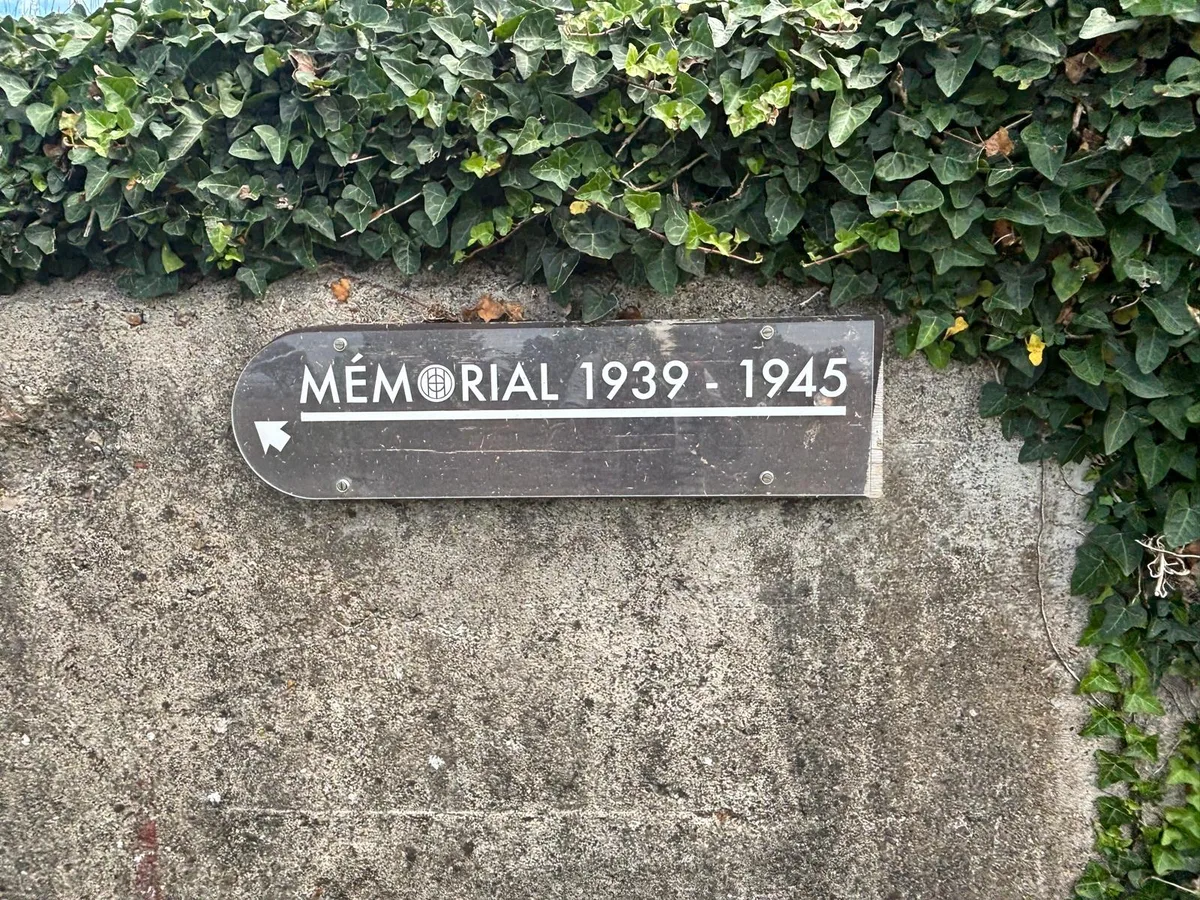 A small sign points the way to a history most visitors walk straight past
Saint-Malo Was a Fortress
When people think of the Second World War in this part of France, they think of the D-Day beaches of Normandy, and rightly so. But the German defences did not stop at the Normandy border. The Atlantic Wall ran the whole length of the coast, and certain ports were singled out by Hitler as fortresses, to be held to the very last man.
Saint-Malo was one of them. The Cité d’Alet, the rocky headland across the water from the old town, was turned into a warren of bunkers, gun emplacements, and underground command posts. Out at sea, the little island of Cézembre was fortified so heavily that it became one of the most bombed scraps of land of the entire campaign.
In August 1944, the Americans came, the men of the US 83rd Infantry Division, the Thunderbolts. The German commander, Colonel von Aulock, the man the press called the mad colonel of Saint-Malo, refused every call to surrender. The battle that followed set the walled city alight. By the end of it, something close to eighty percent of intra-muros was destroyed. The Cité d’Alet held out until the 17th of August. Cézembre did not surrender until the 2nd of September.
The Saint-Malo you stroll through today, those perfect granite streets, was rebuilt after the war, stone by stone, from the ruins. That is something worth feeling under your feet as you walk it.
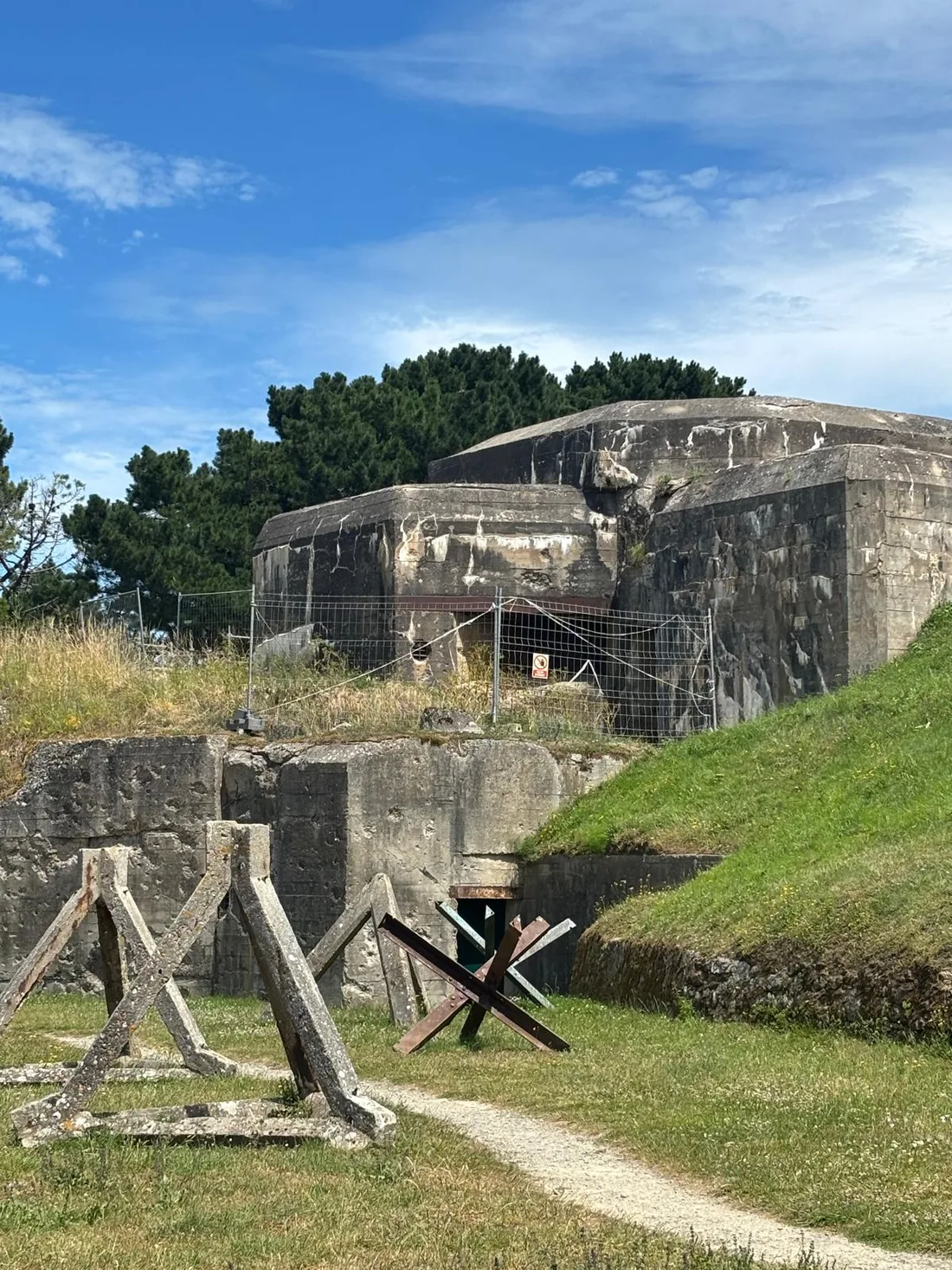 The German fortifications of the Cité d’Alet, part of the Atlantic Wall, still standing above Saint-Malo
What You Can Still See, If You Know Where to Look
The history is still here, if someone shows you where to look.
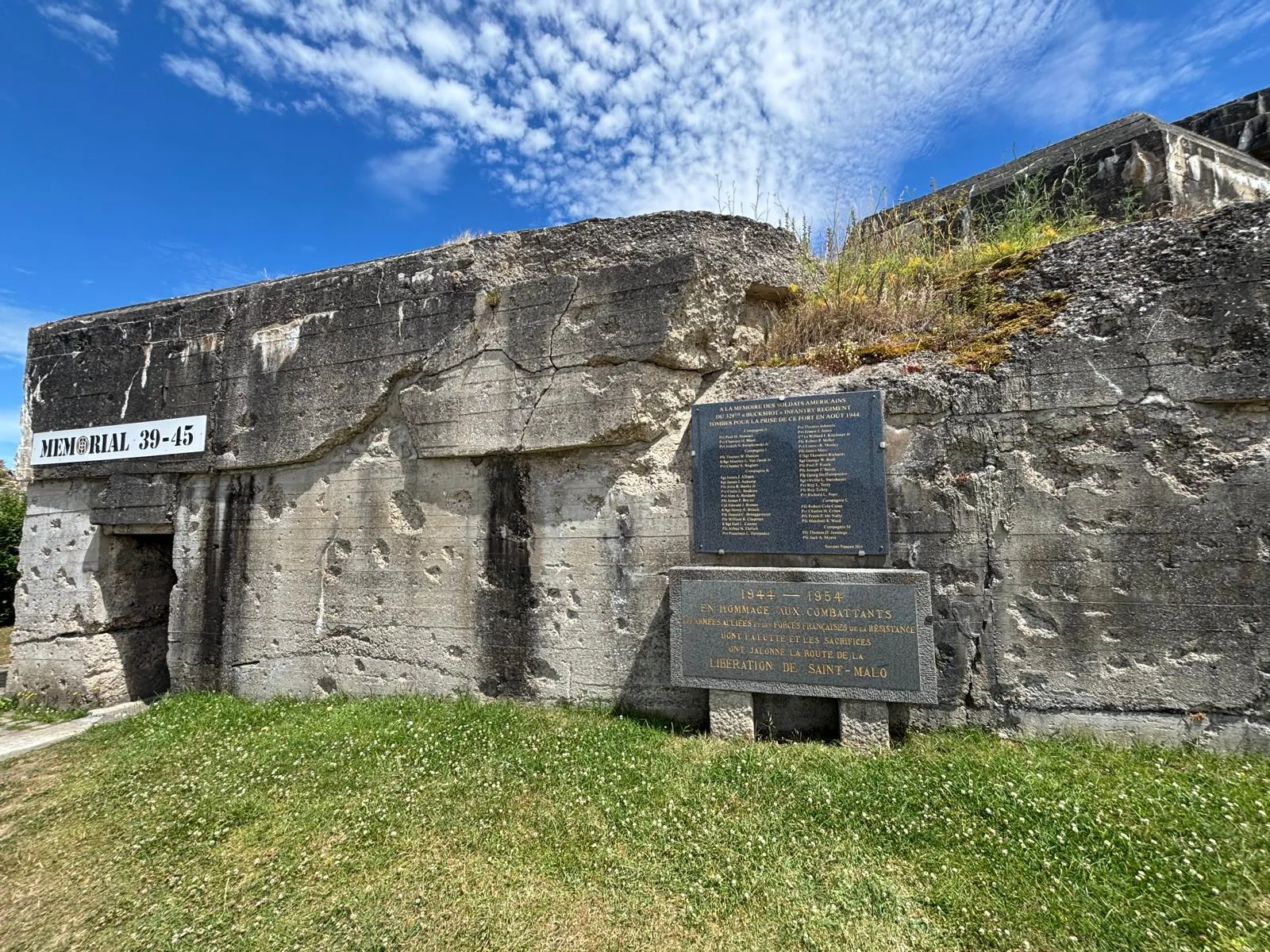
The 39-45 Memorial is built into a former German command bunker in the Cité d’Alet, and it tells the story of the siege and the liberation. Around it stand the ruins of the old cathedral of Alet, the gun positions, and the views out to Cézembre that suddenly mean something once you know what happened there.
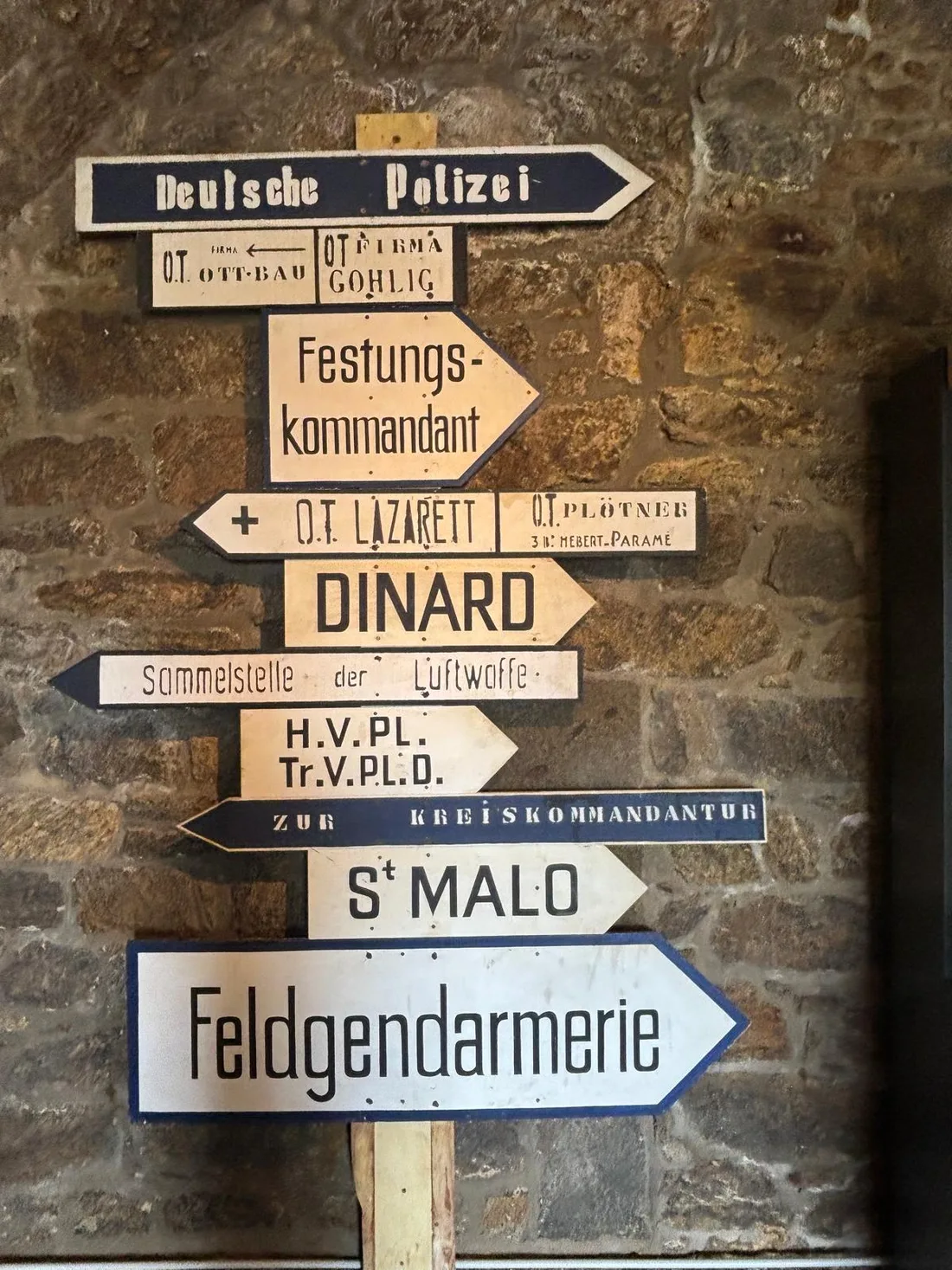
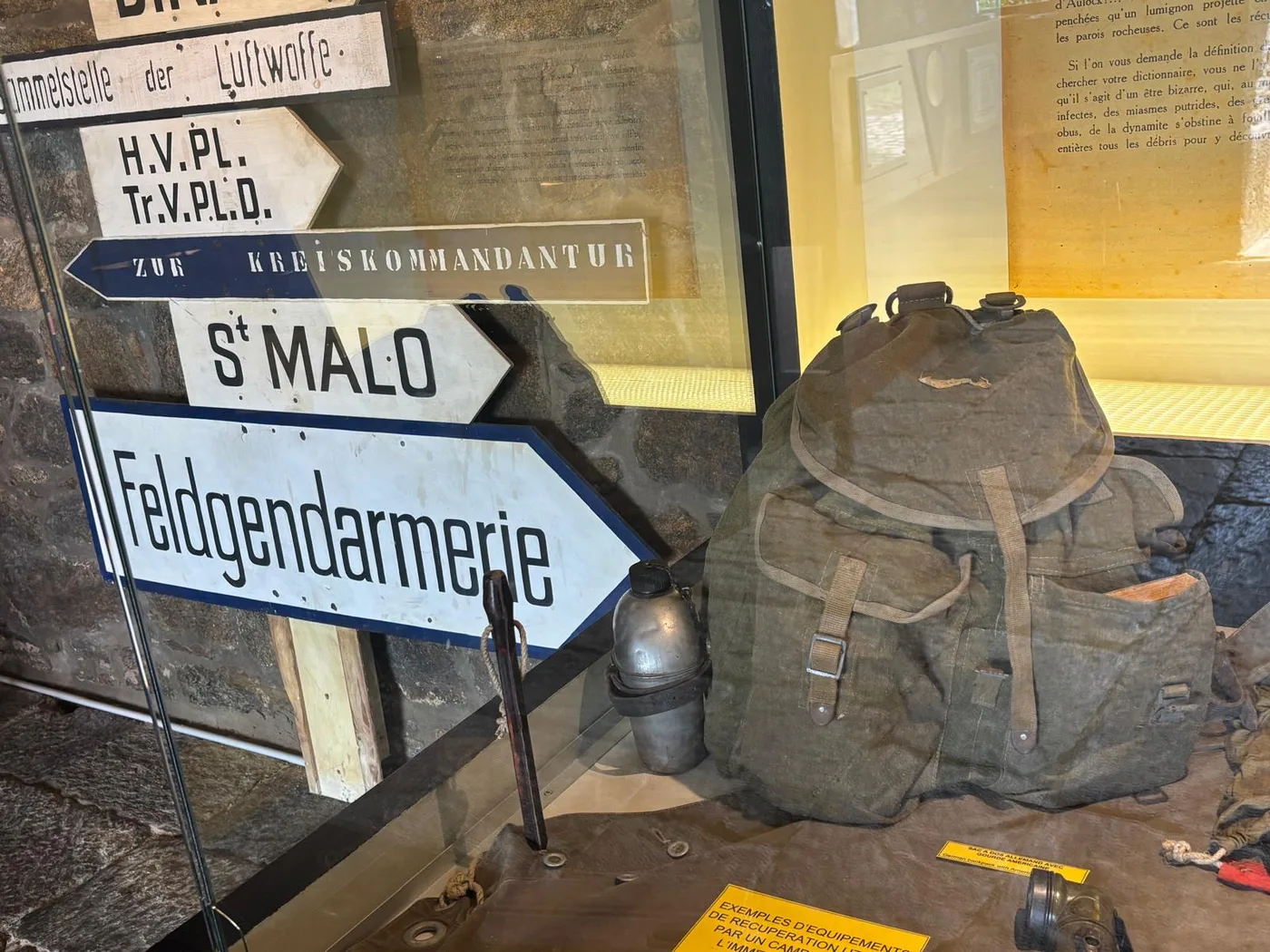
Inside the 39-45 Memorial, the German occupation of Saint-Malo told through the objects it left behind
And for those who take the time to arrange it, there are things that stop you in your tracks. A captured German flag, for instance, covered in the signatures of the American soldiers who liberated the town. You do not forget a thing like that. But it has to be organised in advance, and you have to know who to ask.
Why This Matters to Me
I do not guide these places only as history. I guide them as a thank you.
Thank you to the soldiers, so many of them barely more than boys, who crossed an ocean to fight for a country that was not even their own. And thank you to the people of the shadows we speak of far too rarely, the Breton resistance, the men and women of this land who fought in silence and paid for it.
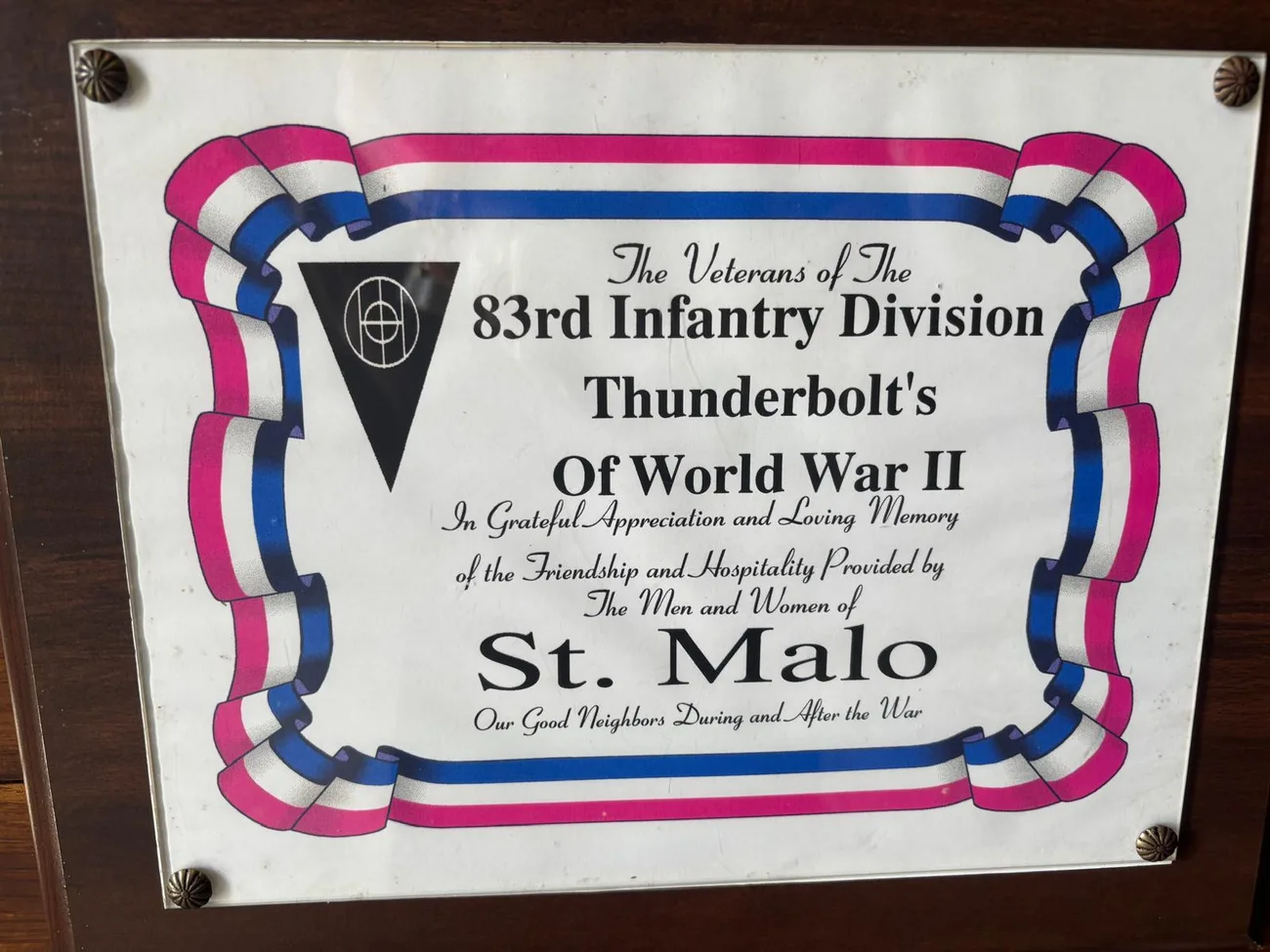 A plaque left by the veterans of the 83rd Infantry Division, the Thunderbolts who liberated the town, to the people of Saint-Malo, their good neighbors during and after the war
This is the history my best friend Colin taught me to feel, not as dates in a book but as something human, something that still aches. He was Irish, an extraordinary historian, and one of the finest guides ever to walk the D-Day beaches. We were going to write a book together about the Second World War in Brittany. I am writing it now, for him. And I made a promise: to keep searching, and to keep telling these stories, even the smallest and most forgotten ones, so the memories stay alive. The bodies are gone. The souls are not.
You can read that part of the story, the personal one, here.
The Liberation Commemorations
Every year, Saint-Malo remembers. The town gathers to mark its liberation, and I try to be there whenever I can. Standing in that crowd, among the flags and the veterans and the families, you understand that this is not the past at all. It is a living thing, carried forward by people who refuse to let it fade.
Let Me Show You the Real Brittany
If you want to understand the real Brittany behind the postcard, I would love to take you there. I can guide you around the German fortifications of the Cité d’Alet and tell you the whole story on the spot, in the language you are most comfortable in, French, English, Spanish, Italian or Portuguese.
One honest word about access. The bunker that houses the 39-45 Memorial belongs to the town of Saint-Malo, and the inside can only be visited privately, on set days and times. It is not a place you can simply walk into whenever you like. But the exterior, the bunkers, the defences, the headland and its views over the bay and out to Cézembre, can be explored freely, and that is where I come in. I bring the history alive, and I make sure you understand exactly what you are standing in front of.
If your family has a connection to this coast, a name, a regiment, a story passed down, reach out and tell me. I will build the day around it.