The Grande Briere is one of France's largest natural parks and one of its least visited. Thatched villages, flat-bottomed boats, rare birds, and total silence. A slow travel destination unlike anywhere else in Western France.
Most visitors to the Loire-Atlantique drive straight through it without stopping. They are heading for Nantes, or the coast, or Saint-Nazaire, and the flat, reedy landscape on either side of the road does not announce itself dramatically. There are no cliffs, no chateaux, no medieval towers. Just water, sky, and an improbable silence for a place this close to the Atlantic.
That silence is exactly the point.
The Parc Naturel Regional de Briere is the second largest marshland in France, covering more than 40,000 hectares of peat bog, reed bed, canal, and grassland between Saint-Nazaire and the Guerande peninsula. It has been inhabited for thousands of years. It was granted in common ownership to the local communities by a royal charter in 1461, and it remains, in law and in spirit, a shared territory. No one owns the marshes. Everyone tends them.
I have been bringing travelers here for years, and I still find it one of the most unexpectedly powerful places in my territory. It is not a dramatic landscape. It earns its hold on you slowly, quietly, in the way that only genuinely wild places can.
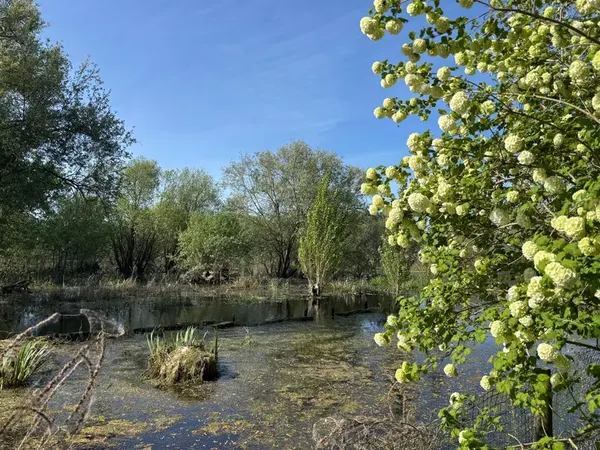 The Grande Briere in spring, white flowers framing the still water
Kerhinet: The Village That Refused to Disappear
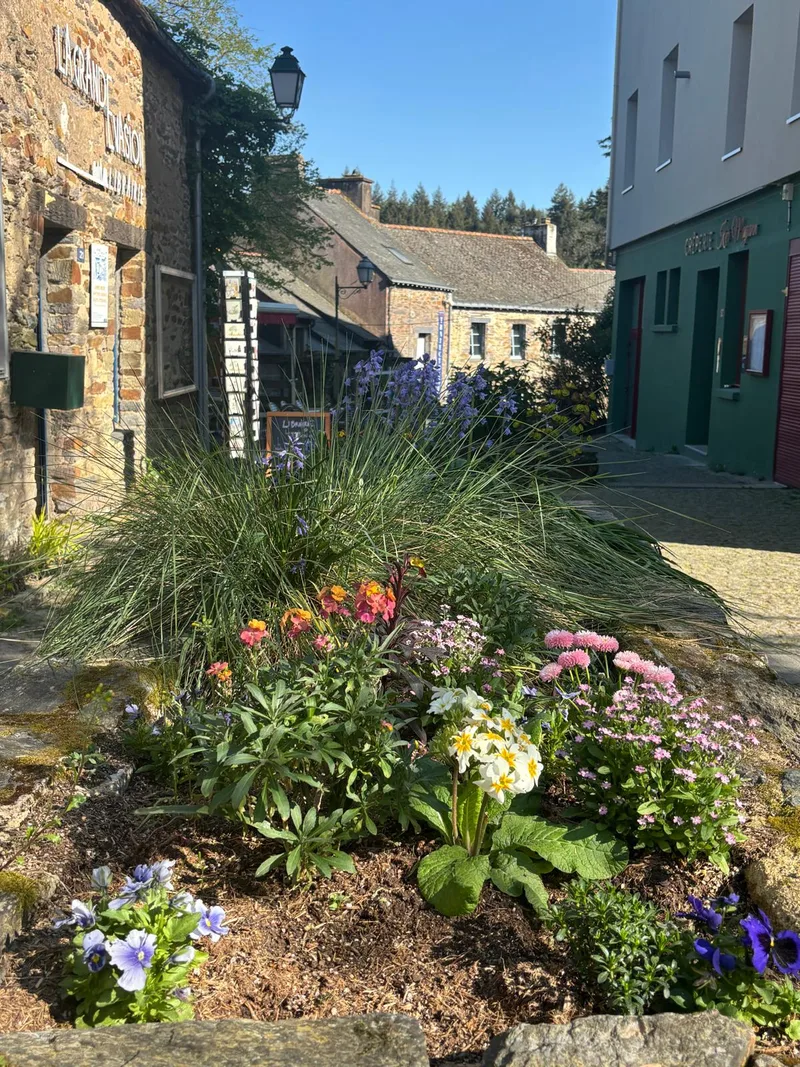
The village of Kerhinet, at the heart of the park, is one of the most complete examples of traditional Briere architecture in existence. Eighteen thatched cottages, restored to their original state by the Regional Natural Park authority, line a narrow lane that feels entirely removed from the 21st century. The thatch is local reed, harvested from the marshes exactly as it has been for centuries. The stone walls are the pale granite of the region. The gardens are small and wild.
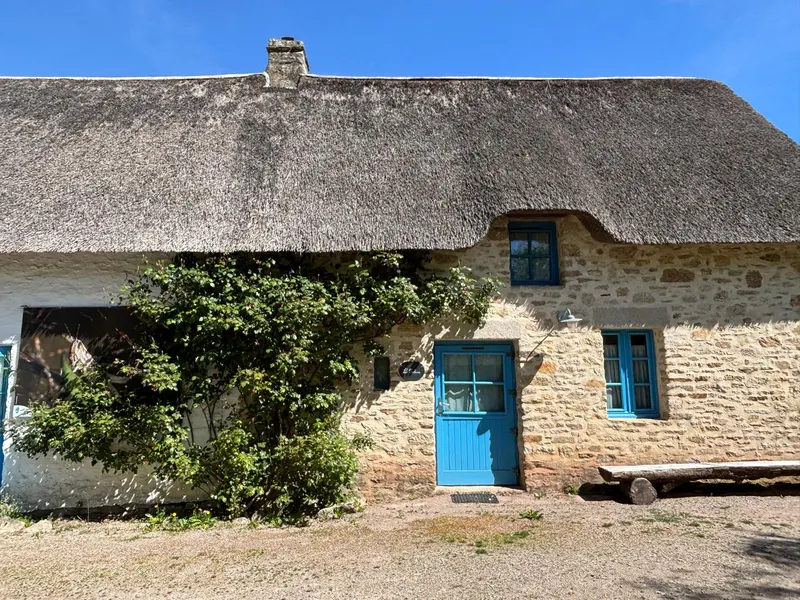 Kerhinet, thatched reed roofs and blue shutters unchanged for centuries
Kerhinet was abandoned in the 1970s as rural depopulation emptied the marshland villages. The park authority bought the buildings, restored them one by one, and breathed new life into them without turning the village into a theme park. Today it is home to artisan workshops, a small museum of Briere life, and one of the most authentic rural restaurants in the region.
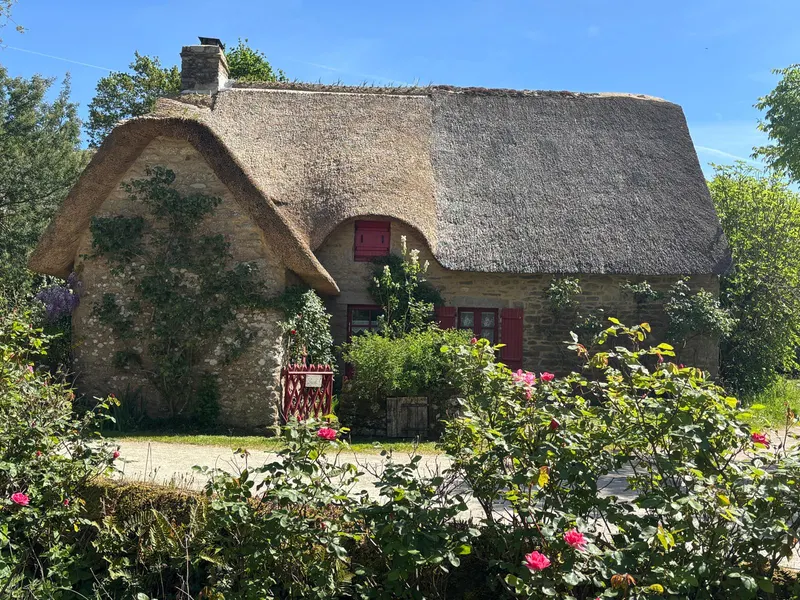 A Kerhinet cottage in summer, roses climbing the ancient stone walls
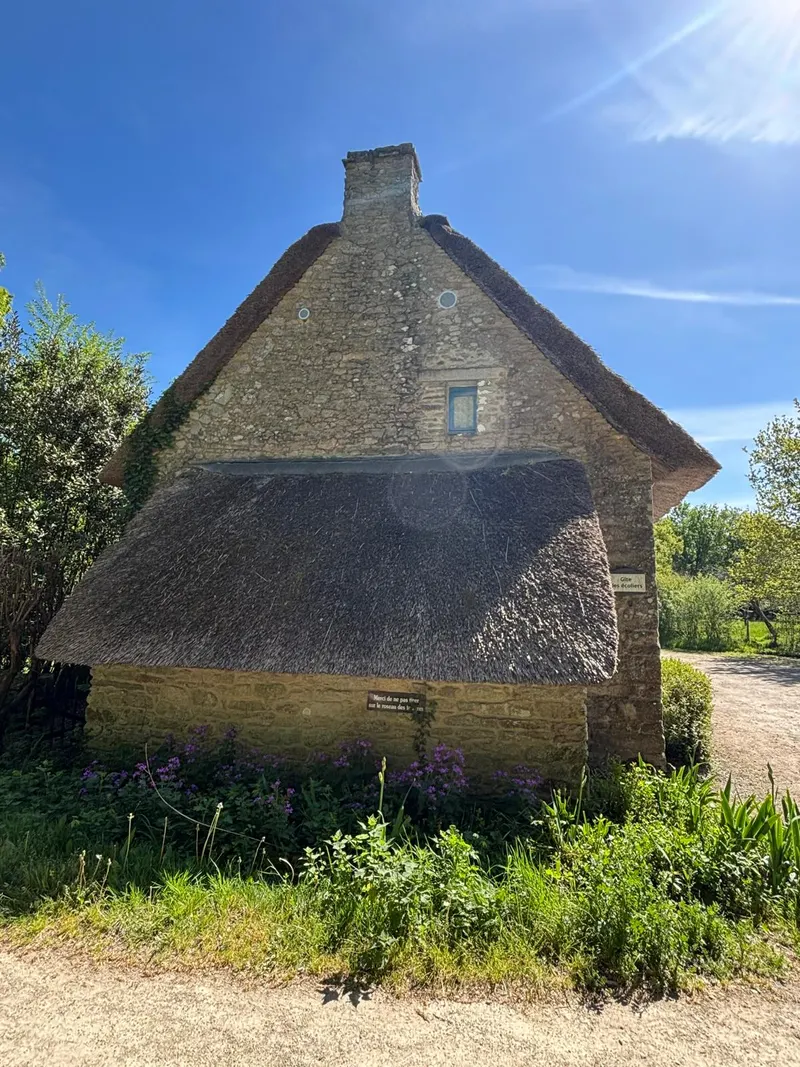 Traditional Briere architecture, stone and reed, built to last
The Auberge de Kerhinet is the kind of place that travel writers describe as a hidden gem so often that the phrase has lost all meaning. This one genuinely deserves it. The menu changes with the seasons and the catch, the portions are generous, the prices are reasonable, and the terrace overlooking the thatched rooftops has a view that reminds you why you travel in the first place.
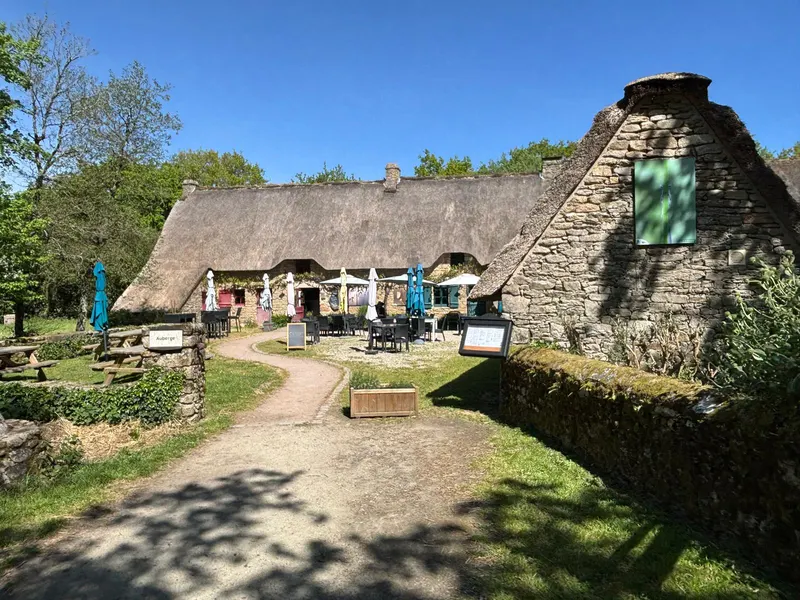 The Auberge de Kerhinet, a genuine hidden gem in the heart of the park
The owner also rents several restored gites in the village for those who want to spend a night or two inside the marsh rather than passing through it. Staying in Kerhinet, even for a single night, is a completely different experience from passing through. At dusk, when the day visitors have left and the village returns to its own pace, the silence of the Briere settles in. It is one of those silences that you can actually hear.
The Marshes: Getting on the Water
The Briere is a landscape that must be experienced from the water to be properly understood. The network of canals and channels that criss-crosses the park has been maintained for centuries, first for peat cutting and fishing, now for navigation and wildlife observation.
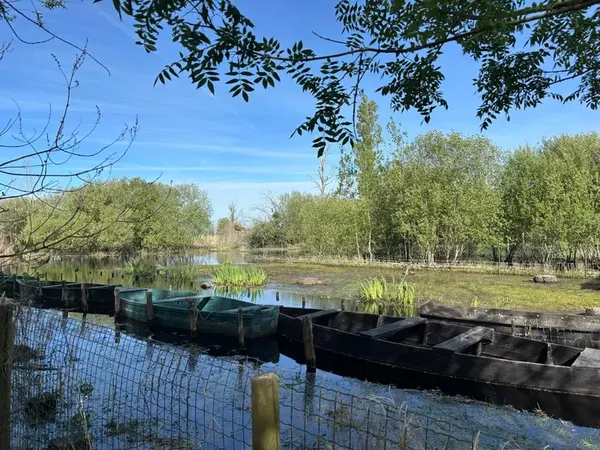 The chalands, traditional flat-bottomed boats of the Briere, moored and waiting
Traditional flat-bottomed boats, the chalands, are the original transport of the Briere. Local boatmen, the passeurs, have poled these boats through the reed beds for generations, and the tradition continues today. A guided boat trip through the interior of the marsh, away from the main canals and into the narrower channels where the reed closes in overhead and the water is perfectly still, is one of the most memorable experiences in the region.
It is also one of the best wildlife experiences in Atlantic France. The Briere is on a major migratory flyway and supports breeding populations of marsh harriers, bitterns, purple herons, great white egrets, and in summer, a bewildering variety of warblers that fill the reed beds with sound. For visitors with any interest in birds, the Briere is extraordinary.
And yes, there are frogs. An enormous number of frogs, singing in chorus from April onward with a volume and enthusiasm that has to be heard to be believed. My clients always laugh the first time they hear it. Then they stop laughing and just listen.
Slow Food, Slow Travel: Eating in the Briere
The Briere has its own food culture, rooted in the marsh and the salt flats of Guerande just to the south.
Fleur de sel de Guerande is the hand-harvested sea salt produced in the saline marshes on the edge of the Briere peninsula. It has been produced here since the Middle Ages, gathered by paludiers with wooden rakes in a process unchanged for a thousand years. The fleur de sel, the delicate crystals that form on the surface of the water on calm summer days, is among the finest salt in the world.
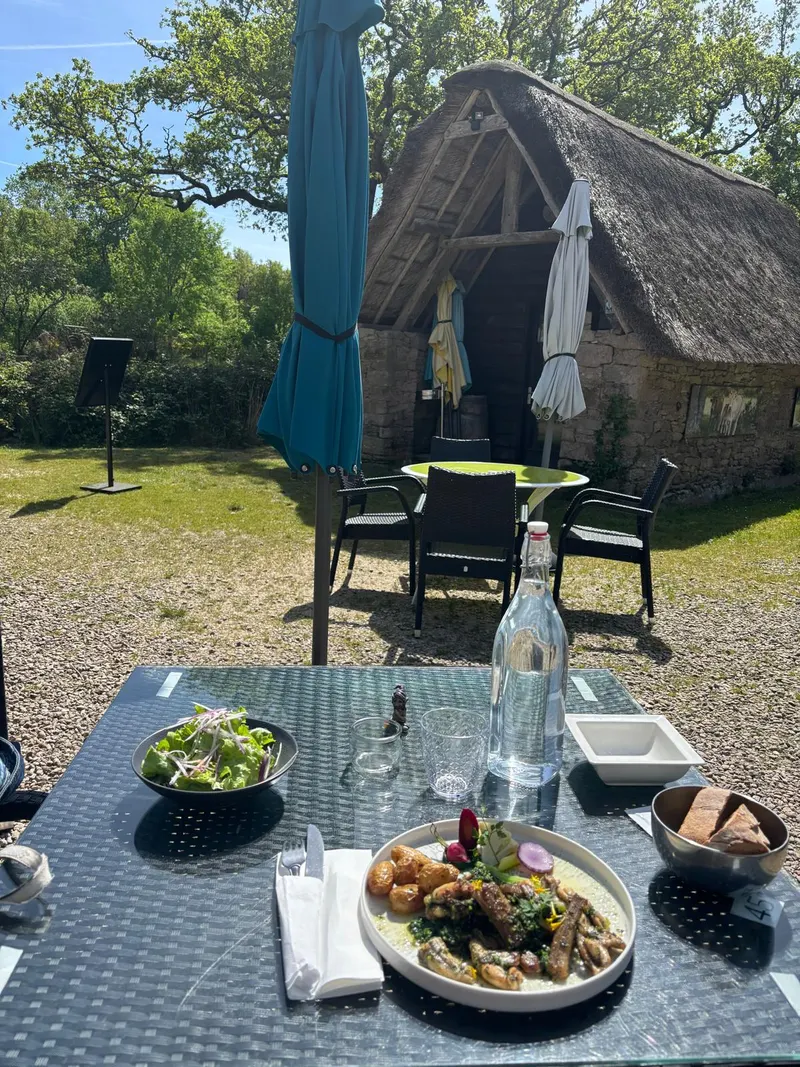 Lunch at the Auberge de Kerhinet, seasonal local ingredients and thatched rooftops
Eel from the marsh has been a staple of Briere cuisine since long before anyone thought to write it down. Smoked, grilled, or served in a matelote with local wine, it is one of those dishes that tastes entirely of place.
The Auberge de Kerhinet works closely with local producers and seasonal ingredients, and a meal there is as honest a representation of Briere food culture as you will find. No truffle foam, no deconstructed anything. Just good ingredients, prepared with respect.
For those who want to combine the authentic Briere experience with something altogether more spectacular, La Mare aux Oiseaux, the Michelin-starred restaurant and hotel at Saint-Joachim, sits at the heart of the park and represents the Briere at its most refined and ambitious. The two restaurants represent two completely different faces of the same territory, and both are worth experiencing.
The Guerande Peninsula: Salt, Sea, and La Baule
The Briere does not exist in isolation. It sits at the heart of a peninsula that offers several days of extraordinary variety within a very small area.
Guerande is the medieval walled town on the edge of the salt marshes, with ramparts intact and an old town that has changed very little since the 15th century. The Saturday morning market is one of the best in the region: local salt, fresh fish, Briere honey, and the kind of farmhouse cheeses that do not travel.
La Baule, just south of Guerande, is the grande dame of the Atlantic coast resorts: a five-kilometer arc of fine sand, grand Belle Epoque hotels, and a promenade that was fashionable in the 1920s and never entirely went out of fashion. The contrast between the wild marsh and the elegant seaside resort, within twenty minutes of each other, is one of the things that makes this corner of France so endlessly interesting.
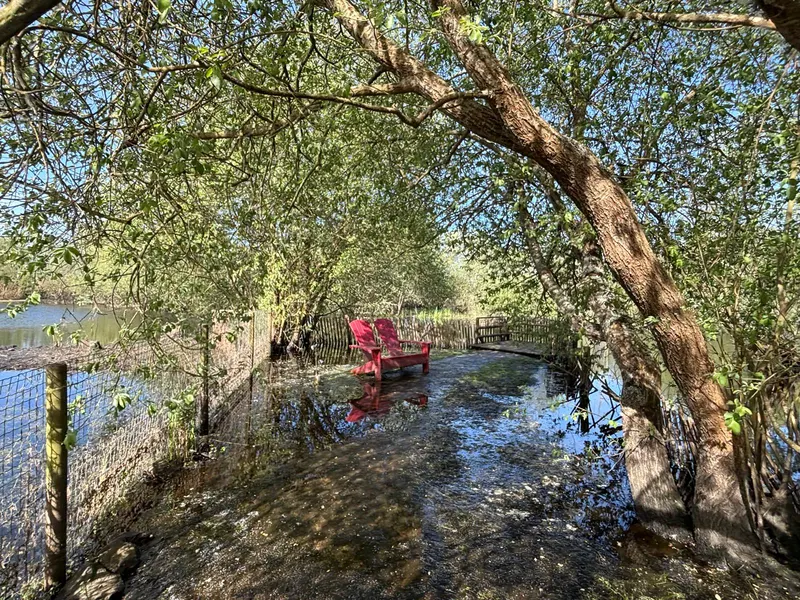 Slow down, sit, and listen to the silence of the Briere
Practical Information
- Getting there. The Briere is located between Saint-Nazaire and Guerande in Loire-Atlantique, approximately 1 hour from Nantes, 1h30 from Rennes, and 1h45 from Saint-Malo by car.
- When to visit. Spring and early summer (April to June) are ideal: the birds are nesting, the vegetation is at its most vivid, and the frog chorus is at full volume. September and October offer beautiful light and far fewer visitors.
- How long do you need? A half-day allows a visit to Kerhinet, a boat trip, and lunch at the Auberge. A full day adds Guerande and a walk along the salt marshes. Two days, with an overnight stay in a Kerhinet gite or at La Mare aux Oiseaux, reveal the Briere at its most unhurried and most authentic.
Plan Your Briere Experience with BELLIDAYS
The Grande Briere is one of those places that rewards having a guide, not because it is complicated, but because the stories embedded in this landscape take years to accumulate, and having someone who knows them makes the experience infinitely richer.
I combine the Briere with a variety of broader circuits depending on where clients are departing from. From Nantes, a full day takes in the park, Guerande, and the salt marshes. From Saint-Malo or Rennes, the Briere works beautifully as part of a two or three day southern Brittany circuit, combined with Carnac, the Gulf of Morbihan, and La Baule. From a cruise ship in Saint-Nazaire, a shore excursion into the heart of the park and back is entirely feasible within a port day.
Contact us to start planning your Briere escape →
Frequently Asked Questions
What is the Parc Naturel de Briere?
The Grande Briere is France’s second largest marshland and one of its least visited natural parks, covering more than 40,000 hectares of peat bog, reed bed, and canal between Saint-Nazaire and the Guerande peninsula. It has been protected as a Regional Natural Park since 1970 and is one of the most important wetland habitats for migratory birds in Atlantic France.
Is the Briere worth visiting?
Without question, for the right traveler. The Briere is not a landscape that announces itself dramatically. It rewards patience, curiosity, and a willingness to slow down. For visitors interested in nature, authentic rural France, slow tourism, and genuinely off-the-beaten-path experiences, it is one of the most memorable destinations in Western France.
What is the village of Kerhinet?
Kerhinet is a restored thatched village at the heart of the Briere park, preserved and maintained by the Regional Natural Park authority. It includes artisan workshops, a rural museum, a traditional auberge restaurant, and several gites available for overnight stays. It is one of the finest examples of traditional Briere architecture in existence.
Can I visit the Briere from Nantes?
Yes, easily. The park is approximately 1 hour from Nantes by car, making it a comfortable full-day excursion. A private chauffeur-guide can combine a Briere visit with Guerande and La Baule for a varied and memorable day.
Can I visit the Briere from a cruise ship in Saint-Nazaire?
Yes. Saint-Nazaire is the gateway to the Briere, and the park is less than 20 minutes from the port. A shore excursion combining a boat trip in the marsh, a visit to Kerhinet, and lunch at the Auberge fits comfortably within a standard port day. BELLIDAYS offers guaranteed return to the ship before departure.
Is the Briere good for birdwatching?
Exceptional. The park is on a major Atlantic migratory flyway and supports breeding populations of marsh harriers, bitterns, purple herons, great white egrets, and numerous warbler species. Spring and early summer are the best seasons. A guided boat trip through the interior channels offers access to areas inaccessible on foot.
Article written by Belinda C., licensed private chauffeur-guide and founder of BELLIDAYS Travel Tours. Specialising in private tours across Brittany, Normandy and the Loire Valley for international travellers. bellidays.com