
From the pink granite cliffs of the north to the wild shores of Finistere, the Brittany coast is one of France's most dramatic and least crowded coastlines. Your insider guide from a local expert with 17 years on the ground.
I have lived and worked in Brittany for over 17 years. I have driven its coastal roads in every season, in rain and sunshine, at dawn and at dusk. And I will tell you something that surprises most of my clients when they arrive: they had no idea it would look like this.
The Brittany coast is not a single landscape. It is four or five completely different worlds, stitched together by a 2,700-kilometer shoreline that is longer than the entire Spanish Mediterranean coast. From the shell-pink granite boulders of the north to the wild, windswept shores of Finistere, from the oyster beds of Cancale to the prehistoric mysteries of Carnac, Brittany is one of the most visually dramatic and culturally rich coastlines in Europe.
And most international travelers have never heard of half of it.
The Emerald Coast: Saint-Malo, Cancale, and Dinan
The Emerald Coast stretches along the northern shore from Mont-Saint-Michel to Cap Frehel, and it is where most visitors to Brittany begin their journey. For good reason.
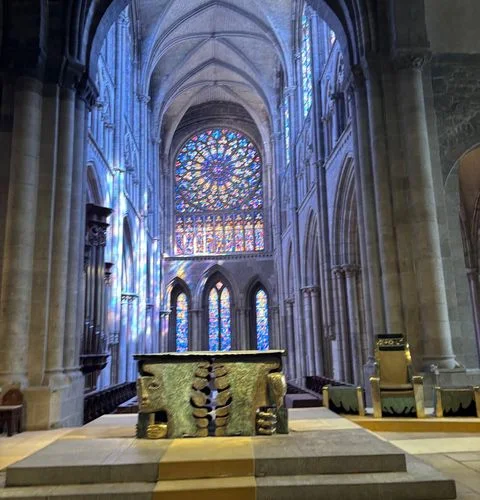 Saint-Malo, the walled corsair city rising straight from the sea
Saint-Malo is the undisputed star: a walled granite city rising straight from the sea, built by corsairs, besieged by English fleets, and rebuilt stone by stone after the Second World War. Walk the ramparts at high tide and you understand immediately why this city has a hold on people that never quite lets go. The intra-muros is compact, walkable, and full of excellent seafood restaurants, creperies, and history at every turn.
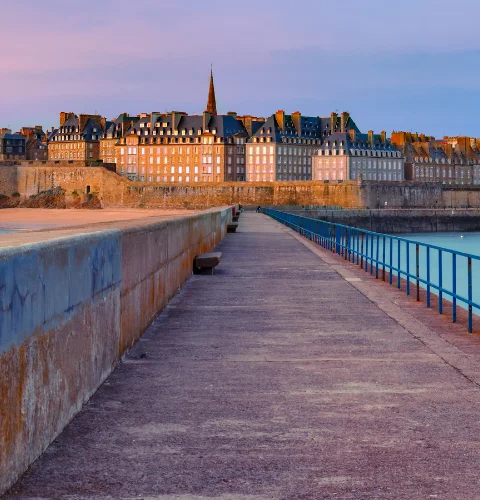 Walking the ramparts of Saint-Malo at high tide, the sea on both sides
Just 30 minutes east, Cancale is Brittany distilled into a single view: a crescent bay, fishing boats at low tide, and oyster beds stretching as far as the eye can see. Cancale produces some of the finest oysters in France, and eating them at the market overlooking the bay, with a glass of Muscadet, is one of those simple pleasures that people talk about for years.
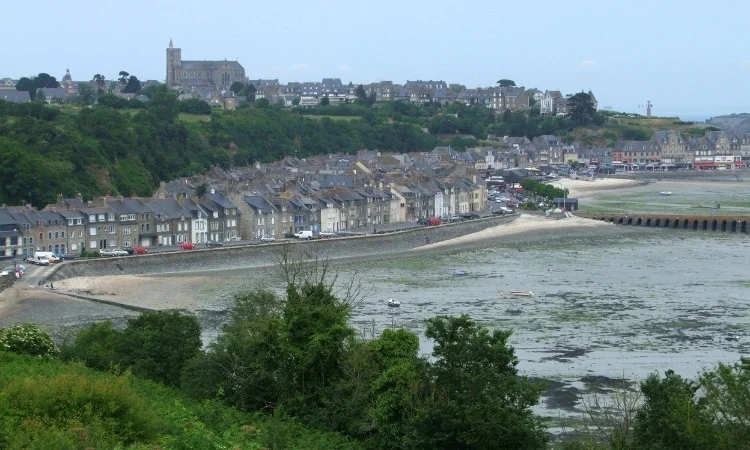 Cancale bay, where the finest oysters in Brittany meet the open sea
Dinan, perched above the Rance river a short drive inland, is one of the best-preserved medieval towns in France, and the perfect complement to a Saint-Malo day. Half-timbered houses, cobblestone streets, ramparts dating back to the 14th century, and a port at the bottom of a dramatically steep hill that feels completely untouched by the modern world.
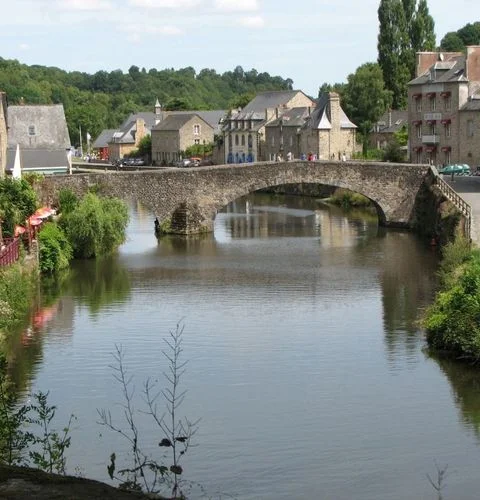 Dinan, one of the best-preserved medieval towns in France
The Pink Granite Coast: One of the World’s Great Natural Spectacles
If you have never seen the Pink Granite Coast, nothing I write will quite prepare you for it. The Cote de Granit Rose, stretching around the village of Ploumanac’h near Perros-Guirec in northern Brittany, is a geological phenomenon: an accumulation of rose-colored granite boulders, sculpted over millions of years into shapes that look like the work of a very ambitious sculptor.
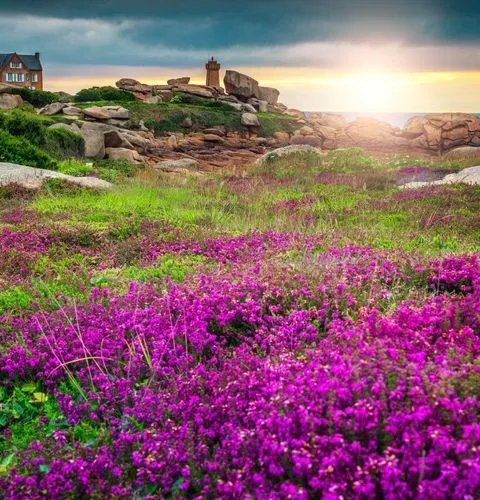 The Pink Granite Coast, a geological masterpiece millions of years in the making
The boulders are enormous, smooth, and warm to the touch. They tumble into the sea in formations that have been given names: the Tortoise, the Elephant, the Rabbit. The coastal footpath, the Sentier des Douaniers, winds between them for kilometers, offering views that are unlike anything else in Western Europe.
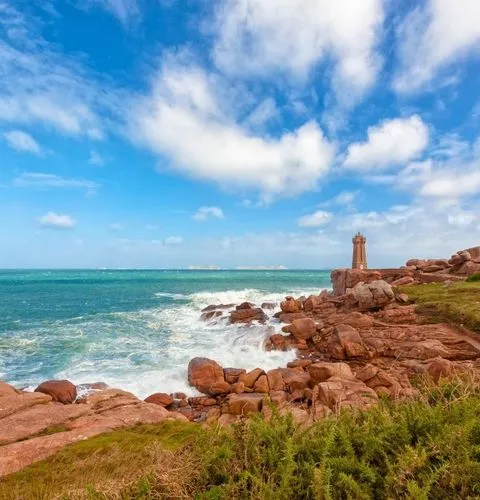 Rose-coloured boulders tumbling into turquoise water along the Sentier des Douaniers
The nearby island of Ile de Brehat, reachable by ferry in 10 minutes from the Pointe de l’Arcouest, is a car-free island of flowering hedgerows, stone walls, and turquoise water. In late spring, when the mimosas and hydrangeas are in bloom, it borders on the absurd.
The Wild Coast of Finistere: Cap Sizun, Pointe du Raz, and Beyond
Western Brittany, the departement of Finistere, meaning literally “End of the Earth,” is where the land runs out and the Atlantic begins in earnest. The coastline here is rougher, wilder, and far less visited than the north.
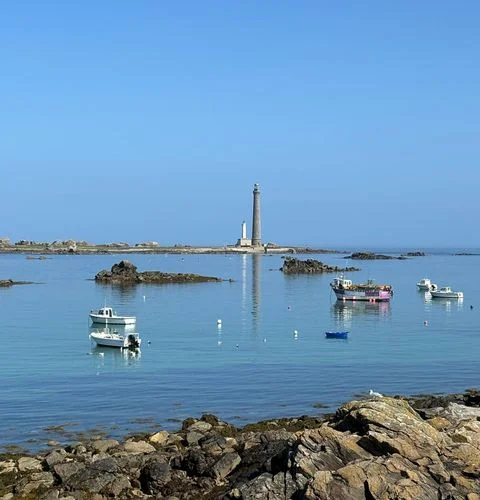 Finistere, the End of the Earth, where the Atlantic begins
The Pointe du Raz, at the westernmost tip of the Breton peninsula, is one of the most dramatic headlands in France. Standing on the edge of the cliff with the wind in your face and the Ile de Sein visible on the horizon, you feel, in a very physical way, that you are standing at the edge of the known world. It is not a metaphor. The Celts believed it literally.
The small fishing ports of Concarneau and Pont-Aven are worth a full day each. Concarneau has a walled island in the middle of its harbour, the Ville Close, that feels like a miniature Saint-Malo. Pont-Aven was where Paul Gauguin spent his summers before leaving for Tahiti, and the light of the Aven river valley, soft and golden, still draws painters from across the world.
The Morbihan Coast: Megaliths, Islands, and the Gulf
Southern Brittany offers yet another face of the region: softer, warmer, and steeped in prehistoric mystery.
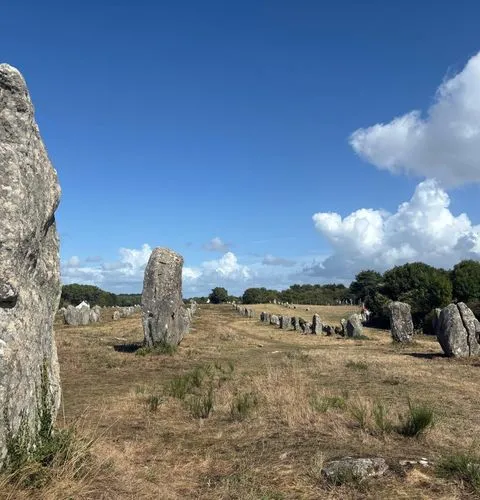
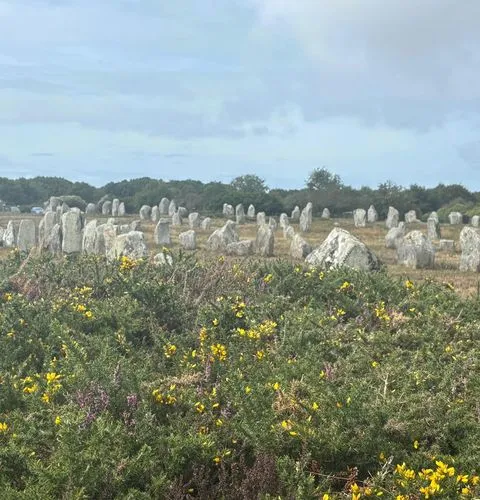 The Carnac alignments, more than 3,000 standing stones erected before Stonehenge
Carnac is home to the world’s largest megalithic site: more than 3,000 standing stones arranged in alignments that stretch across the countryside for several kilometers. They were erected more than 7,000 years ago, before Stonehenge, before the Pyramids, by a civilization we know almost nothing about. Walking among them at dawn, when the mist is still on the ground, is one of the most quietly powerful experiences Brittany has to offer.
The Gulf of Morbihan is an inland sea dotted with over 40 islands, sheltered from the Atlantic by a narrow passage near the town of Vannes. The light here is extraordinary: softer than the north, Mediterranean in feel despite being firmly in Brittany. Boat trips through the gulf are one of the great pleasures of the region.
Brittany’s Tides: A Landscape That Changes Twice a Day
One thing that surprises every first-time visitor to Brittany is the tides. The tidal range here, particularly in the Bay of Mont-Saint-Michel, is among the largest in the world, reaching up to 14 or 15 meters between low and high water. The landscape transforms completely twice a day: vast stretches of sand and mudflat appear and disappear, islands become peninsulas, and Mont-Saint-Michel itself is surrounded by sea or connected to the mainland depending on the hour.
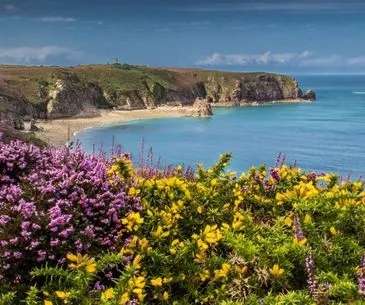
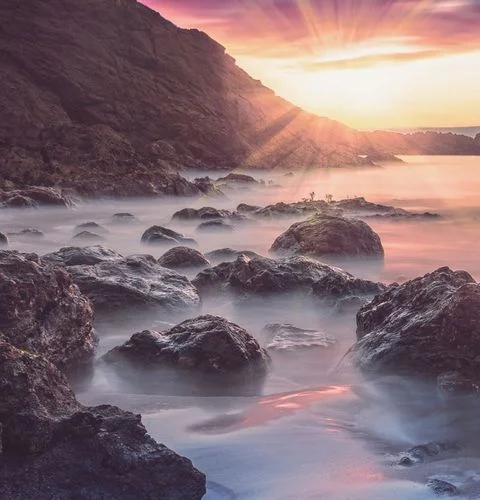 The Brittany coast at golden hour, a landscape that changes with every tide
Learning to time your visits around the tides is one of the most important pieces of advice I give every client. It is also one of the most rewarding: seeing Mont-Saint-Michel at high tide, completely encircled by water, is a completely different experience from the low-tide approach. Both are magnificent. But the tides wait for no one.
Brittany’s Coastal Food Culture
The Brittany coast feeds you extraordinarily well, but not in the way you might expect. This is not Michelin-star gastronomy at every table. It is something better: an honest, deep-rooted food culture built around what the sea and the land produce.
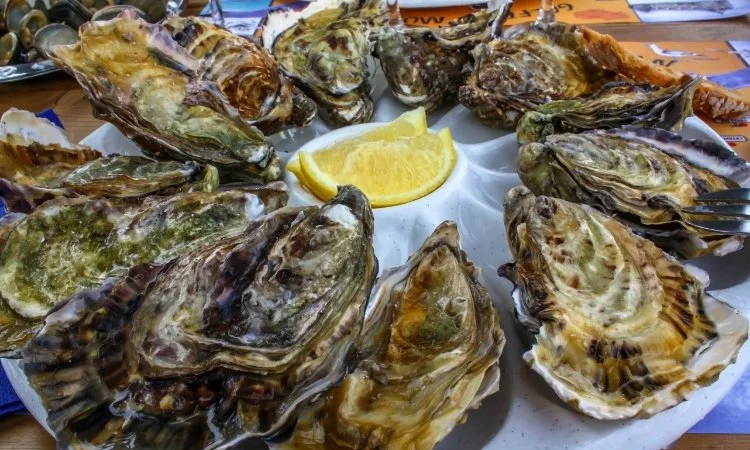 Cancale oysters, eaten fresh at the market overlooking the bay
Oysters from Cancale and the Gulf of Morbihan. Lobster from the waters off Belle-Ile. Galettes de sarrasin, buckwheat crepes, eaten with salted butter that is so good it needs nothing else. Kouign-amann, the laminated butter cake from Douarnenez that will ruin every pastry you eat afterward. Cider from the orchards of inland Brittany, dry and sharp and perfect with a plate of charcuterie.
And everywhere, fleur de sel from Guerande: the hand-harvested sea salt that has been produced in the marshes south of the Loire since the Middle Ages, and which is still gathered by the paludiers with wooden rakes exactly as it has always been done.
Plan Your Brittany Coast Experience with BELLIDAYS
The Brittany coast is vast, and a week is not enough. But a well-planned private tour can give you the essential Brittany in three to five days, combining the highlights with the hidden corners that most visitors never find.
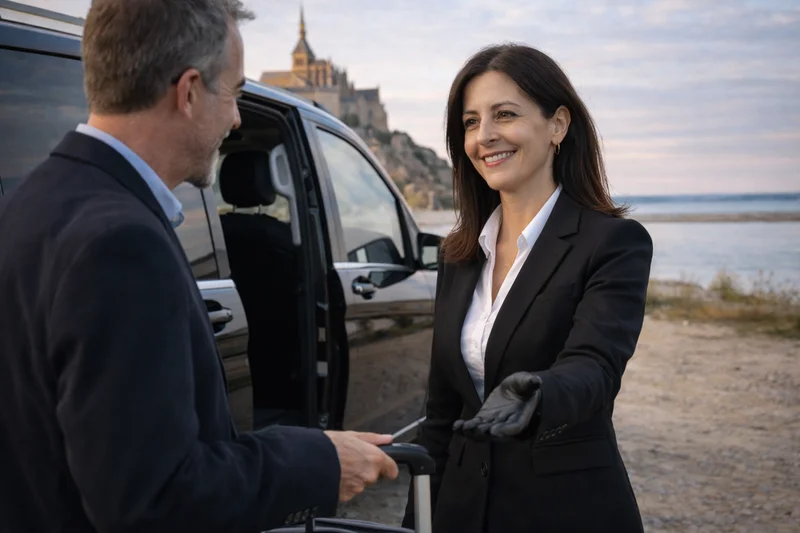
As a licensed private chauffeur-guide based near Rennes, I design tailor-made Brittany coast itineraries for private groups of one to seven people, guided in English, Spanish, Italian, or Portuguese. Every route is built around your interests, your pace, and your time.
Brittany also pairs beautifully with Normandy to the north, where the D-Day beaches, Mont-Saint-Michel, and the Impressionist coast await, and with the Loire Valley to the south, for a complete western France experience that covers three of the country’s most distinctive regions in a single journey.
Contact us to start planning your Brittany coast tour →
Frequently Asked Questions
What is the Brittany coast known for?
Brittany is known for its dramatic and varied coastline, its Celtic heritage, its prehistoric standing stones at Carnac, its walled corsair city of Saint-Malo, the pink granite cliffs of the north, and one of the finest seafood and crepe traditions in France. It is also the closest French region to the British Isles, and shares deep cultural and historical ties with Wales, Cornwall, and Ireland.
How long is the Brittany coastline?
Brittany has approximately 2,700 kilometers of coastline, the longest of any French region. It includes everything from sheltered bays and sandy beaches to wild cliffs, tidal mudflats, and offshore islands.
Is Brittany worth visiting?
Without question. Brittany is one of France’s most distinctive, visually dramatic, and culturally rich regions, and one of its least crowded outside of peak summer. If you are looking for authentic France away from tourist conveyor belts, Brittany is the answer.
What is the best part of the Brittany coast to visit?
It depends entirely on what you are looking for. For history and coastal drama: the Emerald Coast around Saint-Malo. For extraordinary natural beauty: the Pink Granite Coast. For prehistoric mystery: Carnac and the Morbihan Gulf. For wild, end-of-the-world scenery: Finistere and the Pointe du Raz. A private guide can help you combine several in a single well-paced itinerary.
Can I visit the Brittany coast from Paris?
Yes. Rennes is 1h30 from Paris by TGV, and is the ideal base for exploring northern and central Brittany. From Rennes, Saint-Malo is 1 hour by car, Carnac is 2 hours, and the Pink Granite Coast is 2h30. A private chauffeur-guide picks you up directly from the train station.
Can I combine Brittany with Normandy or the Loire Valley?
Absolutely, and I highly recommend it. A 7 to 10 day circuit combining Brittany, Normandy, and the Loire Valley gives you the complete picture of Western France. BELLIDAYS specialises in exactly this kind of tailor-made multi-region journey, with seamless logistics from start to finish.
Article written by Belinda C., licensed private chauffeur-guide and founder of BELLIDAYS Travel Tours. Specialising in private tours across Brittany, Normandy and the Loire Valley for international travellers. bellidays.com