
Everything you need to know before visiting Mont-Saint-Michel: the tides, the abbey, the crowds, the best time to arrive, and how to experience it without the chaos. From a private guide who has been there hundreds of times.
Somewhere between three and four million people visit Mont-Saint-Michel every year. On a busy summer day, the causeway queues stretch back hundreds of meters, the village streets are shoulder to shoulder, and the abbey admission line can add an hour to your morning.
And yet, when the tide comes in and the water rises around the base of the mount, and you are standing on the ramparts watching the bay fill in silence, there is nowhere in France quite like it.
Mont-Saint-Michel is worth every cliche written about it. It is also worth doing properly. This guide tells you exactly how.
What You Are Looking At: A Brief History
Mont-Saint-Michel is a granite island rising 92 meters above the tidal flats of the bay shared between Normandy and Brittany. It has been inhabited since prehistoric times, but its story as a sacred site begins in 708, when the bishop of Avranches, Aubert, claimed that the Archangel Michael appeared to him three times and instructed him to build a sanctuary on the rock.
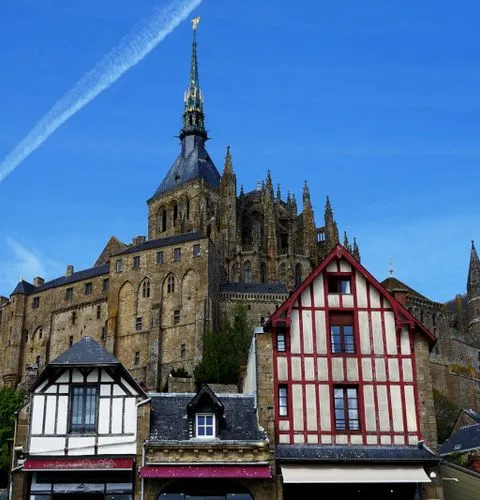 Mont-Saint-Michel, 92 meters of granite, faith, and a thousand years of history
The sanctuary became an abbey. The abbey became a pilgrimage site. The pilgrimage site attracted a village. The village attracted fortifications. For centuries, Mont-Saint-Michel was simultaneously one of the most important religious destinations in Christian Europe and one of the most militarily formidable strongholds on the Norman coast. It was never taken by force. Not once, in over a thousand years.
It served as a prison during the Revolution and was used for housing prisoners until 1863, when it was classified as a historic monument and restoration began. Today, a small community of monks and nuns lives in the abbey and maintains the religious life of the mount. The Benedictine offices are celebrated daily. Visitors are welcome to attend.
The Tides: The Most Important Thing to Understand
Before you plan anything else about your visit, understand the tides. They change everything.
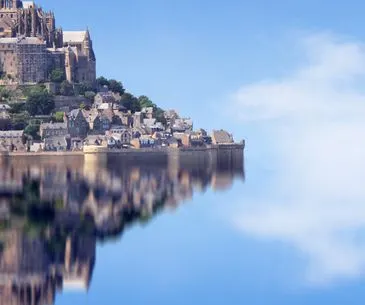
The Bay of Mont-Saint-Michel has one of the largest tidal ranges in Europe, reaching up to 14 meters between low and high water. The tide moves exceptionally fast, famously described as advancing at the speed of a galloping horse. The bay that was a vast sandy plain an hour ago is covered by a meter of seawater. The mount that was connected to the mainland by a causeway appears to float.
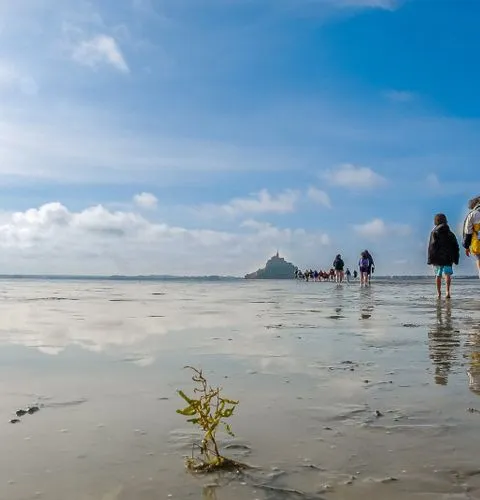 Walking the bay at low tide, Mont-Saint-Michel shimmering on the horizon
There are essentially four ways to experience Mont-Saint-Michel depending on the tide. At low tide, the bay is exposed and you can walk out onto the sand flats. As the tide comes in, the reflections intensify and the mount gradually becomes surrounded. At high tide, the mount is completely encircled by water. At night, illuminated from below, the reflection in the surrounding water is extraordinary.
I check the tide tables for every client visit and plan the arrival time accordingly. This is not optional. It is the difference between an ordinary visit and an exceptional one.
The Abbey: What to See and What It Means
The abbey is the reason Mont-Saint-Michel exists, and it deserves more than a quick walk-through.
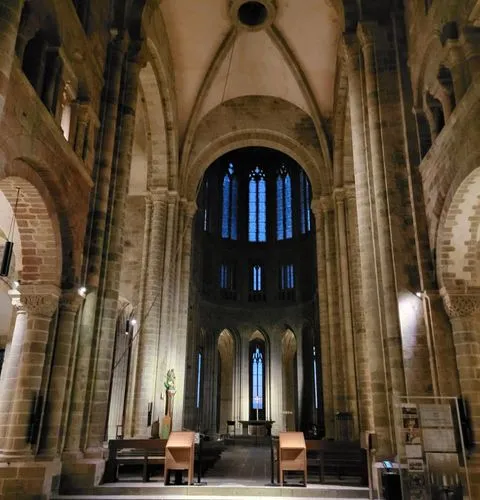 The cloisters of the Merveille, among the most beautiful in France
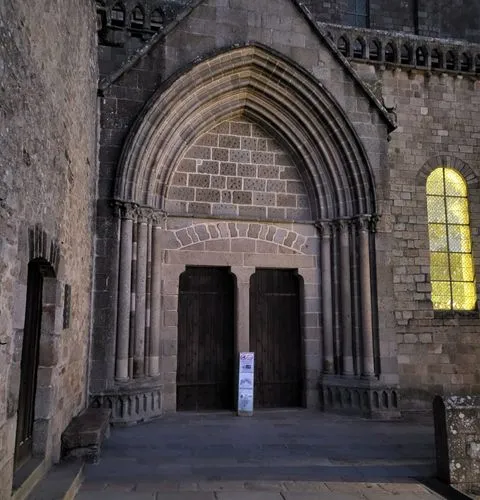
The architectural ensemble spans roughly eight centuries, from the Romanesque nave begun in the 11th century to the Flamboyant Gothic choir rebuilt after 1421. The cloisters, suspended between the church and the refectory on the upper level of the Merveille, are among the most beautiful in France. The double row of slender granite columns, each slightly offset from the one next to it, creates a play of light and shadow that changes throughout the day.
 The abbey church, where Romanesque solidity meets Gothic light
The crypts and the lower levels are less visited and equally remarkable: massive Romanesque pilasters, vaulted ceilings, the engineering logic of a building constructed on top of a pointed rock made progressively taller over several centuries.
The Village: Honest Assessment
The village of Mont-Saint-Michel is, frankly, one of the most commercially dense tourist streets in France. The Grande Rue is lined entirely with restaurants, souvenir shops, and crepe stands. The crowds in high season are intense.
This does not mean the village is without interest. The medieval architecture is genuine. The views from the ramparts at various levels are extraordinary. And the human geography of a community that built a city on the side of a pointed rock periodically surrounded by the sea is, on reflection, remarkable.
My practical advice: walk the ramparts before going up to the abbey, when your energy is fresh. Eat before you arrive or after you return to the mainland. And La Mere Poulard: her famous omelettes beaten in copper pans over an open fire are worth it once, for the ritual and the history. Not worth it if you are on a budget.
How to Get There: Departure Points and Logistics
Mont-Saint-Michel sits on the border between Normandy and Brittany, easily accessible from a wide range of starting points:
- From Rennes: approximately 1 hour by car. The most natural gateway from Brittany.
- From Saint-Malo: approximately 45 minutes. One of the most popular pairings in northern Brittany.
- From Cancale: approximately 30 minutes. Cancale oysters for breakfast, Mont-Saint-Michel for the rest of the morning.
- From Bayeux or Caen: approximately 45 minutes to 1 hour. Natural pairing with a D-Day beaches circuit.
- From Nantes: approximately 2h30 each way. Long but entirely feasible.
Mont-Saint-Michel as a Transfer Stop
One of the best-kept secrets of planning a Brittany and Normandy itinerary is using Mont-Saint-Michel as a natural stop between two destinations rather than a dedicated day trip.
Traveling from Bayeux to Dinard? Mont-Saint-Michel is almost exactly on the route: stop for 3 to 4 hours, visit the abbey, and continue. This is the kind of itinerary logic that makes a private driver-guide genuinely useful.
Visiting from Paris
By train and private transfer: take the TGV to Rennes (1h30), where a private driver-guide picks you up at the station and takes care of everything. Significantly more relaxing than driving from Paris.
Mont-Saint-Michel and the D-Day beaches in one day from Paris: yes, it is possible, and no, it is not ideal. It is a long day with an early start and a late return. For travelers for whom this is a once-in-a-lifetime opportunity, we will make it work. At BELLIDAYS, we do not judge the type of traveler, we find the best solution for the journey they have. But if there is any flexibility, we always recommend spending at least one night in the region.
When to Visit: The Honest Answer
Early morning. Every time.
The first shuttle buses from the car park leave before 9am. If you are on one of them, you arrive when the village is still quiet, the light is soft, and the abbey opens without a queue.
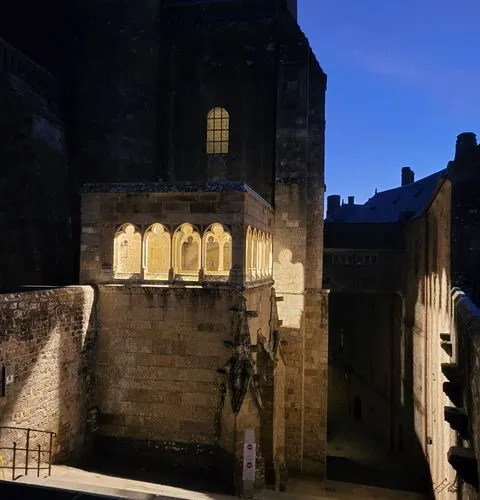 Mont-Saint-Michel at night, illuminated and reflected in the bay
May, June, and September are the sweet spots. July and August are beautiful and extremely busy. The great autumn tides of September and October offer the most dramatic views. Winter is underrated: minimal crowds, extraordinary light, and the experience of walking the ramparts with the bay to yourself.
The Mont-Saint-Michel Ebook
To help you make the most of your visit, I have written a comprehensive PDF ebook covering the full history of the abbey, the tidal calendar, the best viewpoints and photography spots, practical logistics, and recommended restaurants and hotels.
The ebook is available for download at 10 euros directly on our website. It is included free of charge with every BELLIDAYS Mont-Saint-Michel tour booking.
Visiting Mont-Saint-Michel with BELLIDAYS
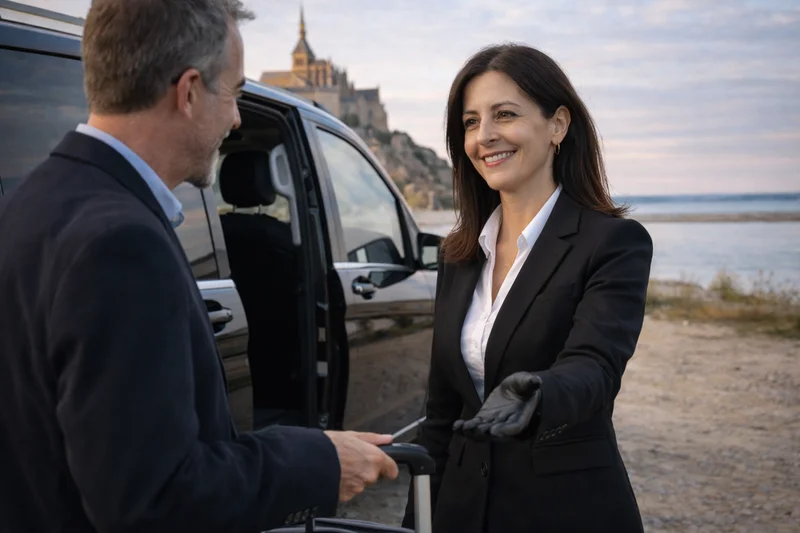
A private guide makes a significant difference at Mont-Saint-Michel. The history is rich enough to fill a morning. The tidal logic needs explaining once. The village needs navigating with someone who knows which turning leads to a quiet viewpoint and which leads to a souvenir shop.
I offer private Mont-Saint-Michel tours departing from Rennes, Saint-Malo, Dinan, Cancale, Bayeux, Caen, Nantes, and Paris. Every tour includes tide-timed arrival, expert abbey commentary, and photography guidance. Groups of one to seven people, guided in English, Spanish, Italian, or Portuguese.
Contact us to plan your Mont-Saint-Michel visit →
Frequently Asked Questions
How long do you need at Mont-Saint-Michel?
A minimum of 3 hours to see the village and the abbey without rushing. A full morning (4 to 5 hours) is ideal and allows you to walk the ramparts, visit the abbey properly, and have coffee before the midday crowds arrive.
Is Mont-Saint-Michel worth visiting?
Yes, without reservation. It is one of the great architectural and geographical wonders of France. The key is timing: a well-timed visit in good weather is extraordinary. A poorly timed visit in the middle of a summer afternoon is exhausting.
What is the best time of day to visit Mont-Saint-Michel?
Early morning, before 9am. The village is quiet, the light is best, and the abbey opens without a queue.
Can I visit Mont-Saint-Michel from Paris in a day?
Yes, though it is a long day. We recommend taking the train to Rennes, where a private driver-guide meets you and handles everything. For travelers who want to combine Mont-Saint-Michel with Omaha Beach in a single day, it is possible with an early start. Contact us to plan the right itinerary.
Can I walk across the bay to Mont-Saint-Michel?
Yes, guided bay crossings on foot are organized by licensed guides and are one of the most memorable ways to arrive. They require appropriate weather and tide conditions and sensible footwear.
Can I combine Mont-Saint-Michel with the D-Day beaches?
Yes. The two sites are approximately 1h30 apart by car. On a two-day Normandy circuit, Mont-Saint-Michel in the morning and the D-Day beaches in the afternoon is one of the most powerful itineraries we offer.
Article written by Belinda C., licensed private chauffeur-guide and founder of BELLIDAYS Travel Tours. Specialising in private tours to Mont-Saint-Michel and across Brittany, Normandy and the Loire Valley for international travellers. bellidays.com