

Three Brittany itineraries I have built and driven for real travellers: four days from a single base in Rennes, six days through the south and Finistère, and eight days around the whole peninsula. With driving times, what to skip and where to sleep.
The first question I ask anyone planning Brittany is not where they want to go. It is how many nights they have, and whether they would rather unpack once or move every two days.
Brittany looks small on a map of France. It is not. From Rennes to the Pointe du Raz is close to four hours of driving, and the coast between the two folds in and out for well over a thousand kilometres. Trying to see all of it in a long weekend is the most common mistake I see, and the surest way to spend your holiday on the motorway.
I have been designing private tours across Brittany since 2008. The three itineraries below are not theory: they are adapted from programmes I have built and driven for real travellers, with the driving times we actually count on.
Treat them as a base, not a fixed programme. Each day has two main stops, which in normal season is what I find reasonable: enough time to walk, have lunch without watching the clock and enjoy each place rather than tick it off. Where I mention alternatives, they are swaps, not additions. Depending on your pace, your interests and how easily you get around, we can always add a stop or take one away.

Four Days: One Base in Rennes, Three Directions
This is the itinerary I recommend most often to first-time visitors coming from Paris. Rennes is 1h25 from Paris by TGV, and from Rennes the north coast, the south coast and the medieval east of Brittany are all within reach of a day trip. You unpack once, you sleep in the same bed every night, and you still see a remarkable amount.
Day 1: Arrival and Rennes
Arrive by train in the morning, check in, have lunch, then spend the afternoon on a walking tour of the old town: the half-timbered houses that survived the great fire of 1720, the Parliament of Brittany, and the Thabor gardens if the weather is kind. Dinner is galettes and cider, naturally.
Day 2: Saint-Malo and Dinan
North to the Emerald Coast. The morning in the walled corsair city of Saint-Malo, for the ramparts and lunch. The afternoon in medieval Dinan on the banks of the Rance, with its timber-framed streets and its port. Alternatives: the seaside villas of Dinard instead of Dinan, or an oyster tasting in Cancale if you love seafood.
Day 3: Carnac and the Gulf of Morbihan
South this time. The 3,000 standing stones of Carnac in the morning, then the Gulf of Morbihan and the walled town of Vannes in the afternoon. Alternatives: the castle of Josselin, reflected in the river Oust, or the little harbour of Saint-Goustan in Auray, instead of Vannes.
Day 4: Fougères and Vitré
East, towards the old border of the Duchy of Brittany. Fougères has one of the largest medieval fortresses in Europe, and Vitré, where we stop for lunch, is one of the best preserved small towns in the region, before your afternoon train from Rennes. Alternative: La Roche-aux-Fées, one of the finest Neolithic passage graves in France, instead of one of the two towns.
Why it works: no hotel changes, no luggage to repack, and every day has a different landscape. What it leaves out: Finistère, the far west, which is simply too far for a day trip from Rennes.
Six Days: The South and Finistère
Six days lets you go west, which is where Brittany becomes most Breton: the language on the road signs, the lace headdresses in the museums, the end-of-the-world headlands. This itinerary moves twice, with two nights in each base.
Day 1, Rennes. Arrive from Paris and spend the afternoon in the old town, as above.
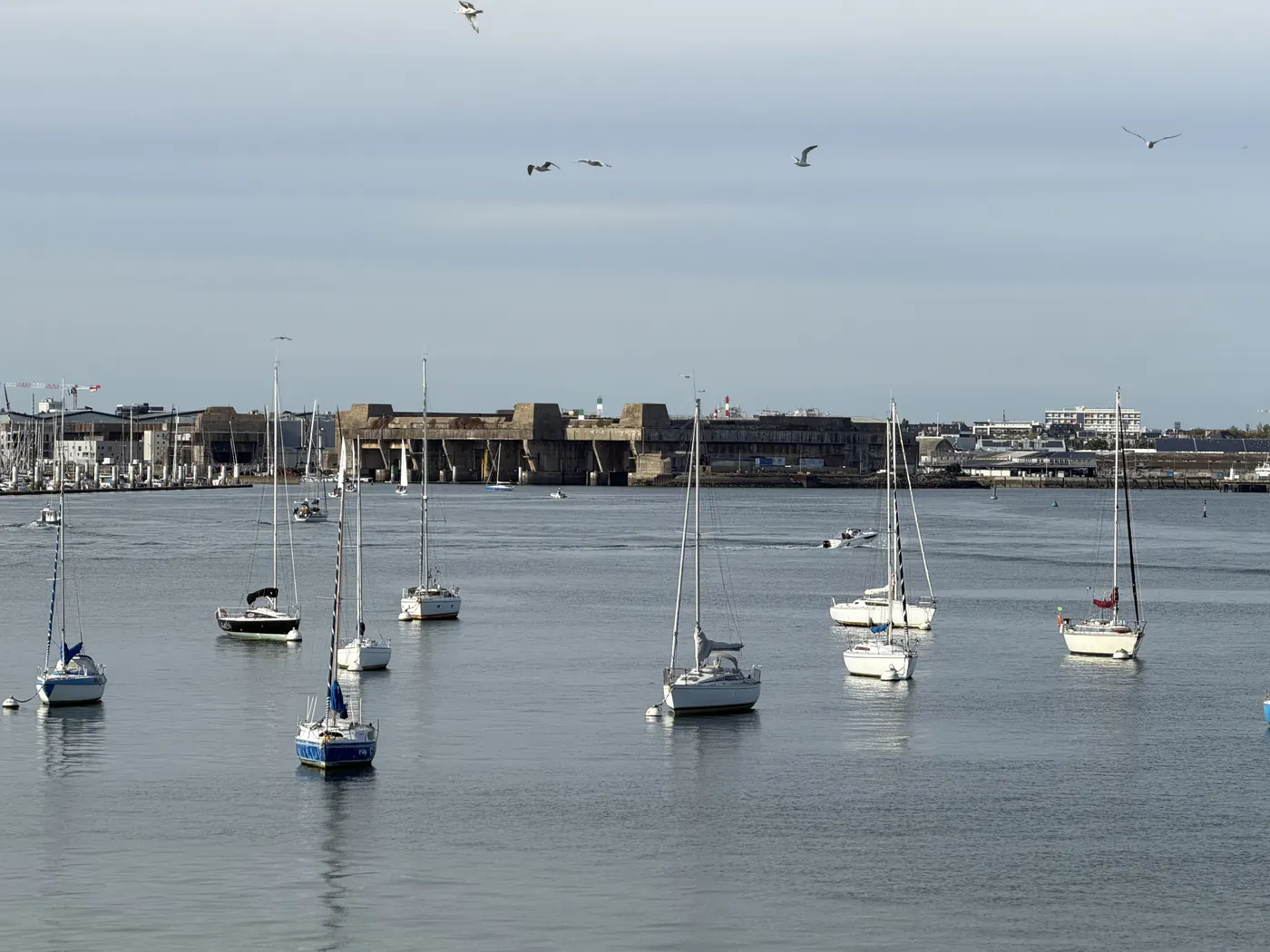
Day 2, Carnac and Lorient. The Carnac alignments in the morning, then on the way west, the Second World War submarine base in Lorient, one of the most striking wartime sites in France. Alternatives: Vannes and its ramparts, or coffee by the harbour in Saint-Goustan, instead of Lorient. Night near the coast of southern Finistère.
Day 3, Pont-Aven and Concarneau. Pont-Aven is the village where Gauguin and his friends painted in the 1880s, and its museum tells that story well. Twenty-five minutes away, the Ville Close of Concarneau is a walled town on an island in the middle of a working fishing port. Alternatives: the Pointe du Raz if you love wild coastline, or the Bigouden museum in Pont-l’Abbé, with its astonishing tall lace headdresses, if you prefer culture.
Day 4, Quimper and Locronan. Quimper is the heart of Breton culture: its Gothic cathedral, its old town closed to cars, its faience potteries. Thirty minutes away, Locronan is one of the most beautiful villages in France, built entirely of granite. Alternative: the fishing port of Douarnenez instead of Locronan.
Day 5, the Pink Granite Coast, or Roscoff and the Île de Batz. Either the coastal path from Perros-Guirec to the extraordinary pink rocks of Ploumanac’h, or the corsair town of Roscoff and a fifteen-minute crossing to the Île de Batz and its white sand beaches. The first is more spectacular, the second quieter.
Day 6, departure. Private transfer back to Quimper station or to Rennes for your train.
Why it works: you see the Brittany most visitors never reach. What to know: it involves more driving, and some of the longer legs are best done early in the morning.
Eight Days: The Whole Peninsula
Eight days is the minimum I would suggest for a full loop of Brittany, south coast, far west and north coast, without rushing. It follows the six-day itinerary for the first four days, then turns north.
Days 1 to 4: Rennes, Carnac and the south, Pont-Aven and Concarneau, Quimper and Locronan, as above. On day 4, head north for the night near Perros-Guirec.
Day 5, the Pink Granite Coast. A full day this time: the customs officers’ path from Perros-Guirec to Ploumanac’h and the village nestled among the rocks in the morning, the beaches of Trégastel in the afternoon.
Day 6, Tréguier and Cap Fréhel. The cathedral town of Tréguier on the banks of the Jaudy in the morning, then east to the cliffs of Cap Fréhel, with the fortress of La Latte right next to it, one of the most photographed views in Brittany. Alternative: the old fishing port of Paimpol instead of Tréguier. Night in Dinan.
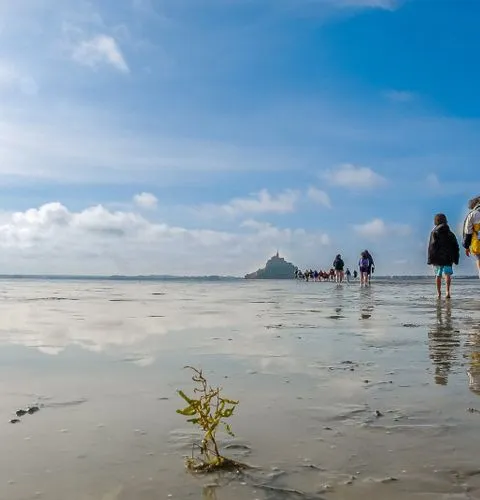
Day 7, Saint-Malo and Cancale. The ramparts of Saint-Malo in the morning, then oysters by the harbour in Cancale, facing the bay of Mont Saint-Michel. If you can add one more day, this is where Mont Saint-Michel fits, an hour from Saint-Malo.
Day 8, departure. Transfer from Dinan to Rennes station, about 45 minutes.
Why it works: you leave having seen every face of Brittany. What to know: it changes base three times, so travel light.
Moving Bases or Staying Put?
Every itinerary is a trade between seeing more and unpacking less. My rule of thumb: if you have four days or fewer, stay in one place and make day trips. Beyond that, move, but never more often than every two nights. A single night somewhere is a night spent packing.
Rennes is the best single base for the east and north. For the south, Vannes or the Gulf of Morbihan. For the far west, Quimper or the coast around it. And if you arrive by cruise ship rather than by train, the logic changes completely: see our shore excursions in Brittany.
Why Two Stops a Day?
Because Brittany rewards lingering. A walled town takes an hour and a half to walk properly, lunch in a harbour should not be rushed, and the light on the coast is worth waiting for. Three or four stops a day looks impressive on paper, but in practice it means seeing everything through a car window. Two stops in normal season leaves room for the unexpected: a market, a viewpoint, a conversation. Out of season, or for travellers who like a faster pace, we can add a third.
How Much Driving Is Too Much?
A comfortable day in Brittany has no more than three hours in the car, split into short legs. The four-day itinerary stays within that every day. The six- and eight-day itineraries have two longer days each, and these are the days we start early.
Keep in mind that driving times are not the same all year. In July and August, over the May bank holidays and during French school holidays, the coast roads fill up and everything takes longer. We plan around that rather than hope for the best.
Planning Your Brittany Itinerary with Bellidays
Every itinerary above can be shortened, stretched or combined with Normandy or the Loire Valley. I design each one around the people travelling: your interests, your pace, your hotels, and how much walking you are happy to do. As a licensed guide and professional driver, I drive you and guide you myself whenever my dates allow, in a modern vehicle such as the Mercedes V-Class.
Send me your dates and the number of nights you have, and I will tell you honestly what fits. You can start with our 5-day Brittany tour or our private tours of Brittany, or simply get in touch.
Frequently Asked Questions
How many days do you need in Brittany?
Four days gives you a real taste from a single base in Rennes: the north coast, the south coast and the medieval east. Six days lets you add Finistère, the far west. Eight days is what I suggest for a full loop of the peninsula without rushing.
What is the best base for exploring Brittany?
Rennes, if you have four days or fewer: it is 1h25 from Paris by TGV and within day-trip distance of Saint-Malo, Dinan, Mont Saint-Michel, Carnac and Fougères. For longer stays, split your nights between Rennes or Dinan in the north and Vannes or Quimper in the south.
Can you see Brittany without a car?
Partly. The main towns are linked by train, but most of what makes Brittany special, the megaliths, the headlands, the small harbours and villages, is out of reach of public transport. That is exactly why a private driver-guide makes such a difference here.
Can I combine Brittany with Mont Saint-Michel and Normandy?
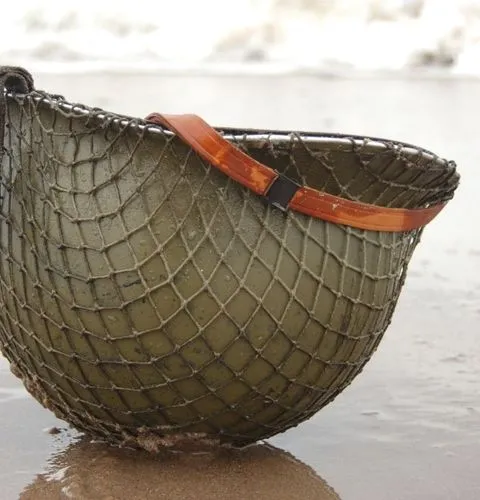
Yes, and many of our guests do. Mont Saint-Michel sits on the border, an hour from Saint-Malo, and the D-Day beaches are a little over two hours from Rennes. A week split between Normandy and northern Brittany works very well.
When is the best time to visit Brittany?
May, June and September offer long days, open sites and fewer crowds than July and August. Brittany is also beautiful out of season, with dramatic skies and quiet villages, as long as you accept that some boat trips and island crossings run less often.