
How to combine the D-Day beaches and the Loire châteaux in one trip: the journey between them, where to stop on the way, and itineraries of four and six days.
More and more of the travellers I drive along the D-Day beaches ask me the same question on their last evening in Bayeux: “And now, how do we get to the Loire Valley?”
It is a natural question. Normandy and the Loire are two of the great chapters of French history, a few hours apart, and many visitors want both in the same trip: the beaches where the liberation of Europe began, then the Renaissance châteaux of the kings of France. The problem is the journey in between. On the map it looks simple. In practice, it is the part of the trip that most often goes wrong.
I have been designing private tours across Western France since 2008, and this is a route I know well. Here is how I would plan it.
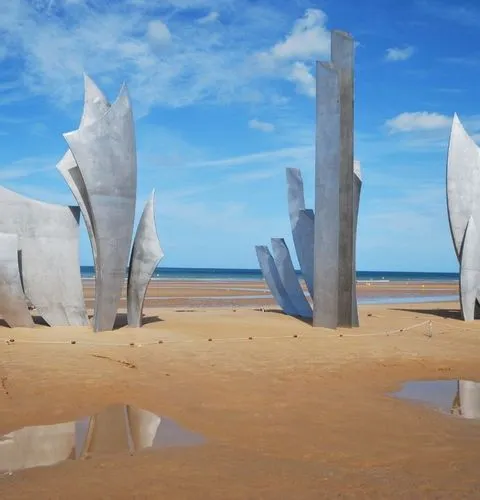
Why Combine Normandy and the Loire?
Because they tell two very different stories, and together they give you a real sense of France. In Normandy, the 20th century: the landing beaches, the cemeteries, the villages that still remember June 1944. In the Loire Valley, the 16th century: Chambord, Chenonceau, Amboise, the gardens, the wine, a gentler landscape along the longest river in France.
The contrast is part of the pleasure. After two days of emotion on the beaches, the châteaux feel like a breath of fresh air.
Normandy Is Not Only the D-Day Beaches
The beaches are what bring most travellers to Normandy, but they are only one of its faces, and it would be a shame to leave without seeing the others.
Start with Bayeux itself. The town was liberated on 7 June 1944, the day after the landings, and came through the war almost untouched, which is rare in this part of Normandy. Its medieval streets, half-timbered houses, water mills and Gothic cathedral make it a lovely place to come back to in the evening after a day on the beaches.
Normandy is also the birthplace of Impressionism. Monet painted the cliffs of Étretat, the harbour of Honfleur and the façade of Rouen cathedral at every hour of the day, and his house and gardens are in Giverny, on the edge of the region.
It is a land of abbeys and cathedrals: the great Romanesque abbeys of Caen, founded by William the Conqueror and his wife Matilda, the ruins of Jumièges, and Gothic cathedrals from Rouen to Bayeux and Coutances.
And it is a land of terroir. In the Pays d’Auge, between Honfleur and Lisieux, half-timbered farms, apple orchards and cows grazing in green pastures give you the cheeses of Normandy, Camembert, Livarot and Pont-l’Évêque, along with its butter, milk and cream, its cider and its Calvados. Normandy is also one of the great flax-growing regions of the world: in June, the fields turn pale blue with its flowers.
Even if your time is short, try to give Normandy one day beyond the beaches. It changes the way you see the region.
The Loire Valley Is Not Only Châteaux
The same is true of the Loire. The châteaux are the reason everyone comes, but the valley itself, listed as a UNESCO World Heritage site, is just as much the attraction.
It is wine country first of all: Vouvray, Chinon, Saumur and many smaller appellations, often tasted in cellars dug into the soft white tufa stone. That same stone gave the valley its troglodyte houses and villages, carved into the cliffs around Saumur and Amboise, some of them still lived in today.
It is a land of gardens, from the Renaissance parterres of Villandry to the more secret gardens of smaller châteaux that most guidebooks never mention. It is goat cheese country, with Sainte-Maure-de-Touraine, Selles-sur-Cher and Valençay, and in winter, the season of the black truffle.
And it is a river to enjoy for itself: a boat trip on a traditional flat-bottomed boat, a bike ride along the Loire à Vélo route, or, for the brave, a hot-air balloon flight over the châteaux at sunrise. I always try to keep a little time for one of these between two châteaux. See our Loire Valley tours for the lesser-known places I like to share.
The Journey: Why It Is Harder Than It Looks
By car, Bayeux to Amboise is about three and a half hours, and Caen to Tours a little under three. Not a short drive, but a very reasonable one.
By train, it is a different story. There is a regional line from Caen to Tours, through Alençon and Le Mans, but it is slow: about three hours on the fastest trains, often closer to four, with only a handful of departures a day, and some of them with a change in Le Mans. You also need to get from Bayeux to Caen first, with your luggage, and once in Tours, you still have to reach the châteaux, which are spread out in the countryside.
Many travellers end up going back through Paris instead, which turns a three-hour journey into most of a day.
This is where a private transfer makes all the difference. You leave from your hotel door in Bayeux, your luggage goes in the boot, and the journey becomes part of the trip rather than a lost day.
Direct Transfer or a Stop on the Way?
Most of my guests prefer a direct transfer. You leave Bayeux after breakfast, arrive in the Loire Valley in the early afternoon, and have the rest of the day to settle into your hotel, walk around Amboise or simply rest after the emotion of the beaches.
If you would rather break the journey, the road passes through Alençon, about halfway, which makes a pleasant stop of an hour or two. Alençon is famous for its needle lace, the “point d’Alençon”, listed by UNESCO, which you can discover at the Museum of Fine Arts and Lace. It is also where Saint Thérèse of Lisieux was born: the family home of her parents, Louis and Zélie Martin, is open to visitors. For motor racing fans, the 24 Hours of Le Mans Museum, a little further south at the famous circuit, is another possible stop.
Through Mont-Saint-Michel and Angers
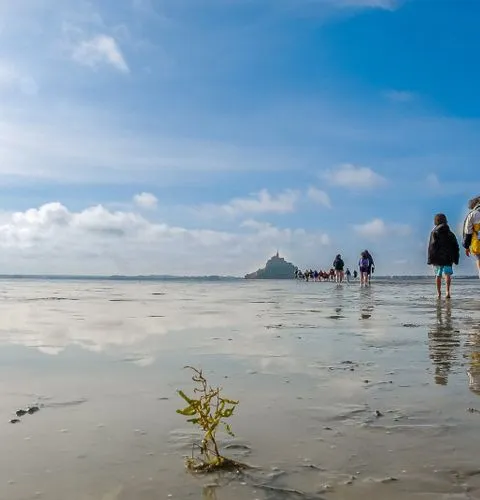
If Mont-Saint-Michel is on your list, you can make it the first stop. From there, the western Loire is about two and a half to three hours away: Angers, whose castle holds the Apocalypse Tapestry, one of the great masterpieces of medieval art, then Saumur, with its troglodyte caves and its sparkling wines. From Saumur, the classic châteaux around Amboise are an hour and a quarter further east. This route is best spread over two days.
Four Days: The Essentials
A four-day itinerary works well for travellers who arrive in Normandy by train from Paris and want to leave from the Loire.
Day 1: The D-Day Beaches
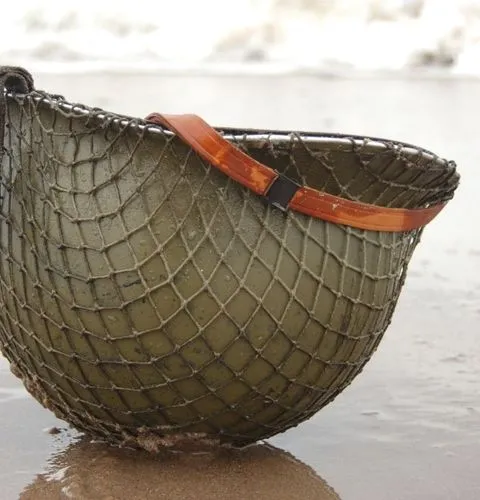
A full day on the American sector from Bayeux: the D-Day beaches, the American Cemetery above Omaha Beach, the cliffs of Pointe du Hoc. If your family has a story connected to June 1944, this is the day to tell me about it. Night in Bayeux.
Day 2: From Normandy to the Loire
Direct private transfer to Amboise, arriving in the early afternoon, with time to settle in and explore the town at your own pace. If you prefer, we can stop on the way in Alençon or at the 24 Hours of Le Mans Museum. Night in Amboise.
Day 3: Chenonceau and Amboise
Chenonceau in the morning, under half an hour from Amboise, ideally at opening time before the crowds: the château built across the river Cher, the “ladies’ château”. In the afternoon, Amboise itself: the royal château above the Loire and Clos Lucé, the manor where Leonardo da Vinci spent the last years of his life. Night in Amboise.
Day 4: Chambord and Cheverny
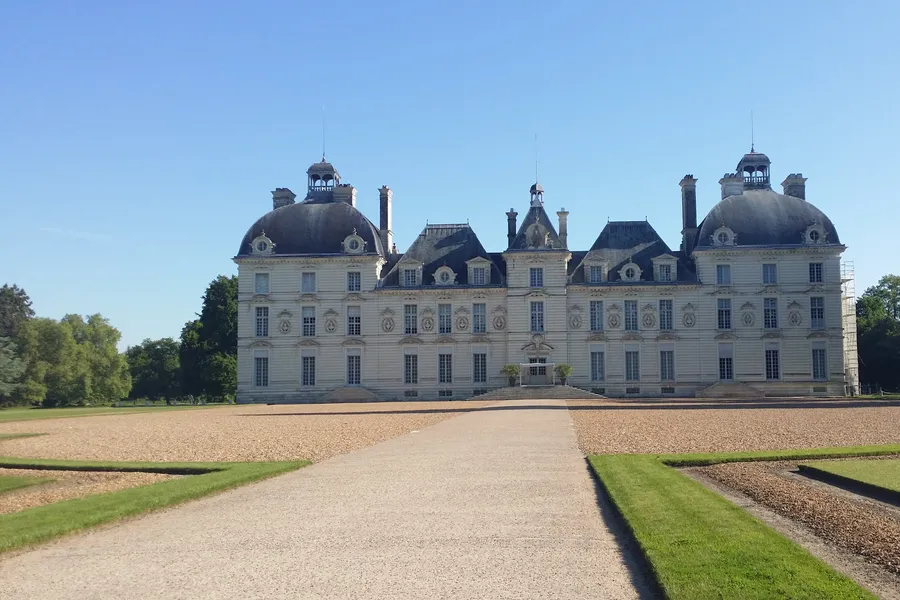
Chambord, about an hour from Amboise, with its double-helix staircase, then Cheverny, still lived in by the same family and the château that inspired Hergé’s Marlinspike Hall in Tintin. In the late afternoon, the TGV from Saint-Pierre-des-Corps takes you to Paris in about an hour.

Six Days: Normandy, Mont-Saint-Michel and the Loire
Six days lets you add Mont-Saint-Michel and take the scenic route south.
Day 1, from Paris to Normandy. Rouen and its cathedral, Honfleur and its old harbour, or the farms and orchards of the Pays d’Auge, on the way to Bayeux.
Day 2, the D-Day beaches, as above.
Day 3, Mont-Saint-Michel. If you can, spend the night on or near the Mont, to see it once the day visitors have left.
Day 4, from the Mont to Angers and Saumur, through the western Loire. Night in Saumur.
Day 5, Villandry and Chenonceau. The Renaissance gardens of Villandry, then Chenonceau. Night in Amboise.
Day 6, Chambord, then the TGV to Paris or a private transfer back, about two and a half hours.
And If You Have a Week: Add Brittany
With seven days or more, Normandy, Brittany and the Loire fit together beautifully in one loop: the D-Day beaches, Mont-Saint-Michel, Saint-Malo and Dinan in northern Brittany, then south to the Loire. I have written more about Brittany in our Brittany itinerary guide.
Where to Stay
In Normandy, Bayeux is the best base for the D-Day beaches: close to the American and British sectors, with a beautiful old town of its own. In the Loire, Amboise is the most practical base for the classic châteaux, with Chenonceau, Clos Lucé and Chambord all within an hour. For the western Loire, Saumur.
I do not book hotels myself, but I am always happy to recommend the ones I know, from charming guesthouses to château hotels. In summer, I advise choosing a hotel with air-conditioning: heatwaves have become more frequent in both regions.
Planning Your Normandy and Loire Trip with Bellidays
Every itinerary above can be shortened, stretched or reversed, starting in the Loire and ending in Normandy. I design each one around the people travelling: your interests, your pace and how much walking you are happy to do. As a licensed guide and professional driver, I can accompany you for the whole trip, or simply organise the transfer between the two regions.
Have a look at our private tours of Normandy, our Loire Valley tours and our private transfers across France, or simply send me your dates.
Frequently Asked Questions
How far is the Loire Valley from the D-Day beaches?
By car, Bayeux to Amboise is about three and a half hours, and Caen to Tours a little under three. It is a comfortable day’s journey, especially with a stop on the way.
Is there a train from Normandy to the Loire Valley?
Yes, a regional line runs from Caen to Tours, but it is slow, with only a few trains a day and sometimes a change in Le Mans. Allow three to four hours, plus the time to get from Bayeux to Caen and from Tours to the châteaux. Many travellers find a private transfer much easier, especially with luggage.
How many days do you need for Normandy and the Loire?
Four days covers the essentials: one day on the D-Day beaches, one day of travel, and two days of châteaux. Six days lets you add Mont-Saint-Michel and the western Loire without rushing.
What is the best base in the Loire Valley?
Amboise, for the classic châteaux: Chenonceau is under half an hour away, Chambord about an hour, and the town has its own château and Clos Lucé. Tours is a good alternative if you prefer a larger city with more restaurants.
Can I end my trip in Paris?
Yes. The TGV from Saint-Pierre-des-Corps, next to Tours, reaches Paris Montparnasse in about an hour. By car, the Loire Valley is about two and a half hours from Paris.